Search
Media Production BA (Hons)
Study level: Undergraduate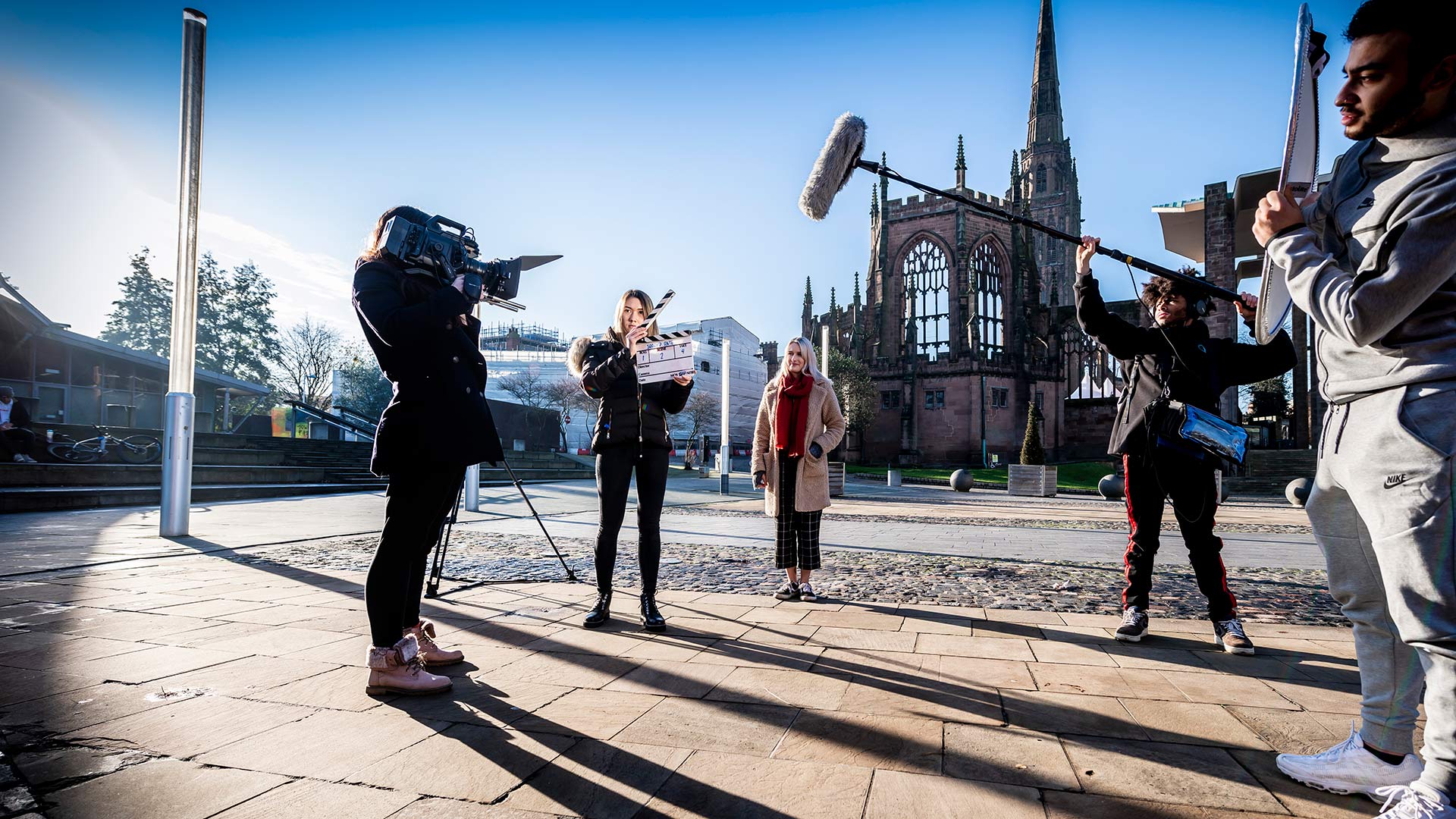
Explore, create and produce a wide range of media formats, from podcasts, photography and music videos to games, film, TV, content creation and radio.
Course features
Year of entry
Location
Coventry University (Coventry)
Study mode
Full-time
Sandwich
Duration
3 years full-time
4 years sandwich
Course code
P310
Start date
September 2027
November 2027
January 2028
March 2028
May 2028
July 2028
Course overview
Aspiring media producers and storytellers can develop creative, technical and craft skills through hands-on media projects, and build a diverse portfolio of content to prepare for a career in the fast-changing media industry.
- Explore a wide range of formats, including music videos, podcasts, photography, films, TV shows, content creation, radio and games.
- Develop high-level technical skills in multi-camera TV studio production, podcasting, radio, mirrorless and DSLR cameras, cinema cameras and game engines.
- Gain a deeper understanding of industry job roles, career pathways and professional practice in the UK’s media industries.

Rated Gold Overall
Teaching Excellence Framework (TEF) 2023
5 QS Stars for Teaching and Facilities
QS Stars University Ratings
4th Student City in England (Coventry)
QS Best Student Cities Index 2027Why you should study this course
- Build a dynamic and wide-ranging industry-facing portfolio of creative media production work.
- Develop the skills to become a multi-skilled media professional, able to work flexibly across the different media sectors.
- Learn a wide range of technical skills through hands-on experience with industry-standard professional kit and studios, including cinema cameras, podcast and radio studios, TV studios, and photography cameras.4
- Participate in real-world projects, honing your creative direction, teamwork and professional problem-solving skills in applied media productions.
Joint 8th
for Career Prospects in Media and Film Studies
Guardian University Guide 2027
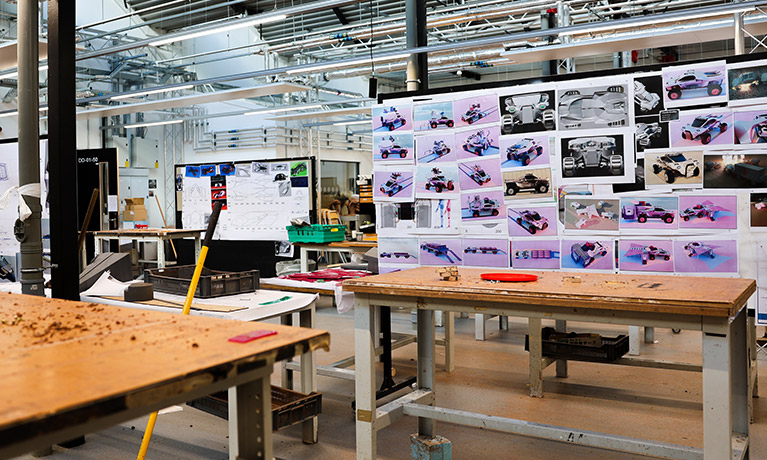
What can you do with an Art and Design degree?
An art and design degree can open the door to a range of careers across the creative industries. Wherever your interests lie, university is a chance to build your creative practice, develop a portfolio that reflects your strengths and discover where your ideas could take you.
Learn more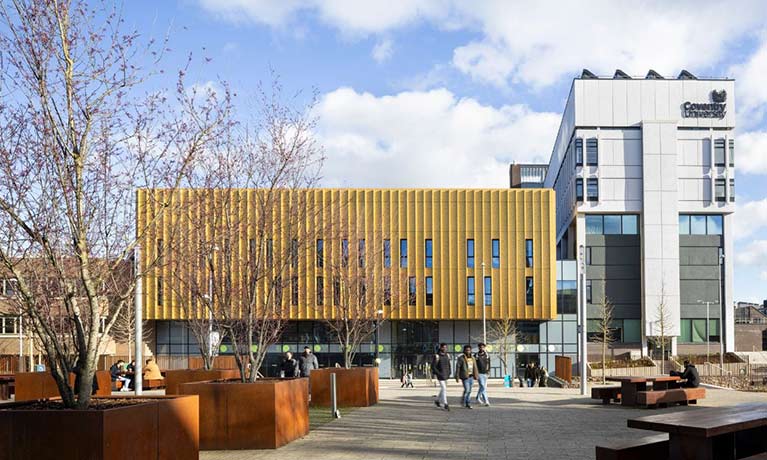
British Art Show 10 at Coventry University
See work by leading contemporary artists, including 2024 Turner Prize winner Jasleen Kaur, as British Art Show 10 comes to Coventry University.
Dates: 2 October 2026 - 10 January 2027
Discover British Art Show 10What you'll study
We regularly review our course content to keep it relevant and current for our students. Consequently, we may update modules to reflect the latest industry standards.
How you'll learn
Teaching and learning methods may include:
- lectures
- seminars
- tutorials
- presentations
- group projects
- workshops
- practical studio sessions
- practical workshop sessions.
Teaching contact hours
As a full-time undergraduate student, you will study modules totalling 120 credits each academic year. A typical 30-credit module requires 300 hours of study. Study hours are made up of teaching contact hours and guided and independent study.
Teaching hours
Teaching hours may vary, depending on where you are in your studies, but on average, you will have between 12 and 15 teaching and learning hours each week. You will also have the option to attend additional sessions, including time with a progress coach or to meet with staff for advice and feedback. As you progress through your studies, teaching hours may reduce.
Guided and independent study
Throughout your studies, you will be expected to spend time in guided and independent study to make up the required study hours per module. You will be digging deeper into topics, reviewing what you’ve learnt and completing assignments. This can be completed around your personal commitments. As you progress to the end of your studies, you’ll spend more time on independent learning.
Online learning
As an innovative university, we use different teaching methods, including online tools and emerging technologies. So, some of your teaching hours and assessments may be delivered online.
Assessment
This course is assessed using methods that vary by module. These approaches are intended to prepare you for the complex and evolving contexts of professional practice. Assessment methods may include:
- practical coursework
- individual work
- group work
- live presentations
- video essays
- academic essays
- projects.
The Coventry University Group assessment strategy ensures that our courses are fairly assessed and allows us to monitor student progression towards achieving the intended learning outcomes.
Entry requirements
Typical entry requirements:
Fees and funding
| Student | Full-time | Part-time |
|---|---|---|
| UK, Ireland*, Channel Islands or Isle of Man | 2027/28 fees TBC 2026/27 fees: £9,790 per year |
Not available |
| EU | 2027/28 fees TBC 2026/27 fees: £9,790 per year with EU Support Bursary** 2027/28 fees TBC 2026/27 fees: £20,800 per year without EU Support Bursary** |
Not available |
| International | 2027/28 fees TBC 2026/27 fees: £20,800 per year |
Not available |
If you choose to study this course with a professional placement2 or study abroad year, you will need to pay a tuition fee3 to cover your academic support throughout your placement year. Students commencing their professional placement in the academic year 2028/29 will pay £1,575 if they are paying UK fees, or £1,900 if they are paying international fees.
For advice and guidance on tuition fees and student loans visit our Undergraduate Finance page and see The University’s Tuition Fee and Refund Terms and Conditions.
The University will charge the tuition fees that are stated in the table above for the first Academic Year of study. The University will review tuition fees each year. For UK (home) students, if Parliament permits an increase in tuition fees, the university may increase fees for each subsequent year of study in line with any such changes. Note that any increase is expected to be in line with the Retail Price Index (RPI), a UK measure of inflation that tracks changes in the cost of living.
If you choose to study this course with a professional placement or study abroad year, the University will charge the tuition fees stated above for those on a placement during Academic Year 2028/29. The University will review professional placement tuition fees each year. For UK (home) students, the University may increase fees for each subsequent year of study, but such that it will be no more than 5% above RPI.
For international students, we may increase fees each year, but such increases will be no more than 5% above inflation. If you defer your course start date or have to extend your studies beyond the normal duration of the course (e.g. to repeat a year or resit examinations) you may be charged the tuition fees in force at the time you take that additional period of study, and/or in line with any legislative changes that apply at that time.
We offer a range of International scholarships to students all over the world. For more information, visit our International Scholarships page.
Tuition fees cover the cost of your teaching, assessments, facilities and support services. There may be additional costs not covered by this fee such as accommodation and living costs, recommended reading books, stationery, printing and re-assessments should you need them. Find out what's included in your tuition costs.
The following are additional costs not included in the tuition fees:
- Any optional overseas field trips or visits: £400+ per trip.
- Any costs associated with securing, attending or completing a placement (whether in the UK or abroad) which may include costs of travel, accommodation, equipment or uniform required for the placement and any visa-related costs.
*Irish student fees
The rights of Irish residents to study in the UK are preserved under the Common Travel Area arrangement. If you are an Irish student and meet the residency criteria, you can study in England, pay the same level of tuition fees as English students and utilise the Tuition Fee Loan.
**EU Support Bursary
Following the UK's exit from the European Union, we are offering financial support to all eligible EU students who wish to study an undergraduate or a postgraduate degree with us full-time. This bursary will be used to offset the cost of your tuition fees to bring them in line with that of UK students. Students studying a degree with a foundation year with us are not eligible for the bursary.
How do you know if you need to pay UK or international tuition fees?
Facilities
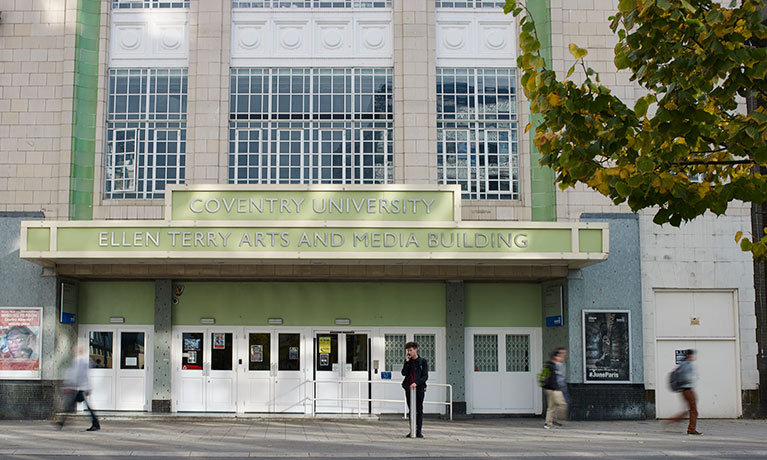
Coventry University has invested in superb arts facilities4 with Ellen Terry, Delia Derbyshire and the Tank forming your primary learning locations. All within a minute's walk of each other in the city centre, you will have access to purpose built studios and a well-stocked Media Loan Shop. Here you can borrow an extensive range of specialist, professional equipment, including 4K and HD video cameras, DSLR cameras, tripods, audio equipment and lighting. Kit is allocated on a first come first served basis via the booking system which you will get to know well!
Take a virtual tour
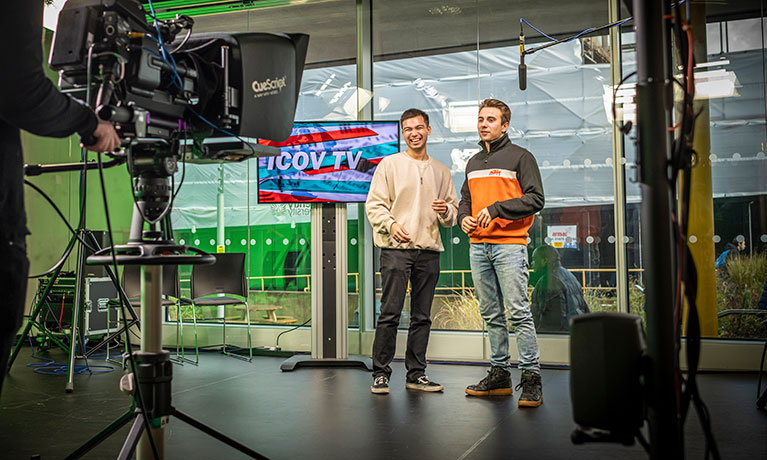
Television Studio
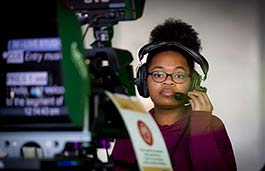
You’ll have access to our on-site television studio The Tank, offering specialist equipment such as large cameras, mixing facilities and fibre-optic wiring throughout.

Photography Suite
This specialist facility is available to media students to take and process photos in a professional environment. There is also support for printing, high-end scanning and film processing.
Media Loan Shop
Our media loan shop provides you with access to the equipment and support you need to excel in your studies – from basic audio recorders to professional cameras and expert advice from our technicians.
You’ll use facilities through timetabled teaching, practical activities and relevant independent study. Access may vary by module, activity, capacity, supervision or safety requirements. Access may change or be limited where the University needs to follow public authority guidance, decisions or orders.
Careers and opportunities
On successful completion, you will have knowledge of:
- roles of communication, media and cultural systems within their political, social, economic and technological contexts.
- modes of representation and systems of learning within the contemporary social world and the ways these are shaped by issues of gender, race, class, ethnicity, disability, sexuality and nationality.
- historical and global contexts of media, communication and cultural systems and processes.
You will be equipped with the skills to:
- apply the various processes and practices that combine towards the production and consumption of media, communication and cultural texts
- undertake a variety of forms of research appropriate to different forms of study and analysis and be able critically to reflect on the appropriateness of each form of research
- critically reflect on the chosen processes of production
- critically interrogate through appropriate theoretical and conceptual material the various processes of production of media and cultural texts.
The ever-changing world of the creative industries demands multi-skilled media professionals, who are familiar with a range of media platforms, full of ideas and imagination, with strong ethics and levels of professionalism; these same graduate attributes our course seeks to nurture.
Where our graduates work
Our Media Production graduates are working successfully all over the world in film, TV and media companies. Example roles have included working as assistant editor for Sunset and Vine on rugby and football coverage, as a runner on the BBC's Strictly Come Dancing, as video editor for the Sidemen, as assistant producer for Envy Post Production, as casting assistant on Channel 4's ‘A Place in the Sun’, as creative producer at Narrative Entertainment, and as radio station producer at Global FM, among many more.
The graduate destinations listed above illustrate potential career paths. You may need to gain additional qualifications or practical experience, pass professional examinations, complete training, cover associated costs and meet specific visa or immigration requirements to secure employment in these fields.
Further study
You can choose to continue your studies at Coventry University with:
You may be entitled to an alumni discount on your fees if you decide to extend your time with us by progressing from undergraduate to postgraduate study.

Discover Phoenix+
Phoenix+ brings you together with other students to learn, experience and develop essential knowledge and skills. Whatever destination you choose, it's about preparing you for life after university.
Learn more about Phoenix+How to apply
UK students
International students
Disclaimers
You may also like
Coventry University (Coventry)

Film Production BA (Hons)
Coventry University (Coventry)

Digital Media BA (Hons)
Coventry University (Coventry)