Search
Biomedical Science MSc
Study level: Postgraduate
Enhance your expertise in biomedical science and develop specialist knowledge in scientific practices and principles. Build an understanding of leadership and management within medical laboratories and prepare for advanced roles.
Course features
Year of entry
Location
Coventry University (Coventry)
Study mode
Full-time
With Professional Placement
Duration
1 year full-time
Up to 2 years full-time with professional placement
Course code
EEST017 Biomedical Science (Cellular and Molecular Pathology)EEST019 Biomedical Science (Clinical Biochemistry and Immunology)EEST020 Biomedical Science (Haematology and Blood Transfusion Science)EEST021 Biomedical Science (Infection Science)
Start date
September 2026
November 2026
January 2027
March 2027
May 2027
July 2027
Course overview
This course is ideal for those looking to specialise in biomedical science. We aim to provide valuable hands-on experience and learning opportunities that lay a strong foundation for careers in research, advanced diagnostic laboratory roles, or professional development.
- Acquire hands-on experience in modern laboratory techniques, including genomics and stem cell technology. Develop the practical skills needed to excel in the rapidly evolving field of biomedical science.
- Specialise in one of four routes: infection science, haematology and blood transfusion science, clinical biochemistry and immunology, or cellular and molecular pathology.
- Develop advanced knowledge in disease diagnostics and laboratory management to prepare for progressive roles in this field.

5 QS Stars for Teaching and Facilities
QS Stars University Ratings
Ranked 1st for Engagement
Postgraduate Taught Experience Survey (PTES) 2026
Ranked 5th for Overall Satisfaction in PTES
Postgraduate Taught Experience Survey (PTES) 2026Why you should study this course
- Specialist study options - choose from four specialist routes, each designed to deepen your expertise and advance your chosen field.
- Applied research project - demonstrate your learning by designing, implementing, analysing and reporting on a research project aligned with your specialism.
- Enhanced career progression - for biomedical scientists and bioscience graduates, specialising in a specific area could significantly enhance professional development, support career progression and open new opportunities in the field.
- Digital skills certificate - the course integrates two International Certificate of Digital Literacy (ICDL) modules, Data Analytics and Big Data. You will be awarded an ICDL certificate and electronic badge on successful completion of each ICDL module.
- Professional placement opportunity - gain practical experience and boost your CV with an additional professional placement. See the modules for more details.2
Ranked 1st
for overall satisfaction in Biological and Sport Sciences
Postgraduate Taught Experience Survey (PTES) 2025 (ranked out of 39 HEIs)
Our Award-winning Green SuperLab
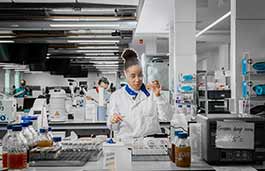
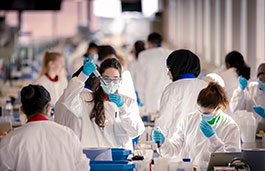
With space for over 250 students and packed full of industry-standard equipment, the Coventry University SuperLab is an amazing place to learn, experiment and discover. Find out what we’re doing in our SuperLab to make it greener and reduce our waste and carbon emissions.

Studying at Coventry University
Michelle Asiedu shares her experiences of studying for a master's in biomedical science.
Read Michelle's storyWhat you'll study
Acquire knowledge and laboratory skills relevant to all biomedical science disciplines, including genomics, stem cell technologies and big data analytics. Through an active learning environment, delve into current issues and future developments in biomedical science, emphasising global initiatives and specialising within your chosen field. Gain an understanding of management and regulation within medical laboratories and develop essential research skills by completing a self-directed project.
Please note that we regularly review our course content, to make it relevant and current for the benefit of our students. For these reasons, course modules may be updated.
How you'll learn
Teaching and learning methods may include:
- lectures - provide a strong foundation in advanced biomedical theory, current research and clinical applications, ensuring you understand key scientific principles and developments.
- seminars - encourage deeper exploration of complex topics, helping you analyse research findings and discuss emerging issues in biomedical science.
- tutorials - offer personalised support and feedback, allowing you to clarify difficult concepts and strengthen your academic and research skills.
- workshops - give you hands-on opportunities to apply techniques, interpret data and develop practical problem-solving skills in realistic scientific contexts.
- quizzes - help reinforce learning, check your understanding and identify areas that may need further study.
- discussions - promote critical thinking and scientific debate, preparing you to evaluate evidence and communicate ideas clearly in professional settings.
- case studies - link theory to real-world clinical and laboratory scenarios, helping you understand how biomedical science impacts patient care and diagnosis.
- presentations - build confidence in communicating scientific findings clearly and professionally – a key skill in research, healthcare and industry roles.
- group work - reflect the collaborative nature of laboratory and healthcare environments, developing teamwork, leadership and communication skills.
- asynchronous learning - provides flexibility to study at your own pace, making it easier to balance learning with other commitments.
- reflective practice - encourages you to evaluate your own development, strengthen professional awareness and support continuous improvement.
- self-guided - develops independence, research ability and lifelong learning skills essential for scientific careers.
- practical laboratory sessions - enable you to gain hands-on experience with laboratory techniques, equipment and data analysis, building the technical competence required in biomedical and clinical settings
Teaching contact hours
As a full-time postgraduate student, you will study modules totalling 180 credits each academic year. A typical 30-credit module requires a total of 300 hours of study. Study hours are made up of teaching contact hours, and guided and independent study.
Teaching hours
Teaching hours may vary, depending on where you are in your studies, but on average you will have between 8 and 12 teaching and learning hours each week. You will also have the opportunity to attend optional sessions including time with a Success Coach or to meet with staff for advice and feedback.
Guided and independent study
Throughout your studies, you will be expected to spend time in guided and independent study to make up the required study hours per module. You will be digging deeper into topics, reviewing what you’ve learnt and completing assignments. This can be completed around your personal commitments. As you progress to the end of your studies, you’ll spend more time on independent learning.
Online learning
As an innovative university, we use different teaching methods, including online tools and emerging technologies. So, some of your teaching hours and assessments may be delivered online.
Assessment
This course will be assessed using a variety of methods which could vary depending on the module. Assessment methods may include:
- essays
- laboratory or project reports
- group work
- individual assignments
- presentations
- data analysis and case study exercises
- portfolio-based assessments
- time-restricted coursework.
The Coventry University Group assessment strategy ensures that our courses are fairly assessed and allows us to monitor student progression towards achieving the intended learning outcomes.

Focus with block learning
Most courses use block learning. You study one module for six weeks, then move on to the next. It's a simple, structured way to stay organised and build confidence in your studies.
Explore block learningEntry requirements
Typical entry requirements:
Fees and funding
| Student | Full-time | Part-time |
|---|---|---|
| UK, Ireland*, Channel Islands or Isle of Man | £11,700 £1,575 professional placement fee (if placement secured) |
Not available |
| EU | £11,700 per year with EU Support Bursary** £1,575 professional placement fee (if placement secured) per year with EU Support Bursary** £19,500 per year without EU Support Bursary** £1,900 professional placement fee (if placement secured) per year without EU Support Bursary** |
Not available |
| International | £19,500 £1,900 professional placement fee (if placement secured) |
Not available |
For advice and guidance on tuition fees3 and student loans visit our Postgraduate Finance page and see the University's Tuition Fee and Refund Terms and Conditions.
We offer a range of International scholarships to students all over the world. For more information, visit our international scholarships page.
Tuition fees cover the cost of your teaching, assessments, facilities and support services. There may be additional costs not covered by this fee, such as accommodation and living costs, recommended reading books, stationery, printing and re-assessments should you need them.
The following are additional costs not included in the tuition fees:
- Any optional overseas field trips or visits: £400+ per trip.
- Any costs associated with securing, attending or completing a placement (whether in the UK or abroad).
*Irish student fees
The rights of Irish residents to study in the UK are preserved under the Common Travel Area arrangement. If you are an Irish student and meet the residency criteria, you can study in England, pay the same level of tuition fees as English students and utilise the Postgraduate Master's Loan.
**EU Support Bursary
Following the UK's exit from the European Union, we are offering financial support to all eligible EU students who wish to study an undergraduate or a postgraduate degree with us full-time. This bursary will be used to offset the cost of your tuition fees to bring them in line with that of UK students. Students studying a degree with a foundation year with us are not eligible for the bursary.
How do you know if you need to pay UK or international tuition fees?
Facilities
The Alison Gingell Building is home to industry-standard facilities allowing you to work in a replicated, dynamic, professional environment from day one.
The SuperLab can hold up to 250 students, making it one of the largest educational laboratories in the UK. It is well-equipped with the latest industry-standard equipment including facilities for biochemistry, immunology, microbiology, haematology and cell and molecular biology.
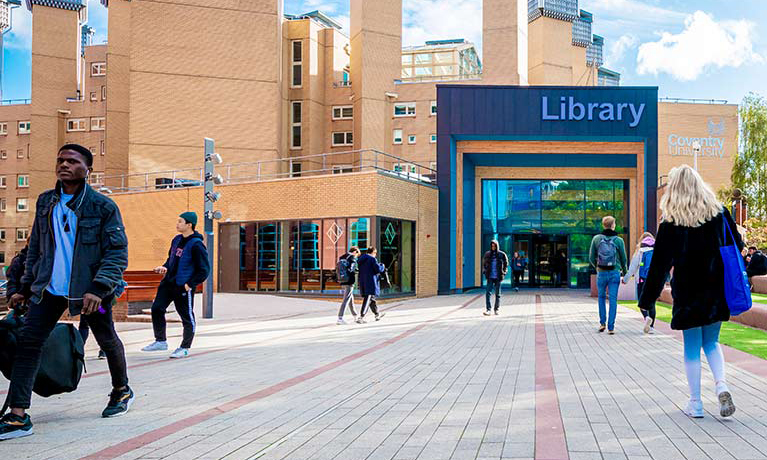
Lanchester Library
The library is usually open 364 days a year. It’s where you can access your course’s specialist Academic Liaison Librarian. It’s also home to specialist teams which can support you with your academic writing and maths and statistics questions.
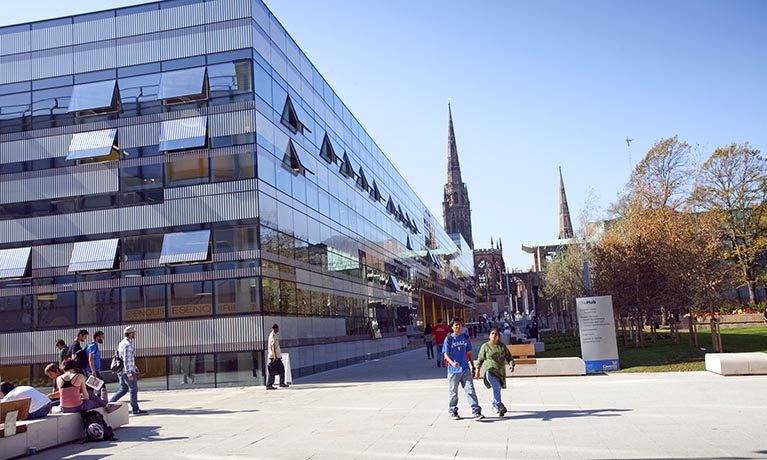
The Hub
The Hub is the centre of student life on campus. Facilities include a food court, convenience store, multi-faith centre, medical centre, hairdresser, coffee shops and the Your SU offices. It has fully licensed function spaces and a bar.

Careers and employability
Get one-on-one guidance lasting up to 18 months from the end of your course. We’ll help you find placements and graduate roles, offer CV and application checks, mentoring, skills workshops, employer events and more.
You’ll use facilities through timetabled teaching, practical activities and relevant independent study. Access may vary by module, activity, capacity, supervision or safety requirements. Access may change or be limited where the University needs to follow public authority guidance, decisions or orders.
Careers and opportunities
Biomedical science is a rapidly evolving field, incorporating digital technologies, omics and personalised medicine. Employers need professionals who can analyse and interpret big data, apply biological understanding, and communicate results effectively.
Learning experiences and assessments mirror real-world practices, including group projects, practical skills, presentations, scientific communication and independence, all relevant to various careers.
Graduates of this Biomedical Science MSc course could go on to a range of different careers. These can include:
- Biomedical scientist (NHS or private healthcare) - advanced biomedical theory combined with practical laboratory sessions strengthens your diagnostic, analytical and technical skills. Case studies and applied learning help you understand clinical laboratory standards and patient-focused testing environments. (Professional registration requirements depend on individual background and accreditation status.)
- Research scientist (academic or industry) - the independent research project develops your ability to design studies, analyse data and communicate findings. These are essential skills for roles in universities, pharmaceutical companies and biotech organisations.
- Pharmaceutical / biotech scientist - in-depth knowledge of disease processes, molecular techniques and laboratory investigation supports careers in drug development, testing and biomedical innovation. Group work reflects the collaborative nature of industry research teams.
- Clinical trials coordinator - training in research design, ethics and data analysis prepares you to support and manage clinical studies, ensuring compliance, accurate reporting and patient safety.
- Biomedical data analyst - Integrated digital literacy modules in Data Analytics and Big Data strengthen your ability to interpret complex biomedical datasets - an increasingly valuable skill in healthcare and life sciences.
You may also go on to apply to scientist training programmes as well as further postgraduate study
Where our graduates work
Successful graduates of this course have gone on to work in:
- The NHS.
- The UK Health Security Agency (UKHSA).
- PhD and Research.
How to apply
UK students
International students
Disclaimers
You may also like
Coventry University (Coventry)
Biotechnology MSc
Coventry University (Coventry)