Search
Sociology and Criminology BA (Hons)
Study level: Undergraduate
Question structures of society, power and inequality while developing transferable skills in analysis, communication and collaboration for future careers across social policy, criminal justice, advocacy, welfare and education.
Course features
Year of entry
Location
Coventry University (Coventry)
Study mode
Full-time
Sandwich
Duration
3 years full-time
4 years sandwich
Course code
LM39
Start date
September 2027
November 2027
January 2028
March 2028
May 2028
July 2028
Course overview
By exploring the root causes and impacts of inequality, social structures and crime, you'll be able to drive positive change in the lives of vulnerable and excluded individuals, including those affected by the criminal justice system.
- Social and criminal justice: examine the foundations of justice systems, policies and practices, and how they impact individuals and communities. You will also have the opportunity to engage in current debates on crime, punishment, human rights and social justice to develop solutions for contemporary challenges.
- Global and intersectional perspectives: explore how justice issues intersect with race, gender, class and global inequalities to shape the lived experiences of people around the world.
- Applied learning: through a blend of theory, research and practical experience, you should develop a deep understanding of how policies, institutions and communities interact, empowering you to drive positive change.

Rated Gold Overall
Teaching Excellence Framework (TEF) 2023
5 QS Stars for Teaching and Facilities
QS Stars University Ratings
4th Student City in England (Coventry)
QS Best Student Cities Index 2027Why you should study this course
- Project-based learning: actively engage in practical, meaningful projects. Work on complex problems, create tangible solutions and develop essential skills such as critical thinking, collaboration and communication. Assessments are also designed to replicate the type of work you might carry out in your future career, such as podcasts, posters and briefing papers that showcase your expertise and industry readiness.
- Real-world insights: our diverse academic perspectives from across the globe offer an inclusive, supportive environment where you'll gain insights from varied cultural and statehood experiences.
- Make a real impact: go beyond the classroom by engaging with real social issues. Previous students have worked with refugee centres, visited the magistrates' courthouse, and connected with professionals like probation officers who share insights into the criminal justice system.2 You will also explore Coventry’s historical sites to understand their sociological impact, gaining firsthand experience that prepares you to drive meaningful change in society.
- Build your experience: take advantage of optional placement experiences after your second year. Previous students have completed placements covering criminal justice and policy, and in community organisations.2
- Join a supportive community: be part of an inclusive, open-minded environment that challenges inequality. Experience a mix of theoretical learning and practical application, with group teaching, approachable staff and active student engagement. This helps to foster a supportive learning environment and promote a sense of community, both academically and socially.
What you'll study
We regularly review our course content to keep it relevant and current for our students. Consequently, we may update modules to reflect the latest industry standards.
How you'll learn
In this course, you'll learn through hands-on activities and practical examples, using the same approaches professionals use in the field. It’s all about helping you build the skills you need to feel confident and prepared for your future career. You’ll be assessed through a range of coursework and applied tasks that help you build academic and professional skills throughout.
Teaching methods may include:
- interactive lectures that may be delivered online or in-person
- seminars involving smaller groups working on problems or holding discussions and debates about issues arising in the lectures
- workshops involving a combination of content delivery and group work
- working together on projects to help develop critical skills such as problem-solving, teamwork and creative thinking
- simulations, enabling you to apply theoretical knowledge to practical scenarios.
Teaching contact hours
As a full-time undergraduate student, you will study modules totalling 120 credits each academic year. You will normally study one 30-credit module at a time. A typical 30-credit module requires a total of 300 hours of study made up of teaching contact hours, guided and independent study.
Teaching hours
Teaching hours may vary depending on your year of study and selected modules. During your first year, you can expect 12-15 teaching hours each week. You will also have the option to attend additional sessions, including time with a progress coach or to meet with staff for advice and feedback. As you progress through your studies, teaching hours may reduce.
Guided and independent study
Throughout your studies, you will be expected to spend time in guided and independent study to make up the required study hours per module. You’ll be digging deeper into topics, review what you’ve learned and complete assignments. This can be completed around your personal commitments. As you progress through your studies, you’ll spend more time in independent study.
Online learning
As an innovative university, we use different teaching methods including online tools and emerging technologies. So, some of your teaching hours and assessments may be delivered online.
Assessment
This course incorporates new and innovative assessment methods aligned with current industry standards, providing you with practical, real-world skills designed to advance your professional readiness and career prospects.
Assessment methods may include:
- writing exercises such as essays, reports, policy reviews and briefings
- live simulations and reflective journals about them
- group and individual presentations
- posters and infographics
- problem-solving scenarios such as case studies
- podcasts, academic posters and vlogs.
The Coventry University Group assessment strategy ensures that our courses are fairly assessed and allows us to monitor student progression towards achieving the intended learning outcomes.
International experience opportunities
There are opportunities for study or placements abroad2. For example, in recent years, students have studied on a range of courses at universities in Sweden, Spain, Italy and the Netherlands.
Please note that all international experience opportunities may be subject to additional costs, competitive application, availability, and meeting applicable visa and travel requirements, and are therefore not guaranteed2.
Entry requirements
Typical entry requirements:
Fees and funding
| Student | Full-time | Part-time |
|---|---|---|
| UK, Ireland*, Channel Islands or Isle of Man | 2027/28 fees TBC 2026/27 fees: £9,790 per year |
Not available |
| EU | 2027/28 fees TBC 2026/27 fees: £9,790 per year with EU Support Bursary** 2027/28 fees TBC 2026/27 fees: £17,600 per year without EU Support Bursary** |
Not available |
| International | 2027/28 fees TBC 2026/27 fees: £17,600 per year |
Not available |
If you choose to study this course with a professional placement2 or study abroad year, you will need to pay a tuition fee3 to cover your academic support throughout your placement year. Students commencing their professional placement in the academic year 2028/29 will pay £1,575 if they are paying UK fees, or £1,900 if they are paying international fees.
For advice and guidance on tuition fees and student loans visit our Undergraduate Finance page and see The University’s Tuition Fee and Refund Terms and Conditions.
The University will charge the tuition fees that are stated in the table above for the first Academic Year of study. The University will review tuition fees each year. For UK (home) students, if Parliament permits an increase in tuition fees, the university may increase fees for each subsequent year of study in line with any such changes. Note that any increase is expected to be in line with the Retail Price Index (RPI), a UK measure of inflation that tracks changes in the cost of living.
If you choose to study this course with a professional placement or study abroad year, the University will charge the tuition fees stated above for those on a placement during Academic Year 2028/29. The University will review professional placement tuition fees each year. For UK (home) students, the University may increase fees for each subsequent year of study, but such that it will be no more than 5% above RPI.
For international students, we may increase fees each year, but such increases will be no more than 5% above inflation. If you defer your course start date or have to extend your studies beyond the normal duration of the course (e.g. to repeat a year or resit examinations) you may be charged the tuition fees in force at the time you take that additional period of study, and/or in line with any legislative changes that apply at that time.
We offer a range of International scholarships to students all over the world. For more information, visit our International Scholarships page.
Tuition fees cover the cost of your teaching, assessments, facilities and support services. There may be additional costs not covered by this fee such as accommodation and living costs, recommended reading books, stationery, printing and re-assessments should you need them. Find out what's included in your tuition costs.
The following are additional costs not included in the tuition fees:
- Any optional overseas field trips or visits: £400+ per trip.
- Any costs associated with securing, attending or completing a placement (whether in the UK or abroad) which may include costs of travel, accommodation, equipment or uniform required for the placement and any visa-related costs.
*Irish student fees
The rights of Irish residents to study in the UK are preserved under the Common Travel Area arrangement. If you are an Irish student and meet the residency criteria, you can study in England, pay the same level of tuition fees as English students and utilise the Tuition Fee Loan.
**EU Support Bursary
Following the UK's exit from the European Union, we are offering financial support to all eligible EU students who wish to study an undergraduate or a postgraduate degree with us full-time. This bursary will be used to offset the cost of your tuition fees to bring them in line with that of UK students. Students studying a degree with a foundation year with us are not eligible for the bursary.
How do you know if you need to pay UK or international tuition fees?
Facilities
Students will benefit from studying on our well-equipped, modern campus4.
Take a virtual tour
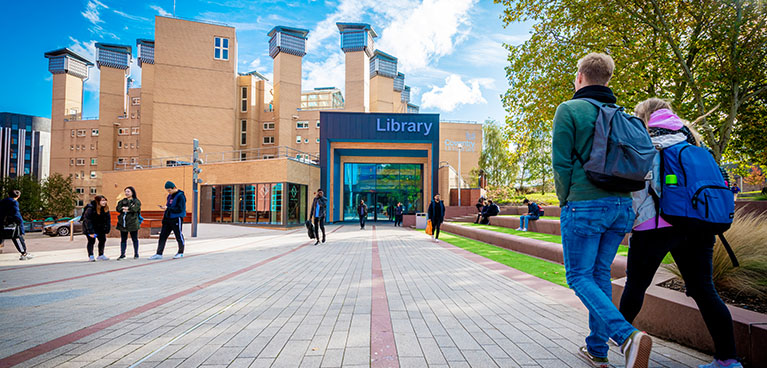
Lanchester Library
The library offers a team of academic liaison librarians who provide specialist help and support. You’ll also have access to subject specific databases of journal articles related to criminology and forensics.
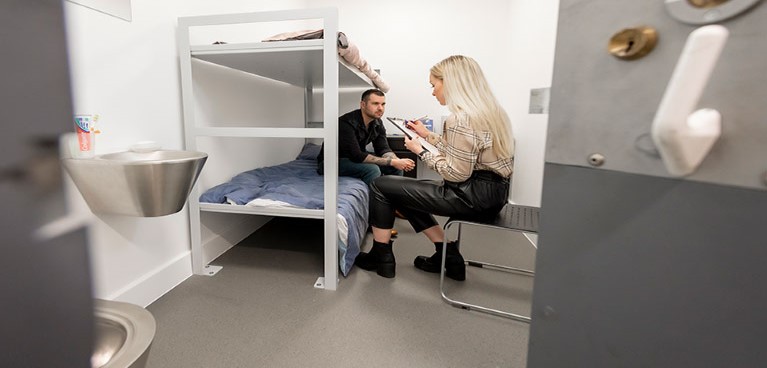
Prison cells
Criminology students can use our mock cells to experience the practical aspects of life in prison.

Academic support
No matter which degree you’re studying, you’ll find a lot of support on campus, including the Centre of Academic Writing and sigma, which offers mathematics and statistics support.
You’ll use facilities through timetabled teaching, practical activities and relevant independent study. Access may vary by module, activity, capacity, supervision or safety requirements. Access may change or be limited where the University needs to follow public authority guidance, decisions or orders.
Careers and opportunities
Throughout the course, you should develop a broad range of highly valued skills to reflect the changing and dynamic needs of industry, including exceptional communication, project planning, critical thinking and analysis, crisis management, problem-solving, and powerful presentation and listening skills.
On successful completion of the course, you should be a globally and interculturally aware graduate ready to make a dynamic difference in the world. You could find yourself in the following roles:
- Restorative justice coordinator
- Public awareness campaign organiser
- Rehabilitation support worker
- Probation officer
- Prison or rehabilitation services staff
- Domestic abuse support worker
- Community development officer
- Social or criminal justice researcher
- Teaching (requires PGCE or equivalent)
- Human resources officer
- Non-profit or charity researcher.
The graduate destinations listed above illustrate potential career paths. You may need to gain additional qualifications or practical experience, pass professional examinations, complete training, cover associated costs and meet specific visa or immigration requirements to secure employment in these fields.
Where our graduates work
Recent graduates are now employed in a range of private and public sector industries. Examples include banking, finance, media, education, the civil service, police local authorities and in community and non-governmental organisations in the charitable and voluntary sectors.
Further study
You can choose to continue your studies at Coventry University with the Sociology and Social Research MA. You may be entitled to an alumni discount on your fees if you decide to extend your time with us by progressing from undergraduate to postgraduate study.

Discover Phoenix+
Phoenix+ brings you together with other students to learn, experience and develop essential knowledge and skills. Whatever destination you choose, it's about preparing you for life after university.
Learn more about Phoenix+How to apply
UK students
International students
Disclaimers
You may also like

Coventry University (Coventry)
Sociology BA (Hons)
Coventry University (Coventry)

Politics BA (Hons)
Coventry University (Coventry)