Search
Journalism BA (Hons)
Study level: Undergraduate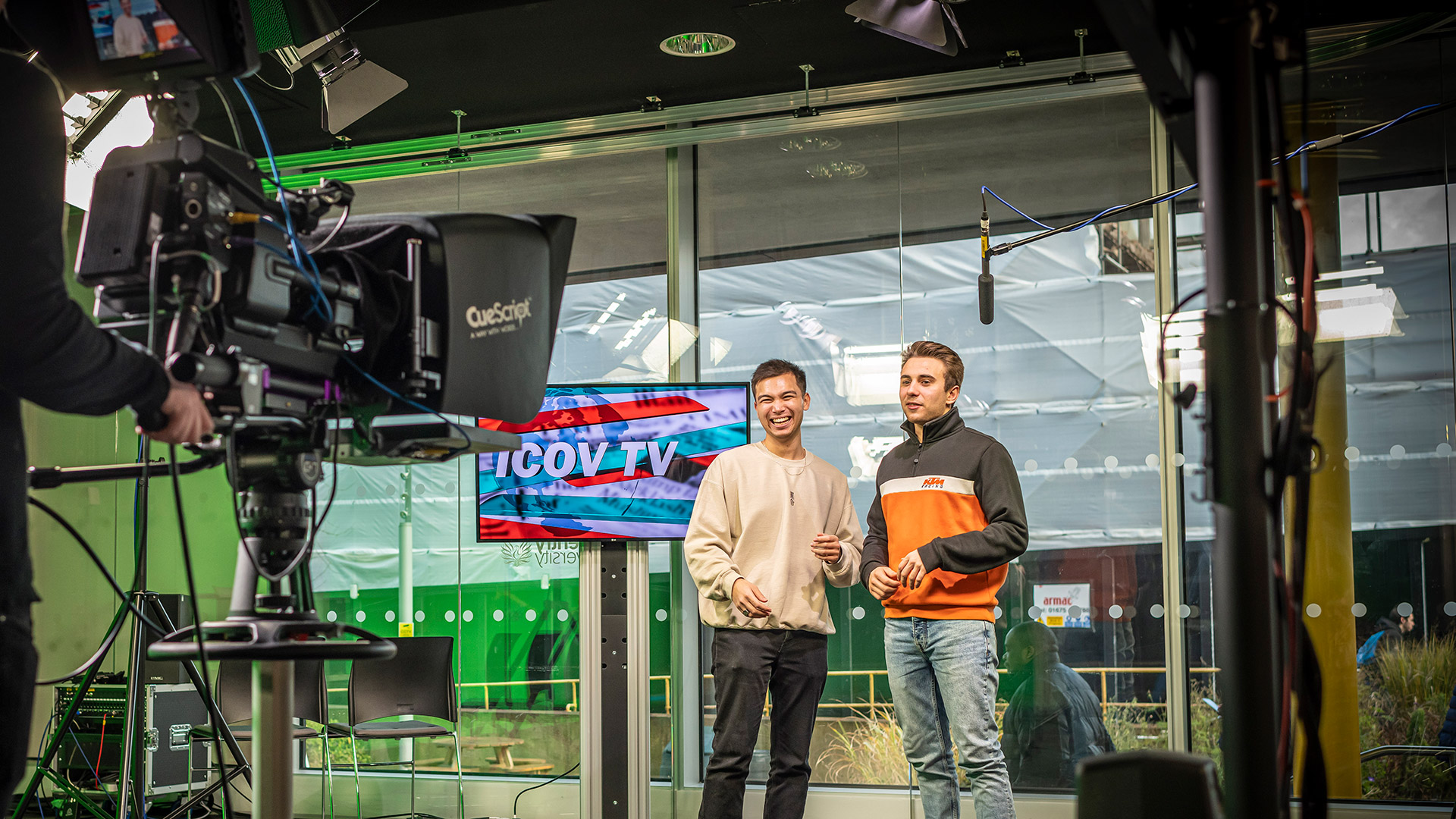
Curious about people and the world? Develop the skills needed for a career in journalism, with a focus on in-depth research, critical thinking and storytelling that makes an impact.
Course features
Year of entry
Location
Coventry University (Coventry)
Study mode
Full-time
Sandwich
Duration
3 years full-time
4 years sandwich
Course code
PP53
Start date
September 2027
November 2027
January 2028
March 2028
May 2028
July 2028
Course overview
Gain extensive hands-on experience in industry-standard TV and radio studios, learning from expert practitioners and guest speakers. Develop top-level news and social media writing, supported by opportunities for industry placements.2
- Specialist journalism: this course has a predominantly broadcast, web and social media focus with opportunities to specialise in an area you are passionate about.
- Career-focused skills: develop strong written and verbal communication skills, including news writing and broadcast presentation.
- Applied learning: get practical experience with broadcasting, social media and digital journalism tools.

Rated Gold Overall
Teaching Excellence Framework (TEF) 2023
5 QS Stars for Teaching and Facilities
QS Stars University Ratings
4th Student City in England (Coventry)
QS Best Student Cities Index 2027Why you should study this course
- Specialised facilities: access to professional standard TV and radio studios, wireless newsrooms, podcast booths and video editing suites, as well as the Media Loan Service for borrowing cameras and other portable recording equipment. These can help you develop the skills and techniques employers need.4
- Content portfolio: build a portfolio of varied stories and other media material, right from your first year, with many involving interactions with external sources and collaborators to help improve your employment prospects.
- Global reach: take part in collaborative projects with other media students internally, nationally and globally - enhancing creativity, skills and employability.
- Choose your path: optional year-long work placement or study abroad on top of short placements, boosting real-world experience and career readiness.2 Previous students have secured work experience and employment at Sky, BBC, ITV, Coventry City FC, Heat magazine and The New York Times among others.
- Develop highly valued skills: reflecting the changing and dynamic needs of industry, including exceptional communication, project planning, critical thinking and analysis, problem-solving and powerful presentation and listening skills.
Why study Journalism BA (Hons) at Coventry University?
What you'll study
We regularly review our course content to keep it relevant and current for our students. Consequently, we may update modules to reflect the latest industry standards.
How you'll learn
Teaching methods may include:
- simulations, including of covering court cases in a moot court
- news days involving editorial teams, reflecting industry practice
- lectures
- seminars
- workshops
- demonstration of equipment use, including out of university buildings
- field trips, including to nearby magistrate and crown courts.2
Teaching contact hours
As a full-time undergraduate student, you will study modules totalling 120 credits each academic year. A typical 30-credit module requires 300 hours of study. Study hours are made up of teaching contact hours and guided and independent study.
Teaching hours
Teaching hours may vary, depending on where you are in your studies, but on average, you will have between 12 and 15 teaching and learning hours each week. You will also have the option to attend additional sessions, including time with a progress coach or to meet with staff for advice and feedback. As you progress through your studies, teaching hours may reduce.
Guided and independent study
Throughout your studies, you will be expected to spend time in guided and independent study to make up the required study hours per module. You will be digging deeper into topics, reviewing what you’ve learnt and completing assignments. This can be completed around your personal commitments. As you progress to the end of your studies, you’ll spend more time on independent learning.
Online learning
As an innovative university, we use different teaching methods, including online tools and emerging technologies. So, some of your teaching hours and assessments may be delivered online.
Assessment
This course is assessed using methods that vary by module.
Assessment methods may include:
- portfolio
- audio/radio stories
- video/tv stories
- online/web articles
- individual website
- social media posts
- court report
- audio essay or commentary
- video essay or commentary
- written reflective essay
- research report
- diary or log
- open book test (media law and ethics)
- employment material—CV, cover letter, skills audit etc
- networking material—calendar and contacts entries
- strategy pitch
- long-form journalism including documentary.
The Coventry University Group assessment strategy ensures that our courses are fairly assessed and allows us to monitor student progression towards the achieving the intended learning outcomes.
Entry requirements
Typical entry requirements:
Fees and funding
| Student | Full-time | Part-time |
|---|---|---|
| UK, Ireland*, Channel Islands or Isle of Man | 2027/28 fees TBC 2026/27 fees: £9,790 per year |
Not available |
| EU | 2027/28 fees TBC 2026/27 fees: £9,790 per year with EU Support Bursary** 2027/28 fees TBC 2026/27 fees: £20,800 per year without EU Support Bursary** |
Not available |
| International | 2027/28 fees TBC 2026/27 fees: £20,800 per year |
Not available |
If you choose to study this course with a professional placement2 or study abroad year, you will need to pay a tuition fee3 to cover your academic support throughout your placement year. Students commencing their professional placement in the academic year 2028/29 will pay £1,575 if they are paying UK fees, or £1,900 if they are paying international fees.
For advice and guidance on tuition fees and student loans visit our Undergraduate Finance page and see The University’s Tuition Fee and Refund Terms and Conditions.
The University will charge the tuition fees that are stated in the table above for the first Academic Year of study. The University will review tuition fees each year. For UK (home) students, if Parliament permits an increase in tuition fees, the university may increase fees for each subsequent year of study in line with any such changes. Note that any increase is expected to be in line with the Retail Price Index (RPI), a UK measure of inflation that tracks changes in the cost of living.
If you choose to study this course with a professional placement or study abroad year, the University will charge the tuition fees stated above for those on a placement during Academic Year 2028/29. The University will review professional placement tuition fees each year. For UK (home) students, the University may increase fees for each subsequent year of study, but such that it will be no more than 5% above RPI.
For international students, we may increase fees each year, but such increases will be no more than 5% above inflation. If you defer your course start date or have to extend your studies beyond the normal duration of the course (e.g. to repeat a year or resit examinations) you may be charged the tuition fees in force at the time you take that additional period of study, and/or in line with any legislative changes that apply at that time.
We offer a range of International scholarships to students all over the world. For more information, visit our International Scholarships page.
Tuition fees cover the cost of your teaching, assessments, facilities and support services. There may be additional costs not covered by this fee such as accommodation and living costs, recommended reading books, stationery, printing and re-assessments should you need them. Find out what's included in your tuition costs.
The following are additional costs not included in the tuition fees:
- Any optional overseas field trips or visits: £400+ per trip.
- Any costs associated with securing, attending or completing a placement (whether in the UK or abroad) which may include costs of travel, accommodation, equipment or uniform required for the placement and any visa-related costs.
*Irish student fees
The rights of Irish residents to study in the UK are preserved under the Common Travel Area arrangement. If you are an Irish student and meet the residency criteria, you can study in England, pay the same level of tuition fees as English students and utilise the Tuition Fee Loan.
**EU Support Bursary
Following the UK's exit from the European Union, we are offering financial support to all eligible EU students who wish to study an undergraduate or a postgraduate degree with us full-time. This bursary will be used to offset the cost of your tuition fees to bring them in line with that of UK students. Students studying a degree with a foundation year with us are not eligible for the bursary.
How do you know if you need to pay UK or international tuition fees?
Facilities
Our facilities4 help develop your practical talent so you feel prepared to enter the workplace and inspire your passion for journalism.
Our extensive specialist resources include a wireless suite of newsrooms, TV studio, video editing suite and radio studio.
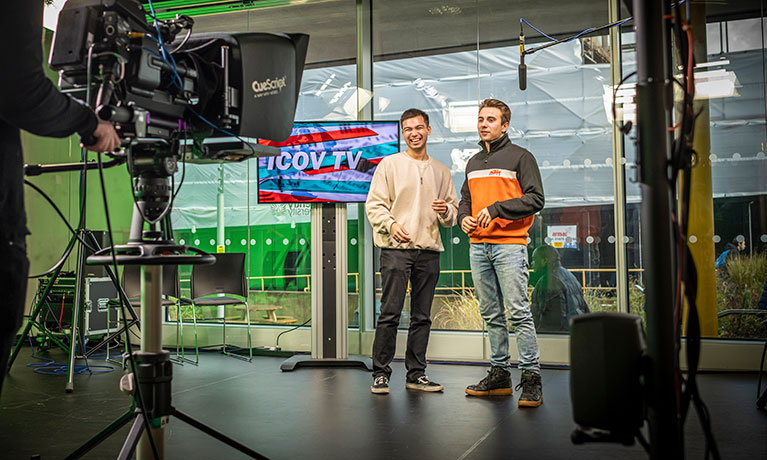
Television Studio
You’ll have access to our on-site television studio The Tank, offering specialist equipment such as large cameras, mixing facilities and fibre-optic wiring throughout.

Phoenix Radio booth
Have you ever wanted to get into a radio booth, or learn how to work a mixing desk? The Students’ Union Phoenix Radio offers you the opportunity to hone your skills.
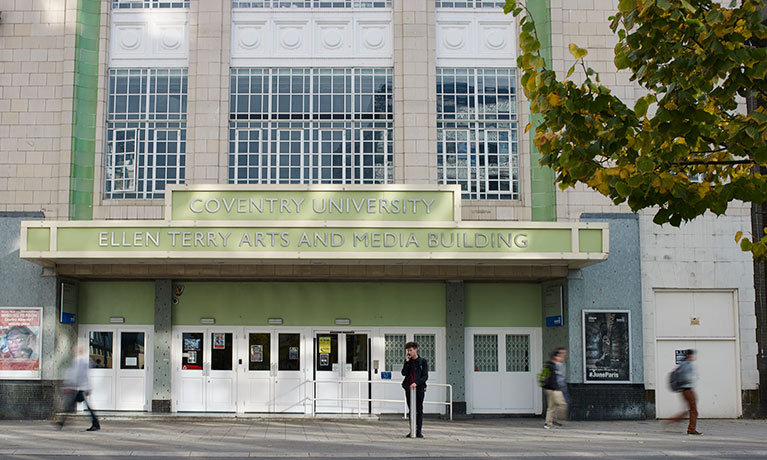
Media Loan Shop
Our media loan shop provides you with access to the equipment and support you need to excel in your studies – from basic audio recorders to professional cameras and expert advice from our technicians.
You’ll use facilities through timetabled teaching, practical activities and relevant independent study. Access may vary by module, activity, capacity, supervision or safety requirements. Access may change or be limited where the University needs to follow public authority guidance, decisions or orders.
How I became Features Editor for IGN
Discover how Coventry University graduate Matt Purslow became the Features Editor for one of the world's largest entertainment news sites.
Read more
Careers and opportunities
On successful completion of the course, you should be a globally and interculturally aware graduate ready to make a dynamic difference in the world.
Possible roles:
- Reporter/Journalist (eg at Coventry Live, Nub News, Waltham Forest Echo)
- Data journalist (eg at The Times and Sunday Times, Radar AI, Finder)
- Video journalist (eg at Caters Media Group)
- Sports writer/Producer (eg at Match, World Soccer, Dub Sports)
- Lifestyle reporter (eg at Jam Press)
- Assistant editor (eg at ITV News)
- Editor/Sub-editor (eg Nub News)
- Broadcast assistant (eg at BBC, Reprezent)
- Presenter (eg at ITV News, Phoenix Radio, Caters Media Group)
- Assistant podcast producer (eg at OG Podcasts)
- Broadcast producer (eg at Sky News, ITV News)
- Journalism co-ordinator (eg at BBC West Midlands)
- Content writer/producer (eg at KG Perazim, CarryBags UK)
- Audience writer (eg at Daily Express)
- Social media executive/manager (eg at BBC, Striker & Radar Podcast)
- Public relations officer/manager
- Press / Communications officer/manager (eg at LID Publishing)
- Corporate Communications officer/manager
- Digital Communications officer (eg at The London Mayor’s Office)
- Internal Communication executive (eg at Pinewood Automotive Intelligence)
- Crisis communications consultant
- Speechwriter
- Media analyst/monitor
- Policy writer/analyst
- Documentary maker
- Media entrepreneur
- Freelance reporter/writer/photographer/producer (eg with BBC CWR, BBC News, ITV News).
The graduate destinations listed above illustrate potential career paths. You may need to gain additional qualifications or practical experience, pass professional examinations, complete training, cover associated costs and meet specific visa or immigration requirements to secure employment in these fields.
Where our graduates work
Previous graduates of the course have gone on to work for a range of broadcasters, newspapers, magazines and online outlets, including the BBC, Sky Sports, ITV, the Telegraph website and Heat magazine.
Further study
You can choose to continue your studies at Coventry University with the Global Journalism and Public Relations MA or one of our other courses:
- Automotive Journalism MA
- Communication, Culture and Media MA
- Film and Media Production MA
- Virtual and Augmented Reality MA
You may be entitled to an alumni discount on your fees if you decide to extend your time with us by progressing from undergraduate to postgraduate study.

Discover Phoenix+
Phoenix+ brings you together with other students to learn, experience and develop essential knowledge and skills. Whatever destination you choose, it's about preparing you for life after university.
Learn more about Phoenix+How to apply
UK students
International students
Disclaimers
You may also like
Coventry University (Coventry)

Media and Communications BA (Hons)
Coventry University (Coventry)

Media Production BA (Hons)
Coventry University (Coventry)