Search
History and Politics BA (Hons)
Study level: Undergraduate
This is the degree where past meets the present to forge tomorrow’s leaders. Join us for a journey through time and power and equip yourself with the tools needed to develop an impactful career.
Course features
Year of entry
Location
Coventry University (Coventry)
Study mode
Full-time
Sandwich
Duration
3 years full-time
4 years sandwich
Course code
LVF1
Start date
September 2027
November 2027
January 2028
March 2028
May 2028
July 2028
Course overview
In a changing world, understanding how the past shaped the present is essential. From the deep roots of modern conflict to the emergence of modern political thought, a deep link exists between our past and our future.
- Past and present: dive into a rich tapestry of topics that explore the links between the past and present. Delve into the art of espionage, the clash of civilisations, the spread of conspiracy theories, the threats facing liberal democracies, and the ideologies that define, divide and unite different societies.
- Project-based learning: work on complex problems, create tangible solutions and develop essential skills such as critical thinking, collaboration and communication. Your assessments are project-based and are designed to replicate the type of work and tasks carried out by history and politics graduates. Throughout your studies, you will produce a portfolio of experience that showcases your expertise and real-world readiness.
- Impact: gain the insights and skills necessary to navigate and influence the political arena while developing a deep understanding of the connections between past and present. Whether your aspirations lie in civil service, media, entrepreneurship, education, or advocacy, this course aims to empower you to make a positive impact on the world.

Rated Gold Overall
Teaching Excellence Framework (TEF) 2023
5 QS Stars for Teaching and Facilities
QS Stars University Ratings
4th Student City in England (Coventry)
QS Best Student Cities Index 2027Why you should study this course
- Interdisciplinary learning: your learning will span two distinct subject areas, allowing you to develop a range of interdisciplinary skills.
- Beyond the written word: build a broad portfolio throughout your studies, from writing op-eds and policy papers to producing short documentary films and other industry-relevant material.
- Customisation: pursue guided and independent projects in your second and third year, exploring topics of your choosing and producing one of a range of work-relevant outputs.
- Employability: this course aims to prepare you for a range of exciting and impactful careers in government and public policy, campaigning and advocacy, research, media, business, social enterprise and law. Understanding the world of politics is the first step to changing it.
- Academic community: work closely with our teaching staff, who will provide a welcoming learning community.
What you'll study
Your first year is shared with students from closely related courses. This approach allows you to learn alongside other disciplines, broaden your perspective and develop strong collaboration skills from the very start.
The common first year also offers flexibility. If you discover a stronger interest in another subject area, you may have the opportunity to transfer to a related course at the end of the year, subject to meeting progression requirements.
Common first year courses:
- History BA (Hons)
- History and Politics BA (Hons)
- International Relations BA (Hons)
- Politics BA (Hons)
- Politics and International Relations BA (Hons)
We regularly review our course content to keep it relevant and current for our students. Consequently, we may update modules to reflect the latest industry standards.
How you'll learn
Teaching on this course takes a global perspective, helping you to develop an international outlook that is sensitive to the changing nature of the world in which we live. Learn through hands-on activities and real-world examples, using the same approaches professionals use in the field. It’s about creating experiences that allow you to apply knowledge, gain confidence and feel prepared for your future career.
Teaching methods may include:
- crisis simulations such as Model United Nations and historic emulations, allowing you to apply knowledge to simulated real-world settings
- interactive lectures that help to make learning relatable, relevant and engaging
- immersive workshops and seminars which help you develop the skills needed for a successful career
- regular ‘course hours’ that allow you to meet your lecturers and course director and build a sense of community within your subject area.
Teaching contact hours
As a full-time undergraduate student, you will study modules totalling 120 credits each academic year. A typical 30-credit module requires 300 hours of study. Study hours are made up of teaching contact hours and guided and independent study.
Teaching hours
Teaching hours may vary, depending on where you are in your studies, but on average, you will have between 12 and 15 teaching and learning hours each week. You will also have the option to attend additional sessions, including time with a progress coach or to meet with staff for advice and feedback. As you progress through your studies, teaching hours may reduce.
Guided and independent study
Throughout your studies, you will be expected to spend time in guided and independent study to make up the required study hours per module. You will be digging deeper into topics, reviewing what you’ve learnt and completing assignments. This can be completed around your personal commitments. As you progress to the end of your studies, you’ll spend more time on independent learning.
Online learning
As an innovative university, we use different teaching methods, including online tools and emerging technologies. So, some of your teaching hours and assessments may be delivered online.
Assessment
This course incorporates new and innovative assessment methods aligned with current industry standards, providing you with practical, real-world skills designed to enhance your professional readiness and career prospects.
Assessment methods may include:
- writing exercises such as essays, reports, policy reviews and briefings
- live simulations and reflective journals
- individual and group presentations
- curation and public communication
- podcasts, academic posters and other media projects.
The Coventry University Group assessment strategy ensures that our courses are fairly assessed and allows us to monitor student progression towards achieving the intended learning outcomes.
International experience opportunities
We are keen to offer an internationalised student experience, so provide opportunities for you to study abroad by maintaining our links with some of the most prestigious European universities, such as the Institute of Cultural Diplomacy (ICD) in Berlin, Science Po in Bordeaux, the University of Heidelberg in Germany and Lund University in Sweden. If you do not speak a foreign language, you could have the opportunity to study for one year at an institution where courses are taught in English.2
Please note that all international experience opportunities may be subject to additional costs, competitive application, availability, and meeting applicable visa and travel requirements, and are therefore not guaranteed.2
Entry requirements
Typical entry requirements:
Fees and funding
| Student | Full-time | Part-time |
|---|---|---|
| UK, Ireland*, Channel Islands or Isle of Man | 2027/28 fees TBC 2026/27 fees: £9,790 per year |
Not available |
| EU | 2027/28 fees TBC 2026/27 fees: £9,790 per year with EU Support Bursary** 2027/28 fees TBC 2026/27 fees: £17,600 per year without EU Support Bursary** |
Not available |
| International | 2027/28 fees TBC 2026/27 fees: £17,600 per year |
Not available |
If you choose to study this course with a professional placement2 or study abroad year, you will need to pay a tuition fee3 to cover your academic support throughout your placement year. Students commencing their professional placement in the academic year 2028/29 will pay £1,575 if they are paying UK fees, or £1,900 if they are paying international fees.
For advice and guidance on tuition fees and student loans visit our Undergraduate Finance page and see The University’s Tuition Fee and Refund Terms and Conditions.
The University will charge the tuition fees that are stated in the table above for the first Academic Year of study. The University will review tuition fees each year. For UK (home) students, if Parliament permits an increase in tuition fees, the university may increase fees for each subsequent year of study in line with any such changes. Note that any increase is expected to be in line with the Retail Price Index (RPI), a UK measure of inflation that tracks changes in the cost of living.
If you choose to study this course with a professional placement or study abroad year, the University will charge the tuition fees stated above for those on a placement during Academic Year 2028/29. The University will review professional placement tuition fees each year. For UK (home) students, the University may increase fees for each subsequent year of study, but such that it will be no more than 5% above RPI.
For international students, we may increase fees each year, but such increases will be no more than 5% above inflation. If you defer your course start date or have to extend your studies beyond the normal duration of the course (e.g. to repeat a year or resit examinations) you may be charged the tuition fees in force at the time you take that additional period of study, and/or in line with any legislative changes that apply at that time.
We offer a range of International scholarships to students all over the world. For more information, visit our International Scholarships page.
Tuition fees cover the cost of your teaching, assessments, facilities and support services. There may be additional costs not covered by this fee such as accommodation and living costs, recommended reading books, stationery, printing and re-assessments should you need them. Find out what's included in your tuition costs.
The following are additional costs not included in the tuition fees:
- Any optional overseas field trips or visits: £400+ per trip.
- Any costs associated with securing, attending or completing a placement (whether in the UK or abroad) which may include costs of travel, accommodation, equipment or uniform required for the placement and any visa-related costs.
*Irish student fees
The rights of Irish residents to study in the UK are preserved under the Common Travel Area arrangement. If you are an Irish student and meet the residency criteria, you can study in England, pay the same level of tuition fees as English students and utilise the Tuition Fee Loan.
**EU Support Bursary
Following the UK's exit from the European Union, we are offering financial support to all eligible EU students who wish to study an undergraduate or a postgraduate degree with us full-time. This bursary will be used to offset the cost of your tuition fees to bring them in line with that of UK students. Students studying a degree with a foundation year with us are not eligible for the bursary.
How do you know if you need to pay UK or international tuition fees?
Facilities
Students will benefit from studying on our well-equipped, modern campus.4
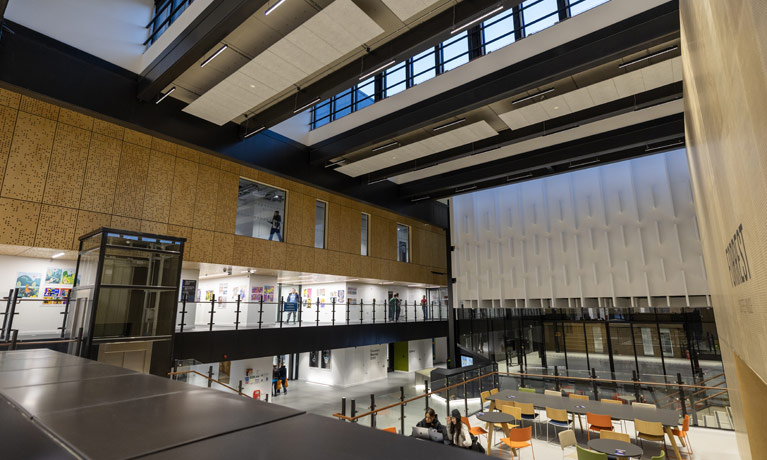
Arts and Society building
The Delia Derbyshire arts and humanities building lies at the heart of our Coventry city campus. This multi-million pound investment in the arts is home to the School of Arts and Creative Industries, and the School of Social Sciences and Humanities.
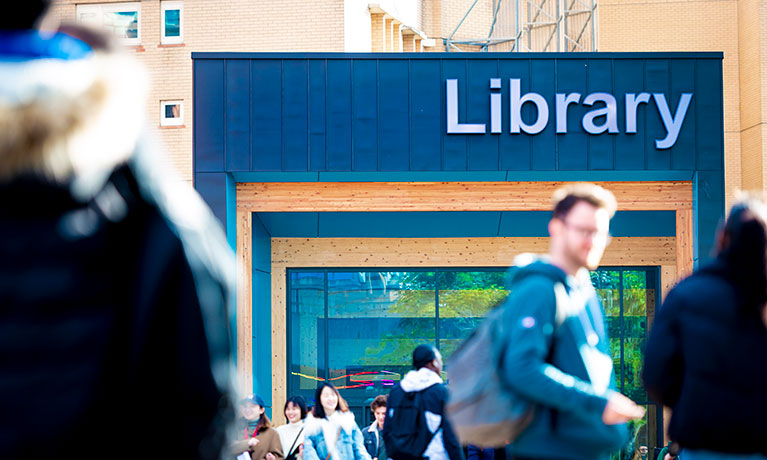
Library
The library offers a team of dedicated academic liaison librarians who provide specialist help and support. You’ll also have access to subject specific databases of journal articles related to criminology and forensics.

Academic support
No matter which degree you’re studying, you’ll find a lot of support on campus, including the Centre of Academic Writing and sigma, which offers mathematics and statistics support.
You’ll use facilities through timetabled teaching, practical activities and relevant independent study. Access may vary by module, activity, capacity, supervision or safety requirements. Access may change or be limited where the University needs to follow public authority guidance, decisions or orders.
Careers and opportunities
Throughout the course, you should develop a broad range of highly valued skills to reflect the changing and dynamic needs of industry, including exceptional communication, project planning, critical thinking and analysis, crisis management, problem-solving, and powerful presentation and listening skills.
On successful completion of the course, you should be a globally and interculturally aware graduate ready to make a dynamic difference in the world. You could find yourself working in the following areas:
- Local government
- Media-based careers
- NGO and charity careers
- Teaching
- International organisations like the EU and UN
- Heritage.
The graduate destinations listed above illustrate potential career paths. You may need to gain additional qualifications or practical experience, pass professional examinations, complete training, cover associated costs and meet specific visa or immigration requirements to secure employment in these fields.
Where our graduates work
Our previous graduates work for a range of organisations, including The Office for Environmental Protection; the Sustainable Energy Association; Parker Meggitt; the Centre for the New Midlands; L’Oréal; British Transport Police (intelligence analyst); Royal British Legion.
Further study
Alternatively, you may decide to pursue postgraduate study opportunities by studying courses such as our History MA. You may be entitled to an alumni discount on your fees if you decide to extend your time with us by progressing from undergraduate to postgraduate study.

Discover Phoenix+
Phoenix+ brings you together with other students to learn, experience and develop essential knowledge and skills. Whatever destination you choose, it's about preparing you for life after university.
Learn more about Phoenix+How to apply
UK students
International students
Disclaimers
You may also like

Coventry University (Coventry)

History BA (Hons)
Coventry University (Coventry)
Politics BA (Hons)
Coventry University (Coventry)