Search
Sports and Exercise Therapy BSc (Hons) with foundation year
Study level: Undergraduate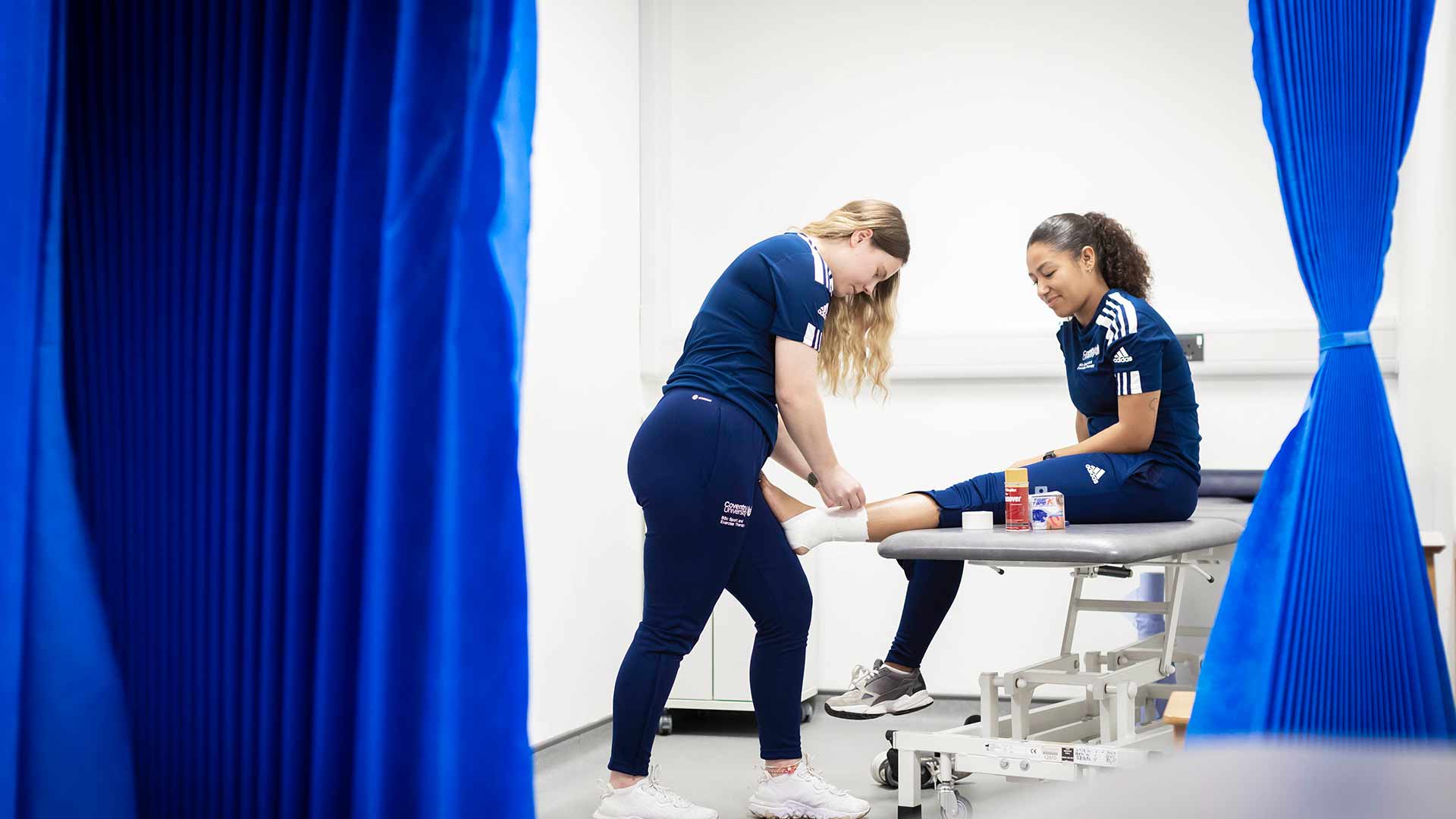
Learn to assess and treat sports injuries by combining exercise physiology with rehabilitation, and develop practical skills through hands-on experience in our on-campus sports therapy clinic.
Course features
Course option
Year of entry
Location
CU Coventry (Coventry) and
Coventry University (Coventry)
Study mode
Full-time
Sandwich
Duration
4 years full-time
5 years sandwich
UCAS codes
BCDF
Start date
March 2026
May 2026
June 2026
September 2026
November 2026
January 2027
March 2027
May 2027
July 2027
Course overview

Our degree with foundation year could be the stepping stone you need to achieve your goals. The foundation year aims to prepare you for degree-level study and is a great way to build the confidence, skills and knowledge needed to succeed on your degree course.
Foundation year
The foundation year course offers an introduction to your chosen subject and helps you develop the necessary skills for degree-level study. In addition, you will also explore key skills such as research methods, scientific fundamentals and promotion techniques.
Degree
Develop the skills and confidence to become an independent sports therapy practitioner, equipped to work in healthcare, sport or private practice. Learn how to support a wide range of clients, from children to older adults, and from beginners to elite athletes.
- Injury prevention and athlete welfare: become proficient in designing, implementing and evaluating injury prevention programmes.
- Clinical examination and assessment: develop knowledge of anatomy, biomechanics, and pathology to assess musculoskeletal conditions, diagnose injuries and determine treatment pathways.
- Therapeutic interventions and rehabilitation: gain hands-on experience in manual therapy, exercise rehabilitation and evidence-based therapeutic interventions for effective injury management.
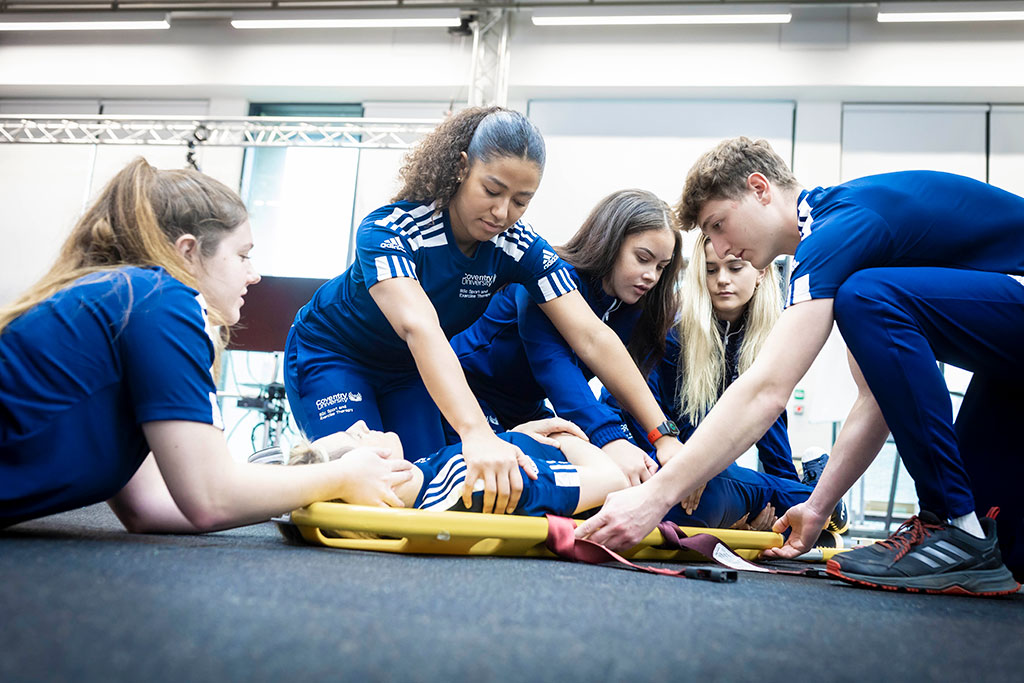
- Emergency and acute care: develop the skills needed for pre-hospital emergency care, including trauma assessment, concussion management and emergency action planning.

Rated Gold Overall
Teaching Excellence Framework (TEF) 2023
5 QS Stars for Teaching and Facilities
QS Stars University Ratings
Top 5 Student City in England (Coventry)
QS Best Student Cities Index 2026Why you should study this course
Foundation year
- Supports you to gain the academic skills required for degree-level study.
- Provides a grounding in key areas of biosciences.
Degree
- Study in our multi-million-pound Alison Gingell building with a specialist sports therapy suite, physiology and biomechanics laboratories and industry-standard equipment4.
- Our dedicated lecturers bring experience from working with international, national and local athletes, and within successful private practices. They are committed to support your development as a future sports and exercise therapist (staff subject to change).
- Previous students have provided support at the World and British Transplant Games and have worked with a variety of elite sports teams including Birmingham City FC, Coventry City Football Club and Coventry Blaze Ice Hockey Team.
- Graduates of this course go on to pursue careers in areas such as elite sports teams, rehabilitation, healthcare and research. This course is designed to help you prepare for opportunities across the sports therapy and health industries.
- This course aims to build a strong base in key scientific disciplines such as anatomy, biomechanics and exercise physiology. This equips you with the knowledge to understand human movement and recovery and to apply it effectively in injury prevention, assessment, treatment and rehabilitation.
Coventry University welcomes Birmingham City Women FC
The squad of 24 players visited the university’s Alison Gingell building for midseason strength testing.
Find out more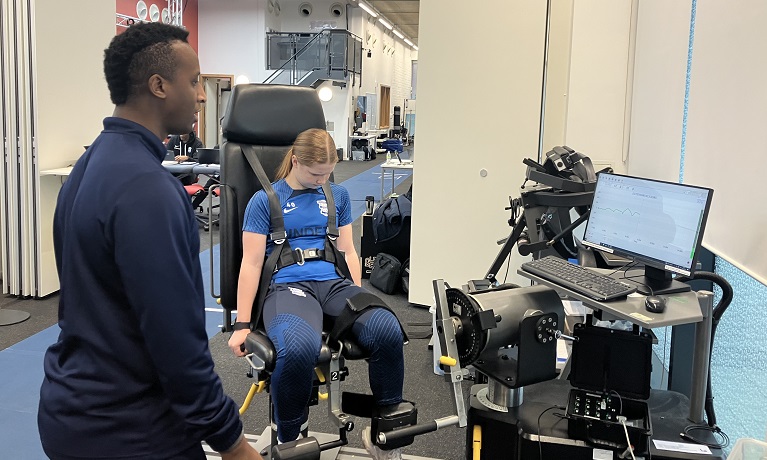
What you'll study
We regularly review our course content, to make it relevant and current for the benefit of our students. For these reasons, course modules may be updated.
How you'll learn
Teaching and learning methods may include:
Entry requirements
Typical entry requirements:
Got higher grades? Have you considered direct entry to the degree without foundation year?
Fees and funding
Foundation year
| Student | Full-time | Part-time |
|---|---|---|
| UK, Ireland*, Channel Islands or Isle of Man | Start dates: Sept 2026-July 2027 £9,790 Start dates: March 2026-July 2026 £9,535 |
Not available |
| International/EU | Not currently available*** | Not available |
Degree
| Student | Full-time | Part-time |
|---|---|---|
| UK, Ireland*, Channel Islands or Isle of Man | £9,790 per year | Not available |
| International/EU | Not currently available*** | Not available |
If you choose to study this course with a professional placement2 or study abroad year, you will need to pay a tuition fee3 to cover your academic support throughout your placement year. As an indication, students commencing their professional placement in the academic year 2028/29 will pay £1,575 if they are paying UK fees, or £1,900 if they are paying international fees. The University will charge the tuition fees stated above for those on a placement during Academic Year 2028/29. The University will review professional placement tuition fees each year. For UK (home) students, the University may increase fees for each subsequent year of study, but such that it will be no more than 5% above inflation.
For advice and guidance on tuition fees and student loans visit our undergraduate finance page and see the university’s Tuition Fee and Refund Terms and Conditions.
The University will charge the tuition fees that are stated in the above table for the first Academic Year of study. The University will review tuition fees each year. For UK (home) students, if Parliament permits an increase in tuition fees, the university may increase fees for each subsequent year of study in line with any such changes. Note that any increase is expected to be in line with inflation.
Tuition fees cover the cost of your teaching, assessments, facilities and support services. There may be additional costs not covered by this fee such as accommodation and living costs, recommended reading books, stationery, printing and re-assessments should you need them. Find out what's included in your tuition costs.
Applies to degree only:
The following are additional costs not included in the tuition fees:
- Any optional overseas field trips or visits: £400+ per trip.
- Any costs associated with securing, attending or completing a placement (whether in the UK or abroad).
Foundation year funding
In order to receive funding for degree with foundation year courses, you will need to complete a four-year degree programme which includes the integrated foundation year, otherwise you may be responsible for your foundation year fees. For further information, please refer to the 'Tuition Fee Loan' details in the 'Funding your undergraduate course' section of our 'Fees and finance' page.
*Irish student fees
The rights of Irish residents to study in the UK are preserved under the Common Travel Area arrangement. If you are an Irish student and meet the residency criteria, you can study in England, pay the same level of tuition fees as English students and utilise the Tuition Fee Loan.
**This course with foundation year is not currently available to international students.
How do you know if you need to pay UK or international tuition fees?
Facilities
Our foundation years are taught at CU Coventry’s Mile Lane building, a short walk from the city centre. You’re part of the university from day one, so during your foundation year you’ll have access to the wider facilities at Coventry University. Once you successfully complete your foundation year, you'll transfer over to studying your chosen degree at Coventry University, where you'll be taught on campus in the relevant academic buildings.
Located on our Mile Lane campus, you will have access to our Library and Learning Services (LLS), fully equipped seminar rooms and IT suites4. You can also take advantage of reading rights in Coventry University’s Lanchester Library, make use of sport centre facilities and receive full membership to Your Students' Union.
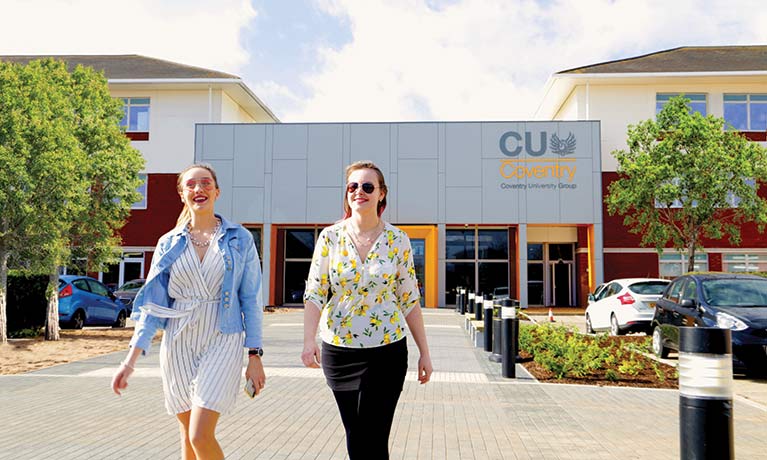
Mile Lane
The campus is home to an on-site library with bookable one-to-one academic writing service and library support sessions, fully equipped seminar rooms, open-access study areas, a café and an IT suite. Our labs contain industry-standard equipment so that you learn using the same equipment as many industry professionals.

The Hub
At The Hub you'll find the Health and Wellbeing Centre, the Students’ Union and Square One (which provides entertainment from quiz nights to live music), the Spirituality and Faith Centre, Tank Studio, Careers Office and a fantastic food court.
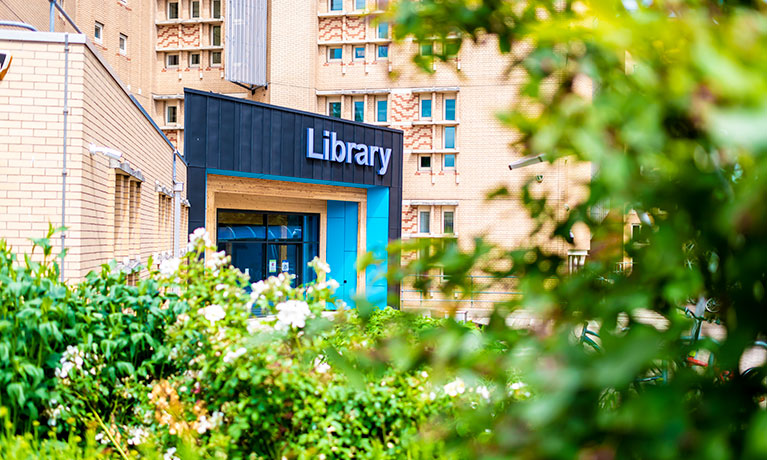
Lanchester Library
Coventry University’s Lanchester Library is usually open 364 days a year, and has 1,400 study spaces, including group and silent areas. It also currently offers more than 550 computers and an additional 120 free-to-loan laptops.
Facilities are subject to availability. Access to some facilities (including some teaching and learning spaces) may vary from those advertised and/or may have reduced availability or restrictions where the university is following public authority guidance, decisions or orders.
The degree is delivered at Coventry University main campus, primarily in the Alison Gingell building4.
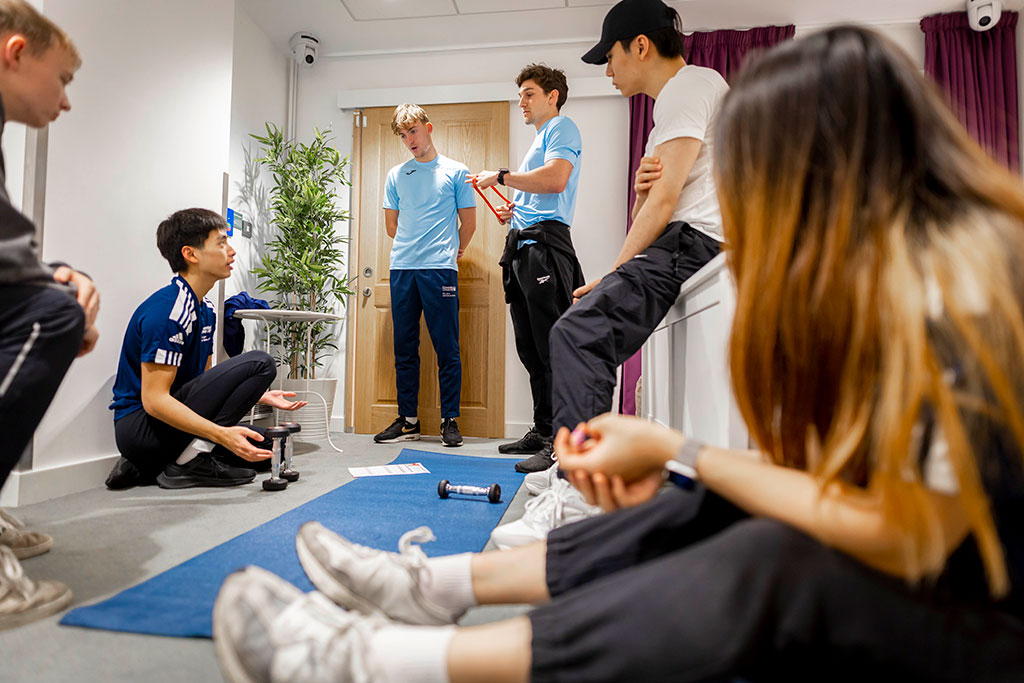
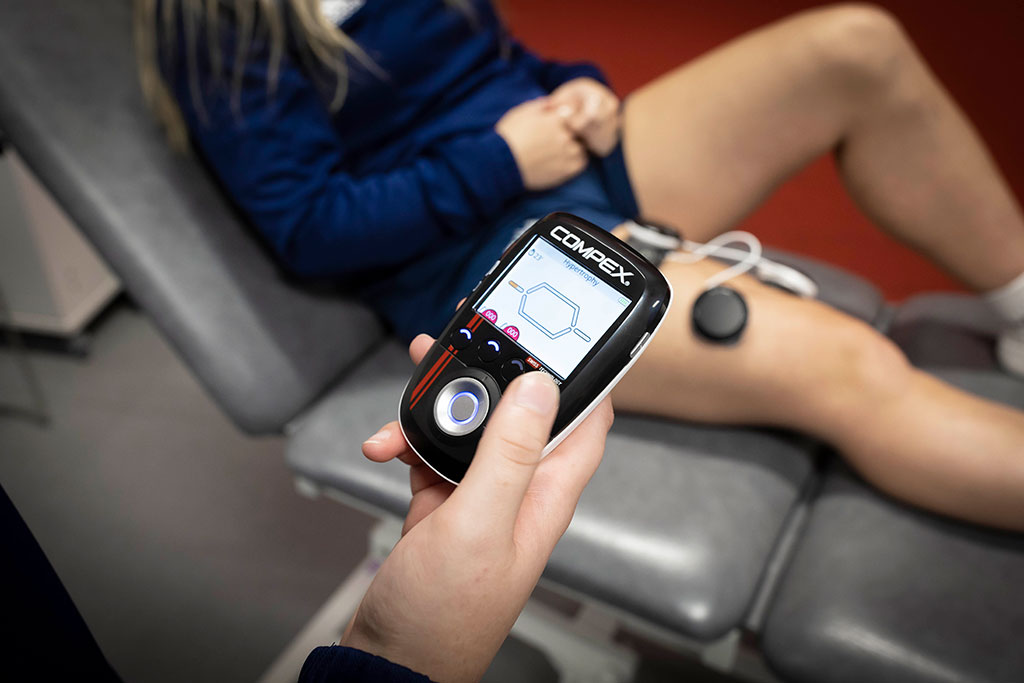
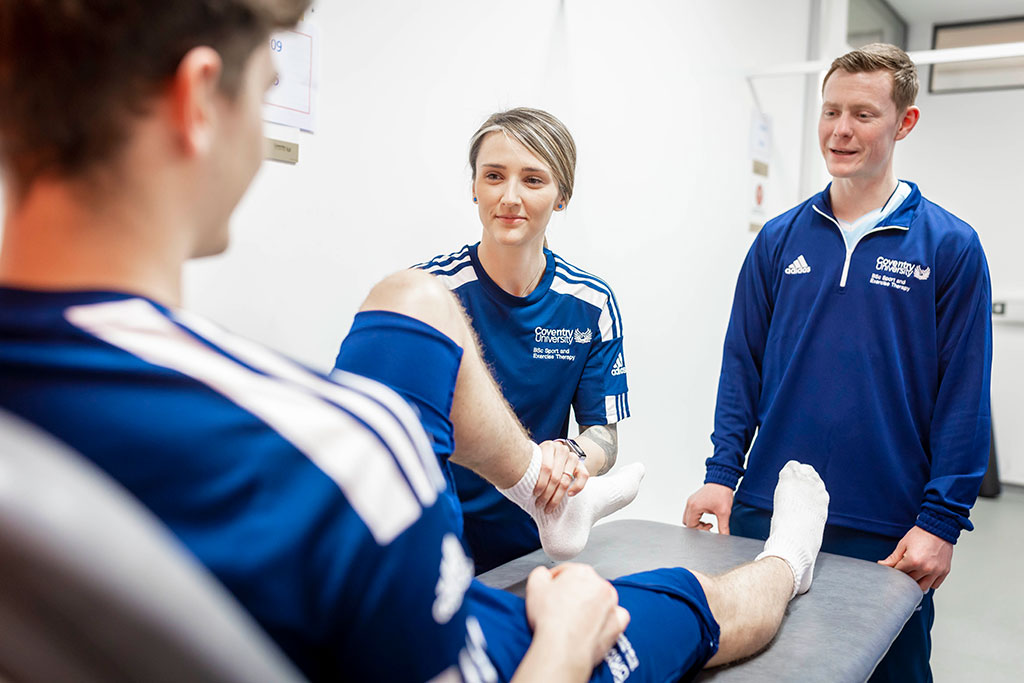
You will benefit from the outstanding facilities for sport and exercise sciences in the purpose-built Alison Gingell building, including sports and exercise therapy clinic, extensive sport and exercise science laboratories, gait analysis track and 3D motion capture software.
Take a virtual tour
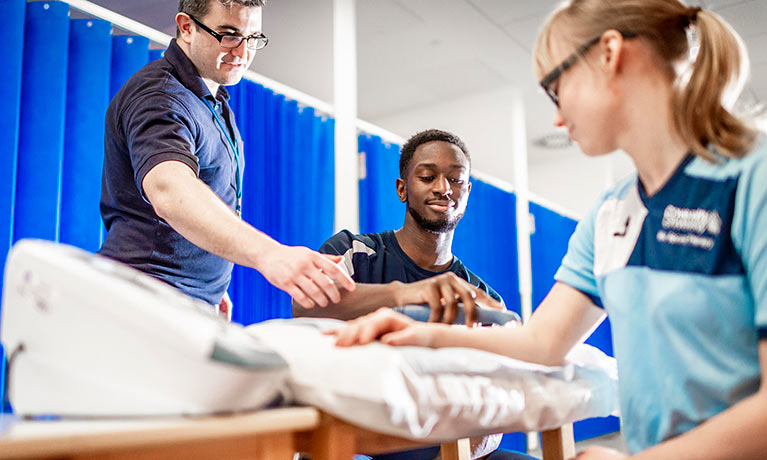
Sports Therapy Clinic
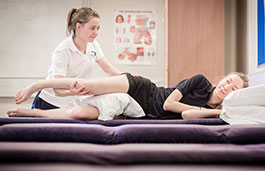
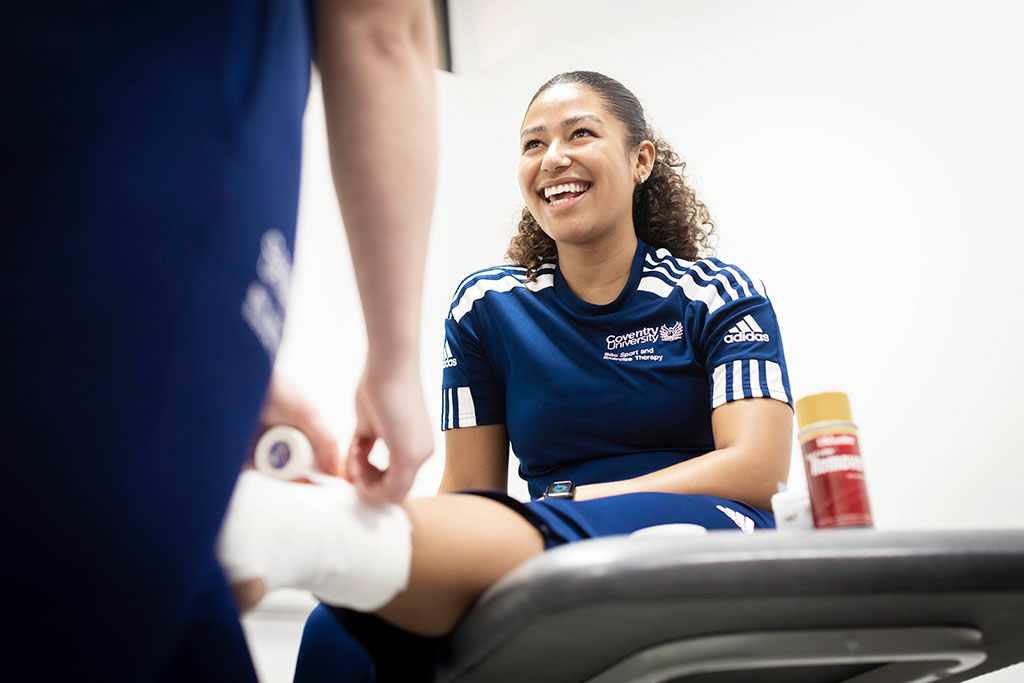
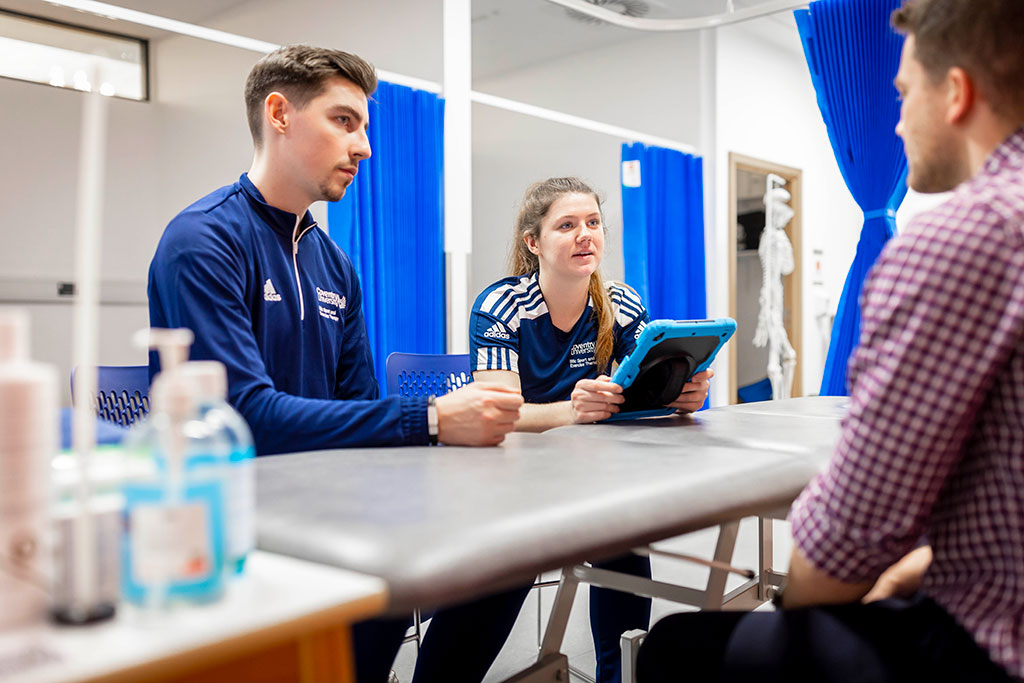
The Sports Therapy Clinic is run by final year Sports Therapy students under the supervision of qualified staff with second year students providing a supervised massage clinic twice a week.
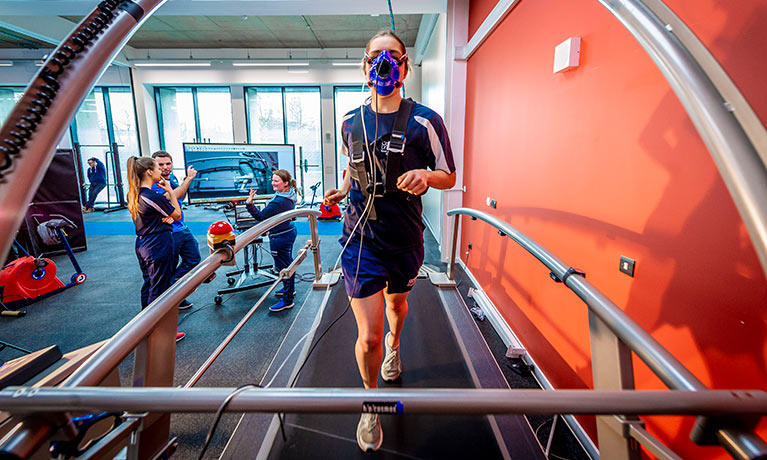
Strength and Conditioning Suite
Our multi-purpose suite is equipped with multiple Olympic lifting platforms, a 20m gait analysis track, an anti-gravity treadmill and a 3D motion capture system.
Facilities are subject to availability. Access to some facilities (including some teaching and learning spaces) may vary from those advertised and/or may have reduced availability or restrictions where the university is following public authority guidance, decisions or orders.
Careers and opportunities
Accreditation from the Society of Sports Therapists means that on graduation you will be qualified to work as a sports therapist with professional teams, clubs or private clinics. Alternatively, you can access appropriate additional training to support professional football and rugby (additional costs, competitive application, availability and meeting any applicable visa requirements may apply).
The course includes a substantial amount of sport science, which can allow you the opportunity to move into other career options upon graduation, such as management or service delivery in sport and leisure centres. If you are more interested in the medical and health applications of exercise science, you could go on to work within cardiac and other rehabilitation teams within the NHS, or with local councils within sports development or exercise for health schemes.
Past graduates from this course have gone on to work at high levels of professional and semi-professional sports such as football, rugby and transplant sport. Other graduates have gone on to lead successful careers within private practice, both owning and working within a range of therapy clinics nationwide and internationally.
A proportion of past graduates have also utilised their skills within the NHS in rehabilitation departments.
Graduates have also continued with postgraduate study on courses, including our:
Where our graduates work
Graduates have also gone to work as clinicians with practices such as Swan Physio Ltd, Body Logic Health, and as sports therapists for teams such as Wasps, Watford FC and Aston Villa FC, Nottingham Forest FC, Kidderminster FC, Peterborough United FC, Coventry United Ladies FC, QPR FC.
The graduate destinations listed above illustrate potential career paths. You may need to gain additional qualifications or practical experience, pass professional examinations, complete training, cover associated costs and meet specific visa or immigration requirements to secure employment in these fields.
Further study
We have a range of postgraduate courses that graduates would be well prepared to progress onto, enabling them to gain specialist skills relating to development of teaching, sporting potential or lifelong physical activity. Our PGCE courses allow entry to teaching careers and our more specialist MSc programmes in sport provide opportunities for graduates to develop skills in a more specific area of study.
You may be entitled to an alumni discount on your fees if you decide to extend your time with us by progressing from undergraduate to postgraduate study.

Discover Phoenix+
Phoenix+ brings you together with other students to learn, experience and develop essential knowledge and skills. Whatever destination you choose, it's about preparing you for life after university.
Learn more about Phoenix+How to apply
This course with foundation year is not available to international students.
UK students
Disclaimers
You may also like
Coventry University (Coventry)
Sports Coaching BSc (Hons)
Coventry University (Coventry)
Sport and Exercise Science BSc (Hons)
Coventry University (Coventry)