Search
Chiropractic MSci
Study level: Undergraduate
Chiropractic is a career focused on supporting patients with musculoskeletal conditions.
Course features
Year of entry
Location
Coventry University (Coventry)
Study mode
Full-time
Duration
4 years full-time
Course code
BC01
Start date
January 2027
May 2027
Course overview
Chiropractic is a career focused on supporting patients with musculoskeletal conditions. You’ll learn how practitioners assess, diagnose and use approaches such as manual therapy, exercise and education to help manage pain, improve function and support patients in working towards meaningful goals.
This course is designed to prepare you for a career in chiropractic practice, building strong therapeutic relationships and delivering impactful, evidence-led care. It aims to support you in meeting the requirements for registration1 with the General Chiropractic Council (GCC), subject to successful completion of the programme and meeting GCC’s criteria, which is required to practise legally as a chiropractor in the UK.
You’ll study a future-focused curriculum, developing the knowledge and skills to work in an evolving healthcare environment. You’ll be supported to build strengths in communication, critical thinking, teamwork and leadership, preparing you to collaborate across professions and explore career pathways in clinical practice, business, research or education.
Key course highlights
- Learn to communicate well, understand what matters to each patient and deliver inclusive, individualised care.
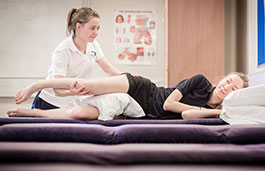
- Build strong human science foundations and hands-on skills in chiropractic assessment, diagnosis and treatment.
- Develop as a reflective, ethical professional able to evaluate innovations, address global healthcare challenges and use research to improve care.

Rated Gold Overall
Teaching Excellence Framework (TEF) 2023
5 QS Stars for Teaching and Facilities
QS Stars University Ratings
4th Student City in England (Coventry)
QS Best Student Cities Index 2027Why you should study this course
- Recognised route to professional registration - This course is recognised1 by the General Chiropractic Council (GCC). Successful completion of this programme allows you to apply for registration with the GCC (subject to meeting GCC’s criteria), which is required to practise legally as a chiropractor in the UK.
- One-module-at-a-time structure - Focus on one 30-credit module for six weeks, followed by an assessment week. This approach allows you to build your knowledge step by step, completing your assessments with support and feedback before moving on.
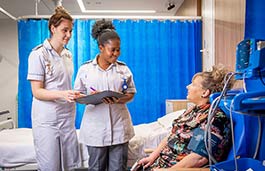
- Immersive clinical learning and placements - Gain extensive hands on, real-world experience in purpose built clinical and simulation facilities.4 From your first year, you’ll learn through immersive practice placements and practical teaching, culminating in a 12-month on-site clinical placement 2,5 in our fully equipped chiropractic clinic in the final year.
- Critical thinking for clinical practice - Building upon digital skills and research literacy, you will learn to scrutinise and challenge evidence, conduct your own research study and embed the use of critically appraised evidence throughout your practice.
- Outwards-looking and future-facing - This course explores current developments, challenges and approaches in healthcare from a global perspective. You’ll receive support to understand the chiropractor’s role within healthcare systems, and to consider how you can contribute to patient care and professional practice.
Accreditation and professional recognition

General Chiropractic Council (GCC)
The Chiropractic MSci programme is currently recognised by the General Chiropractic Council (GCC)1. Successful completion of a GCC-recognised programme allows you to apply for registration with the GCC, which is required to practise legally as a chiropractor in the UK. Recognition indicates that the programme aligns with the GCC’s Education Standards. This helps ensure your education and training develop the knowledge, skills, and professional competencies required for safe and effective practice. Please note that you must meet all GCC registration requirements in place at the time of application. These requirements may change, so you should check the GCC website for full details and the most up-to-date information.
What you'll study
Study human anatomy, physiology and pathology alongside musculoskeletal assessment, diagnosis and management. Develop skills in manual therapy, rehabilitation and person-centred care.
Learn to apply research evidence, think critically and practise ethically within a regulated healthcare context. Clinical learning is embedded throughout, culminating in a final-year supervised placement2,5 working with a supervised patient caseload to develop your clinical skills and professional practice.
We regularly review our course content to keep it relevant and current for our students. Consequently, we may update modules to reflect the latest industry standards.
How you'll learn
Teaching and learning methods may include:
- interactive seminars
- case-based learning in groups
- problem-based learning activities
- practical clinical skills workshops
- simulation-based learning
- supervised clinical placements2,5 (including a final-year on-site clinic placement)
- group learning and peer-assisted learning activities
- independent research project supervision.
Teaching contact hours
As a full-time undergraduate student, you will study modules totalling 120 credits each academic year. A typical 30-credit module requires 300 hours of study. Study hours are made up of teaching contact hours and guided and independent study.
Teaching hours
Teaching hours may vary, depending on where you are in your studies, but on average, you will have between 10 and 20 teaching and learning hours each week. You will also have the option to attend additional sessions, including time with a progress coach or to meet with staff for advice and feedback. As you progress through your studies, teaching hours may reduce.
Guided and independent study
Throughout your studies, you will be expected to spend time in guided and independent study to make up the required study hours per module. You will be digging deeper into topics, reviewing what you’ve learnt and completing assignments. This can be completed around your personal commitments. As you progress to the end of your studies, you’ll spend more time on independent learning.
Online learning
As an innovative university, we use different teaching methods, including online tools and emerging technologies. So, some of your teaching hours and assessments may be delivered online.
Practice-based learning
Practice-based learning is a vital part of this degree, where you develop and apply your skills in real-world settings, supporting you to work towards General Chiropractic Council (GCC) requirements, and giving you sufficient confidence and competence to care for patients after you graduate. In years 1-3, practice placements2,5 may be simulated, virtual, or may take place on- or off-site.
In your final year, you will manage your own case-load of patients as you attend your 400-hour on-site clinical placement for up to 2 days per week across 12 months*, enabling you to progressively develop your experience, ability to autonomously care for patients and preparedness for practice upon graduation, while building your final assessment portfolio. At the end of your placement, competence will be assessed to the level required to meet the proficiency standard required by the General Chiropractic Council’s Code of Professional Practice.
All clinical placements have an expected attendance requirement of 100%.
*You will be able to request leave from your clinical placement of up to 10 weeks (pro rata) across the year (including any clinic closure dates). Leave allocation will be decided on a rota to maintain adequate clinic provision for patient care, which may not align to university semester breaks.
Satisfactory health clearance and enhanced criminal record disclosure are required. As part of the health clearance checks, you will be required to provide information about your immunity and vaccination status. The information you provide will be used to determine your eligibility to undertake placement(s). Placements are provided at the placement provider’s discretion. The University is, therefore, unable to guarantee the provision of placements or the location and type of placement offered. Clinical placements may require some local travel within the Midlands area. You will be responsible for arranging and funding this.
Assessment
This course will be assessed using a variety of methods designed to reflect real clinical practice and professional standards, which will vary depending upon the module.
Assessment methods may include:
- online time-constrained assessments (MCQs)
- practical assessments such as Objective Structured Clinical Examinations (OSCEs) and Objective Structured Long Examination Records (OSLERs)
- written assignments and structured portfolios
- case-based oral examinations
- practical demonstrations and viva assessments
- team-based project work with presentation
- an independent research project.
The Coventry University Group assessment strategy ensures that our courses are fairly assessed and allows us to monitor student progression towards achieving the intended learning outcomes.
Entry requirements
Typical entry requirements:
Fees and funding
| Student | Full-time | Part-time |
|---|---|---|
| UK, Ireland*, Channel Islands or Isle of Man | £9,790 per year | Not available |
| EU | £9,790 per year with EU Support Bursary** £20,800 per year without EU Support Bursary** |
Not available |
| International | £20,800 per year | Not available |
For advice and guidance on tuition fees and student loans visit our Undergraduate Finance page and see The University’s Tuition Fee and Refund Terms and Conditions.
The University will charge the tuition fees that are stated in the above table for the first Academic Year of study. The University will review tuition fees each year. For UK (home) students, if Parliament permits an increase in tuition fees, the university may increase fees for each subsequent year of study in line with any such changes. Note that any increase is expected to be in line with inflation.
For international students, we may increase fees each year, but such increases will be no more than 5% above inflation. If you defer your course start date or have to extend your studies beyond the normal duration of the course (e.g. to repeat a year or resit examinations) the University reserves the right to charge you fees at a higher rate and/or in accordance with any legislative changes during the additional period of study.
We offer a range of International scholarships to students all over the world. For more information, visit our International Scholarships page.
Tuition fees cover the cost of your teaching, assessments, facilities and support services. There may be additional costs not covered by this fee such as accommodation and living costs, recommended reading books, stationery, printing and re-assessments should you need them. Find out what's included in your tuition costs.
The following are additional costs not included in the tuition fees:
- Any optional overseas field trips or visits: £400+ per trip.
- Any costs associated with securing, attending or completing a placement (whether in the UK or abroad).
*Irish student fees
The rights of Irish residents to study in the UK are preserved under the Common Travel Area arrangement. If you are an Irish student and meet the residency criteria, you can study in England, pay the same level of tuition fees as English students and utilise the Tuition Fee Loan.
**EU Support Bursary
Following the UK's exit from the European Union, we are offering financial support to all eligible EU students who wish to study an undergraduate or a postgraduate degree with us full-time. This bursary will be used to offset the cost of your tuition fees to bring them in line with that of UK students. Students studying a degree with a foundation year with us are not eligible for the bursary.
How do you know if you need to pay UK or international tuition fees?
Facilities
Fully equipped on-campus chiropractic clinic, supported by chiropractic clinicians who bring valuable experience from patient care, research and education.
You’ll use facilities through timetabled teaching, practical activities and relevant independent study. Access may vary by module, activity, capacity, supervision or safety requirements. Access may change or be limited where the University needs to follow public authority guidance, decisions or orders.
Careers and opportunities
Graduating from this course could lead to a career as a registered chiropractor and regulated healthcare professional (subject to General Chiropractic Council registration – please see the Accreditation and Recognition section for more information).
This course is designed to enable you to pursue a variety of career pathways. Following graduation and registration, you could work in a private musculoskeletal practice, in a team in a chiropractic or multidisciplinary setting, or establish your own practice. With additional postgraduate experience or training, you can develop a specialist area of practice (for example, sports chiropractic or paediatric care), or pursue leadership, academic or research careers within musculoskeletal healthcare.
Upon successful completion, you should be able to:
- apply for registration with the General Chiropractic Council (subject to meeting their requirements)
- practise safely and autonomously as a registered chiropractor
- assess, diagnose and manage musculoskeletal and related conditions
- deliver person-centred, evidence-informed care
- lead, collaborate and contribute to healthcare service improvement
- critically appraise and apply research to professional practice.
The graduate destinations listed above illustrate potential career paths. You may need to gain additional qualifications or practical experience, pass professional examinations, complete training, cover associated costs and meet specific visa or immigration requirements to secure employment in these fields.

Discover Phoenix+
Phoenix+ brings you together with other students to learn, experience and develop essential knowledge and skills. Whatever destination you choose, it's about preparing you for life after university.
Learn more about Phoenix+How to apply
UK students
International students
Disclaimers
You may also like
Coventry University (Coventry)
Physiotherapy BSc (Hons)
Coventry University (Coventry)