Search
Human Biosciences BSc (Hons)
Study level: Undergraduate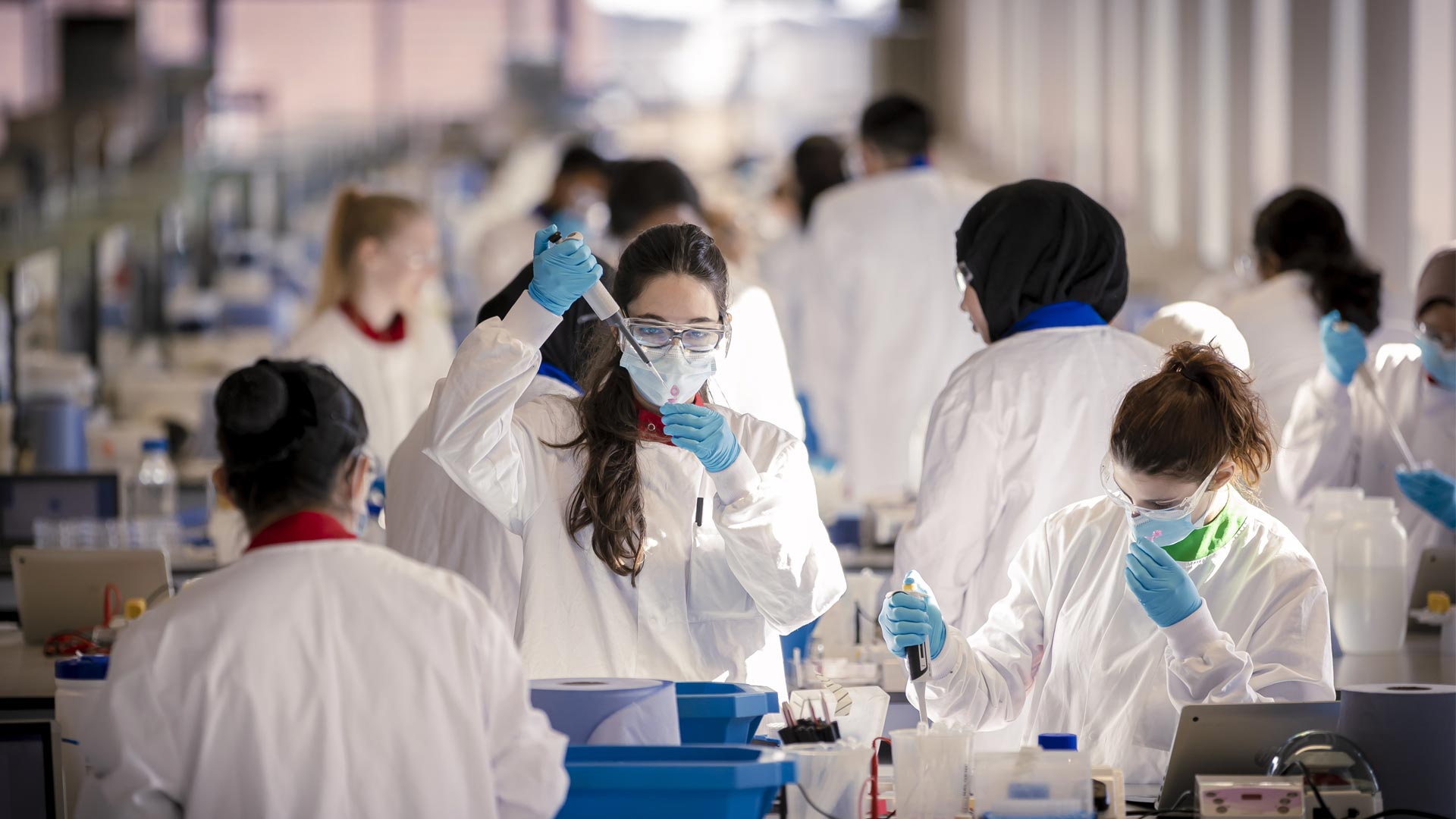
Explore the complexities of human health and disease through genomics, neurophysiology and microbiology. Gain hands-on laboratory experience and prepare for a range of careers in the bioscience and healthcare sectors.
Course features
Course option
Year of entry
Location
Coventry University (Coventry)
Study mode
Full-time
Sandwich
Duration
3 years full-time
4 years sandwich
UCAS codes
C110
Start date
September 2027
November 2027
January 2028
March 2028
May 2028
July 2028
Course overview
This course explores human health and disease, from molecules to global health trends and examines how the human body responds to an ever-changing environment.
- Tackle global health challenges: explore the science behind human health and disease, from molecules to populations, and develop the skills to address pressing global health issues.
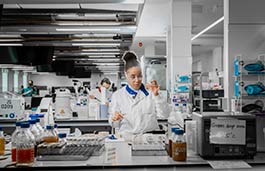
- Hands-on, real-world experience: master advanced lab techniques in our biosciences super-lab, model human physiology in sophisticated simulation spaces, and engage with real-world research and case studies4.
- Prepare for a career in bioscience: gain the scientific knowledge, critical thinking skills and practical experience valued by employers to prepare for career paths in research, healthcare and industry.

Rated Gold Overall
Teaching Excellence Framework (TEF) 2023
5 QS Stars for Teaching and Facilities
QS Stars University Ratings
4th Student City in England (Coventry)
QS Best Student Cities Index 2027Why you should study this course
- Practical, contemporary facilities:4 the SuperLab provides access to advanced equipment, allowing you to master contemporary techniques like qPCR, cell culture and flow cytometry.
- Student-centred active learning: this course will be delivered through a blend of hands-on laboratory-based sessions, interactive lectures and discursive workshops. Apply your knowledge and skills to an independent research project in the final year.
- Common first year: collaborate and work alongside students doing similar courses to expand your knowledge and exposure to other subject areas and professions.
- Cutting-edge science: explore the science behind emerging threats like antimicrobial resistance, challenges of an ageing population and how genomic science is revolutionising our understanding of disease.
- Placement opportunities:2 apply for either a one-year professional training placement, or an international experience year to enhance learning and gain a competitive advantage in the workplace after graduation.
Our award-winning green SuperLab
With space for over 200 students and packed full of industry-standard equipment, the Coventry University SuperLab is an amazing place to learn, experiment and discover. Find out what we’re doing in our SuperLab to make it greener and reduce our waste and carbon emissions.
What you'll study
We regularly review our course content to keep it relevant and current for our students. Consequently, we may update modules to reflect the latest industry standards.
How you'll learn
Throughout your studies, you will have the opportunity to develop a good knowledge of a range of disciplines and how they apply to human health and disease, including both theory and lab-based classes.
You will have the opportunity to undertake challenging lab and non-lab-based independent research projects, dealing with important life science research questions, which in the past have tackled, for example, the antimicrobial activity of essential oils, cinnamon and ginger against drug-resistant clinical pathogens or the effect of sleep deprivation on physiological and mental health in healthy young adults.
Teaching and learning methods may include:
- hands-on laboratory-based sessions
- interactive lectures
- interactive formats such as quizzes
- discussions
- presentations
- case studies
- self-guided and directed study.
Teaching contact hours
As a full-time undergraduate student, you will study modules totalling 120 credits each academic year. A typical 30-credit module requires 300 hours of study. Study hours are made up of teaching contact hours and guided and independent study.
Teaching hours
Teaching hours may vary, depending on where you are in your studies, but on average, you will have between 12 and 15 teaching and learning hours each week. You will also have the option to attend additional sessions, including time with a progress coach or to meet with staff for advice and feedback. As you progress through your studies, teaching hours may reduce.
Guided and independent study
Throughout your studies, you will be expected to spend time in guided and independent study to make up the required study hours per module. You will be digging deeper into topics, reviewing what you’ve learnt and completing assignments. This can be completed around your personal commitments. As you progress to the end of your studies, you’ll spend more time on independent learning.
Online learning
As an innovative university, we use different teaching methods, including online tools and emerging technologies. So, some of your teaching hours and assessments may be delivered online.
Assessment
Assessment methods align to transferable industry skills, providing you with practical, real-world skills designed to enhance your professional readiness and career prospects.
Assessment methods may include:
- online tests
- essays and critical reviews
- pitches
- case studies
- proposals
- portfolios
- group work for presentations, lab projects and reports
- individual presentations
- laboratory reports
- lab skill competency
- posters and other information resources (e.g. videos, websites, briefing papers)
- independent research project.
The Coventry University Group assessment strategy ensures that our courses are fairly assessed and allows us to monitor student progression towards achieving the intended learning outcomes.
Entry requirements
Typical entry requirements:
Not got the required grades? We offer this degree with an integrated foundation year.
Fees and funding
| Student | Full-time | Part-time |
|---|---|---|
| UK, Ireland*, Channel Islands or Isle of Man | 2027/28 fees TBC 2026/27 fees: £9,790 per year |
Not available |
| EU | 2027/28 fees TBC 2026/27 fees: £9,790 per year with EU Support Bursary** 2027/28 fees TBC 2026/27 fees: £20,800 per year without EU Support Bursary** |
Not available |
| International | 2027/28 fees TBC 2026/27 fees: £19,200 per year |
Not available |
If you choose to study this course with a professional placement2 or study abroad year, you will need to pay a tuition fee3 to cover your academic support throughout your placement year. Students commencing their professional placement in the academic year 2028/29 will pay £1,575 if they are paying UK fees, or £1,900 if they are paying international fees.
For advice and guidance on tuition fees and student loans visit our Undergraduate Finance page and see The University’s Tuition Fee and Refund Terms and Conditions.
The University will charge the tuition fees that are stated in the table above for the first Academic Year of study. The University will review tuition fees each year. For UK (home) students, if Parliament permits an increase in tuition fees, the university may increase fees for each subsequent year of study in line with any such changes. Note that any increase is expected to be in line with the Retail Price Index (RPI), a UK measure of inflation that tracks changes in the cost of living.
If you choose to study this course with a professional placement or study abroad year, the University will charge the tuition fees stated above for those on a placement during Academic Year 2028/29. The University will review professional placement tuition fees each year. For UK (home) students, the University may increase fees for each subsequent year of study, but such that it will be no more than 5% above RPI.
For international students, we may increase fees each year, but such increases will be no more than 5% above inflation. If you defer your course start date or have to extend your studies beyond the normal duration of the course (e.g. to repeat a year or resit examinations) you may be charged the tuition fees in force at the time you take that additional period of study, and/or in line with any legislative changes that apply at that time.
We offer a range of International scholarships to students all over the world. For more information, visit our International Scholarships page.
Tuition fees cover the cost of your teaching, assessments, facilities and support services. There may be additional costs not covered by this fee such as accommodation and living costs, recommended reading books, stationery, printing and re-assessments should you need them. Find out what's included in your tuition costs.
The following are additional costs not included in the tuition fees:
- Any optional overseas field trips or visits: £400+ per trip.
- Any costs associated with securing, attending or completing a placement (whether in the UK or abroad) which may include costs of travel, accommodation, equipment or uniform required for the placement and any visa-related costs.
*Irish student fees
The rights of Irish residents to study in the UK are preserved under the Common Travel Area arrangement. If you are an Irish student and meet the residency criteria, you can study in England, pay the same level of tuition fees as English students and utilise the Tuition Fee Loan.
**EU Support Bursary
Following the UK's exit from the European Union, we are offering financial support to all eligible EU students who wish to study an undergraduate or a postgraduate degree with us full-time. This bursary will be used to offset the cost of your tuition fees to bring them in line with that of UK students. Students studying a degree with a foundation year with us are not eligible for the bursary.
How do you know if you need to pay UK or international tuition fees?
Facilities
Your studies will be centred in high-specification learning environments that benefit from extensive social learning facilities, well-appointed laboratories, industry-standard equipment, lecturing facilities and classrooms, facilitating our innovative teaching methods across a diverse suite of courses.
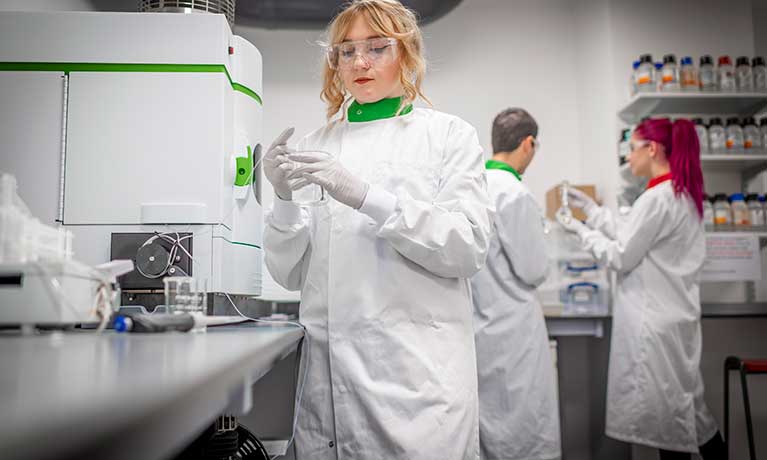
Alison Gingell Building
The Alison Gingell Building is home to microbiology, cell culture, molecular biology/genetics, biochemistry and forensic science laboratories, allowing you to work in a replicated professional environment from day one.
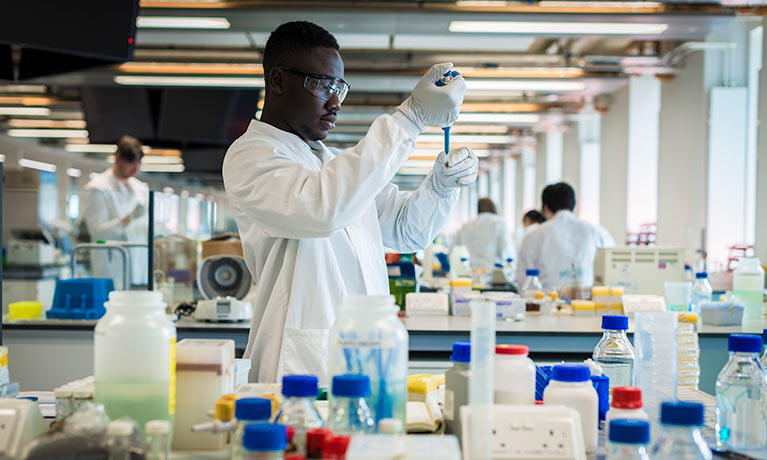
SuperLab
Our SuperLab has facilities for cell culture and equipment for microscopy, DNA, RNA and protein analysis, and forensic testing.
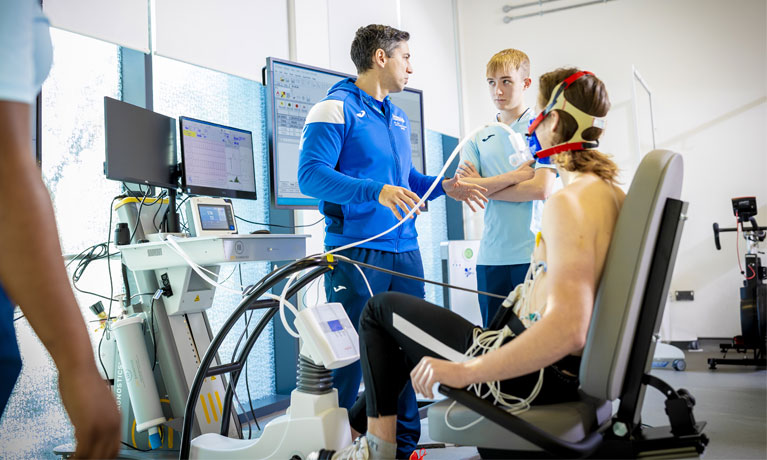
Physiology suite
Separate physiology and health laboratory facilities enable the measurement of physiological parameters such as heart rate, blood pressure, lung function test and neuromuscular functioning.
You’ll use facilities through timetabled teaching, practical activities and relevant independent study. Access may vary by module, activity, capacity, supervision or safety requirements. Access may change or be limited where the University needs to follow public authority guidance, decisions or orders.
Careers and opportunities
This dynamic field equips you with a unique blend of scientific knowledge, critical thinking skills, and practical experience that are highly valued in today's competitive job market.
You could embark on a rewarding career in the thriving bioscience industry, contributing to cutting-edge research and development at leading pharmaceutical companies, biotechnology firms, or medical research institutions. Alternatively, you could pursue a career in healthcare, working in hospitals, clinics, or public health organisations, making a direct impact on patient care.
Beyond traditional scientific roles, your strong analytical, problem-solving, and communication skills should also equip you for successful careers in areas such as data science and analytics, project management, and science communication and education.
Where our graduates work
Previous graduates have gone on to careers in conducting clinical trials for drug companies, as research assistants in laboratories in universities and various roles within industry, such as marketing assistants and medical and scientific representatives for companies. Others have used their qualifications to progress into teaching careers, as well as postgraduate study to obtain MSc, MPhil and PhD qualifications. Our graduates have gone on to work for companies including:
- Binding Site
- Rosalind Franklin Laboratory
- SciBite, Pharmaron
- Weetabix
- Campden BRI
- GSK
- Prime Global
- AS&K communications
- Thermo Fisher Scientific.
The graduate destinations listed above illustrate potential career paths. You may need to gain additional qualifications or practical experience, pass professional examinations, complete training, cover associated costs and meet specific visa or immigration requirements to secure employment in these fields.
Further study
The course is an excellent foundation for further postgraduate studies leading to an MSc or PhD. We run a range of related taught MSc courses that allow our graduates to specialise in the area that they have a passion for and would like to pursue a career in.

Discover Phoenix+
Phoenix+ brings you together with other students to learn, experience and develop essential knowledge and skills. Whatever destination you choose, it's about preparing you for life after university.
Learn more about Phoenix+How to apply
UK students
International students
Disclaimers
You may also like
Coventry University (Coventry)

Biomedical Science BSc (Hons)
Coventry University (Coventry)

Pharmacology BSc (Hons)
Coventry University (Coventry)