Search
Architectural Technology BSc (Hons) / Architectural Design and Technology MSci with foundation year
Study level: Undergraduate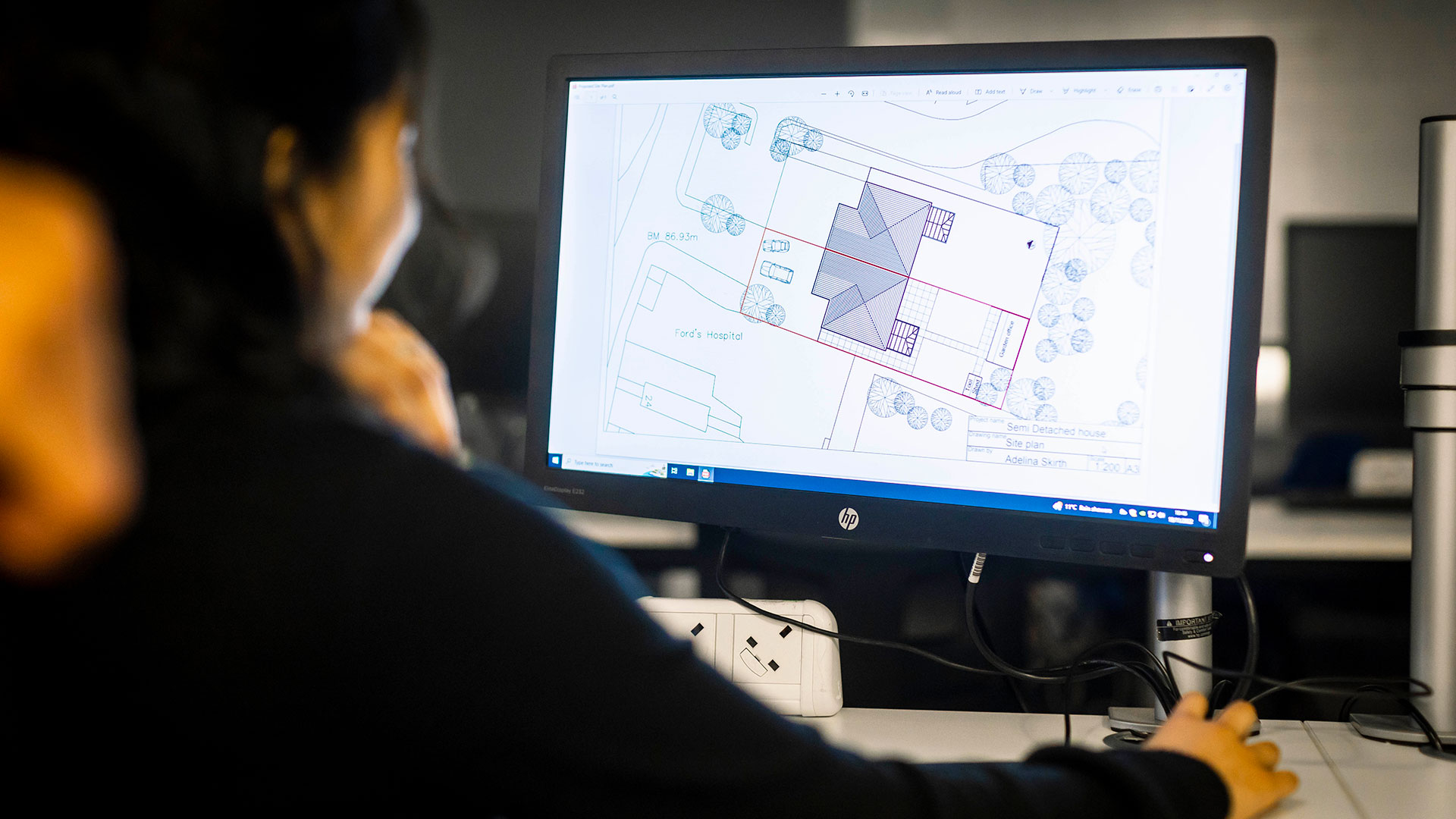
Bring your design ideas to life on this practical course that blends architecture, technology, and sustainability. Use creativity, innovation, and digital tools to tackle projects inspired by real-world design challenges.
Course features
Course option
Year of entry
Location
CU Coventry (Coventry) and
Coventry University (Coventry)
Study mode
Full-time
Sandwich
Duration
4 years full-time
5 years full-time (study abroad or work placement)
UCAS codes
K1DF
Start date
March 2026
May 2026
June 2026
September 2026
November 2026
January 2027
March 2027
May 2027
July 2027
Course overview

Our degree with foundation year could be the stepping stone you need to achieve your goals. The foundation year aims to prepare you for degree-level study and is a great way to build the confidence, skills and knowledge needed to succeed on your degree course. The degree with foundation year is only available for the BSc option.
Foundation year
Learn to create innovative designs that blend aesthetics with advanced building systems, materials and technology to support high performance and functionality.
Degree
This course blends design, technology and construction, with a focus on sustainable practice. Gain practical experience using advanced tools such as Building Information Modelling (BIM)4, while learning from experienced staff and benefiting from industry-informed content. This course aims to support your development for roles in architectural technology across consultancy, development and contractor-based settings.Acquire industry-aligned digitised skills in architectural technology.
- Gain practical experience through project-based learning and industry collaborations.
- Promote sustainability by emphasising eco-friendly design and specification practices.
- Access to advanced facilities and technologies including a design and model-making studio, BIM and the Simulation Centre.4

Rated Gold Overall
Teaching Excellence Framework (TEF) 2023
5 QS Stars for Teaching and Facilities
QS Stars University Ratings
Top 5 Student City in England (Coventry)
QS Best Student Cities Index 2026Why you should study this course
Foundation year
- Supports you to gain the academic skills required for degree-level study.
- Provides a grounding in key areas of engineering.
Degree
- Practical experience: engage in real-world projects and benefit from our strong industry connections, providing you with valuable hands-on learning and networking opportunities.4
- Advanced facilities: access industry-standard laboratories and use cutting-edge tools, including BIM and 3D printing technology.4
- Expert instruction: learn from experienced professionals and academic staff who are leaders in the field of architectural technology.
- Career prospects: prepare for various roles in the architectural and construction industries, such as architectural technologist, BIM coordinator, construction design manager, technical director and sustainability consultant.
Accreditation and professional recognition

Chartered Institute of Architectural Technologists (CIAT)
The Architectural Technology BSc (Hons) course is accredited by the Chartered Institute of Architectural Technologists (CIAT) up to and including September 2029 intakes.
CIAT is a dynamic, forward-thinking and inclusive global membership qualifying body for Architectural Technology. CIAT represents those practising and studying within the discipline and profession. It is a membership organisation representing 10,000 members and affiliates within the discipline who wish to be professionally recognised.
CIAT Accreditation ensures that the programme has been assessed in terms of content, structure, resources and has met the Institute’s requirements. The benefit of studying on a CIAT Accredited Programme is that it will support individuals wishing to become Chartered Architectural Technologists.
What you'll study
This integrated master's combines technical design with creative problem-solving, preparing you for architectural practice. You'll develop expertise in sustainable construction, digital modelling (BIM), and material innovation while engaging with historical and theoretical contexts. Through studio projects and industry collaborations, gain hands-on experience in designing resilient, user-centered spaces.
We regularly review our course content, to make it relevant and current for the benefit of our students. For these reasons, course modules may be updated.
How you'll learn
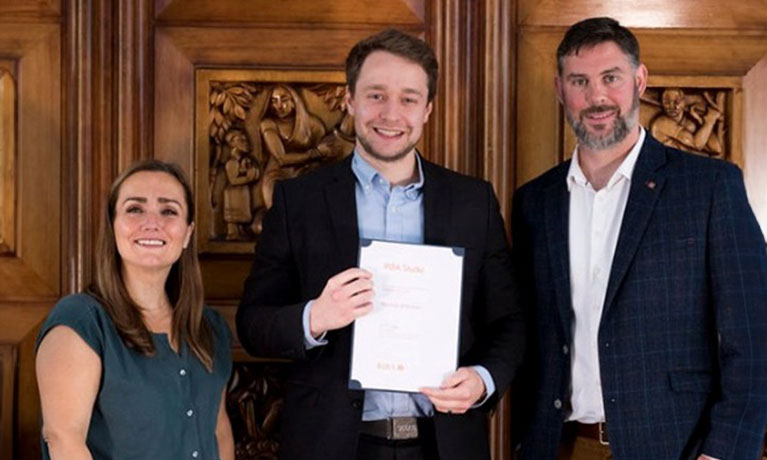
Matthew Willemsen - Made in Coventry
Matthew looks back on his time at Coventry University as the place where his first serious architectural ambitions began. While studying, he threw himself into student life, setting up the Technical Architecture Society.
Read articleEntry requirements
Typical entry requirements:
Got higher grades? Have you considered direct entry to the degree without foundation year?
Fees and funding
Foundation year
| Student | Full-time | Part-time |
|---|---|---|
| UK, Ireland*, Channel Islands or Isle of Man | £5,760 | Not available |
| International/EU | Not currently available*** | Not available |
Degree
| Student | Full-time | Part-time |
|---|---|---|
| UK, Ireland*, Channel Islands or Isle of Man | £9,790 per year | Not available |
| International/EU | Not currently available*** | Not available |
If you choose to study this course with a professional placement2 or study abroad year, you will need to pay a tuition fee3 to cover your academic support throughout your placement year. As an indication, students commencing their professional placement in the academic year 2028/29 will pay £1,575 if they are paying UK fees, or £1,900 if they are paying international fees. The University will charge the tuition fees stated above for those on a placement during Academic Year 2028/29. The University will review professional placement tuition fees each year. For UK (home) students, the University may increase fees for each subsequent year of study, but such that it will be no more than 5% above inflation.
For advice and guidance on tuition fees and student loans visit our undergraduate finance page and see the university’s Tuition Fee and Refund Terms and Conditions.
The University will charge the tuition fees that are stated in the above table for the first Academic Year of study. The University will review tuition fees each year. For UK (home) students, if Parliament permits an increase in tuition fees, the university may increase fees for each subsequent year of study in line with any such changes. Note that any increase is expected to be in line with inflation.
Tuition fees cover the cost of your teaching, assessments, facilities and support services. There may be additional costs not covered by this fee such as accommodation and living costs, recommended reading books, stationery, printing and re-assessments should you need them. Find out what's included in your tuition costs.
Applies to degree only:
The following are additional costs not included in the tuition fees:
- Any optional overseas field trips or visits: £400+ per trip.
- Any costs associated with securing, attending or completing a placement (whether in the UK or abroad).
Foundation year funding
In order to receive funding for degree with foundation year courses, you will need to complete a four-year degree programme which includes the integrated foundation year, otherwise you may be responsible for your foundation year fees. For further information, please refer to the 'Tuition Fee Loan' details in the 'Funding your undergraduate course' section of our 'Fees and finance' page.
*Irish student fees
The rights of Irish residents to study in the UK are preserved under the Common Travel Area arrangement. If you are an Irish student and meet the residency criteria, you can study in England, pay the same level of tuition fees as English students and utilise the Tuition Fee Loan.
**This course with foundation year is not currently available to international students.
How do you know if you need to pay UK or international tuition fees?
Facilities
Our foundation years are taught at CU Coventry’s Mile Lane building, a short walk from the city centre. You’re part of the university from day one, so during your foundation year you’ll have access to the wider facilities at Coventry University. Once you successfully complete your foundation year, you'll transfer over to studying your chosen degree at Coventry University, where you'll be taught on campus in the relevant academic buildings.
Located on our Mile Lane campus, you will have access to our Library and Learning Services (LLS), fully equipped seminar rooms and IT suites. You can also take advantage of reading rights in Coventry University’s Lanchester Library, make use of sport centre facilities and receive full membership to Your Students' Union.
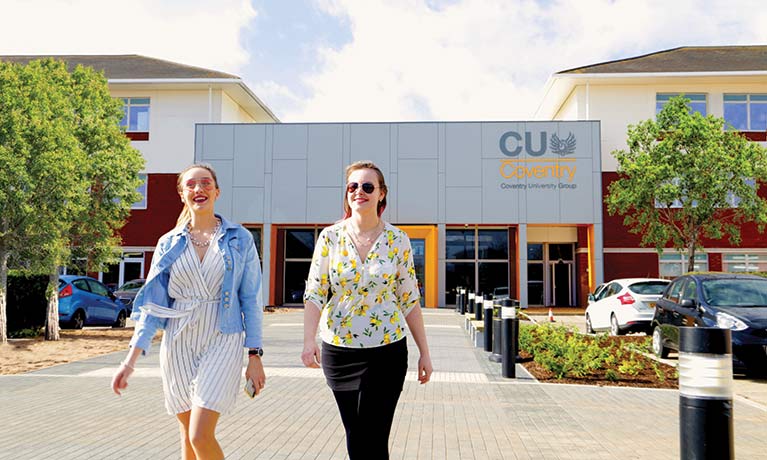
Mile Lane
The campus is home to an on-site library with bookable one-to-one academic writing service and library support sessions, fully equipped seminar rooms, open-access study areas, a café and an IT suite. Our labs contain industry-standard equipment so that you learn using the same equipment as many industry professionals.

The Hub
At The Hub you'll find the Health and Wellbeing Centre, the Students’ Union and Square One (which provides entertainment from quiz nights to live music), the Spirituality and Faith Centre, Tank Studio, Careers Office and a fantastic food court.

Lanchester Library
Coventry University’s Lanchester Library is usually open 364 days a year, and has 1,400 study spaces, including group and silent areas. It also currently offers more than 550 computers and an additional 120 free-to-loan laptops.
Facilities are subject to availability. Access to some facilities (including some teaching and learning spaces) may vary from those advertised and/or may have reduced availability or restrictions where the university is following public authority guidance, decisions or orders.
Your studies will be centred in high-specification learning environments that benefit from extensive social learning facilities, well-appointed laboratories, industry-standard equipment, lecturing facilities and classrooms, facilitating our innovative teaching methods across a diverse suite of courses.

Architectural Studio
The multi-functional Architectural Technology Studio space acts both as a teaching and tutorial room. It houses 40 high spec computers which include Revit, Sketchup and AutoCAD. An informal area is available for group discussions, tutorials and making models.

Simulation Centre
You will have access to our Simulation Centre, which incorporates best practice building information modelling (BIM). Using a 3D model, the centre is designed so that you can view and walk through your project to add value, realise efficiencies and ensure every member of the construction team understands what is required of them and when.
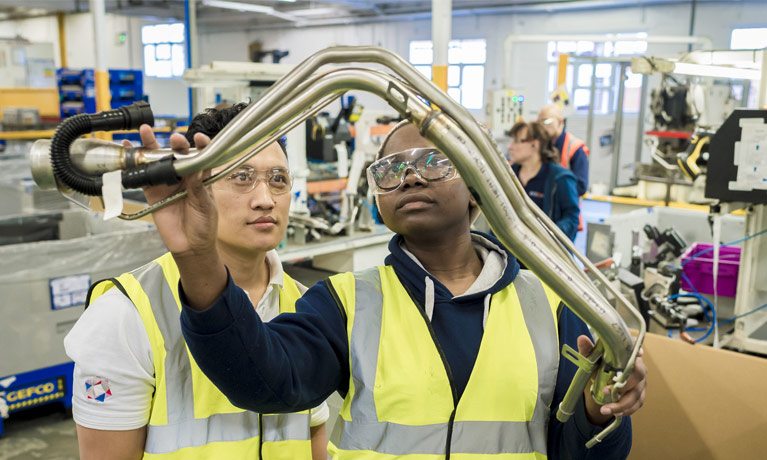
Workshop
For all your model making needs, there are fully equipped workshops with woodworking, 3D printing, laser cutting and CNC facilities in the Beatrice Shilling building.
Facilities are subject to availability. Access to some facilities (including some teaching and learning spaces) may vary from those advertised and/or may have reduced availability or restrictions where the university is following public authority guidance, decisions or orders.
Careers and opportunities
Upon successful completion of this course, you will be equipped with the skills sought after by many employers. In addition to being a fully qualified architectural technologist with a sound knowledge of building technologies, you should have also developed skills in the creative aspects of design and contextual studies. You could find yourself working in architectural practice or decide to proceed to further qualifications on Part 2 and 3 of architecture.
Where our graduates work
- Harrison Design Company, Birmingham
- Kendrick Homes, Stourbridge
- HLP UK Ltd, Cannock
- MWArchitectural, Coventry
- JNP Architects, Belfast
- St Modwen Homes, Birmingham
The graduate destinations listed above illustrate potential career paths. You may need to gain additional qualifications or practical experience, pass professional examinations, complete training, cover associated costs and meet specific visa or immigration requirements to secure employment in these fields.

Discover Phoenix+
Phoenix+ brings you together with other students to learn, experience and develop essential knowledge and skills. Whatever destination you choose, it's about preparing you for life after university.
Learn more about Phoenix+How to apply
This course with foundation year is not available to international students.
UK students
Disclaimers
You may also like

Coventry University (Coventry)

Architectural Engineering BEng (Hons)
Coventry University (Coventry)

Architecture BSc (Hons)
Coventry University (Coventry)