Search
Advanced Aerospace Engineering MSc
Study level: Postgraduate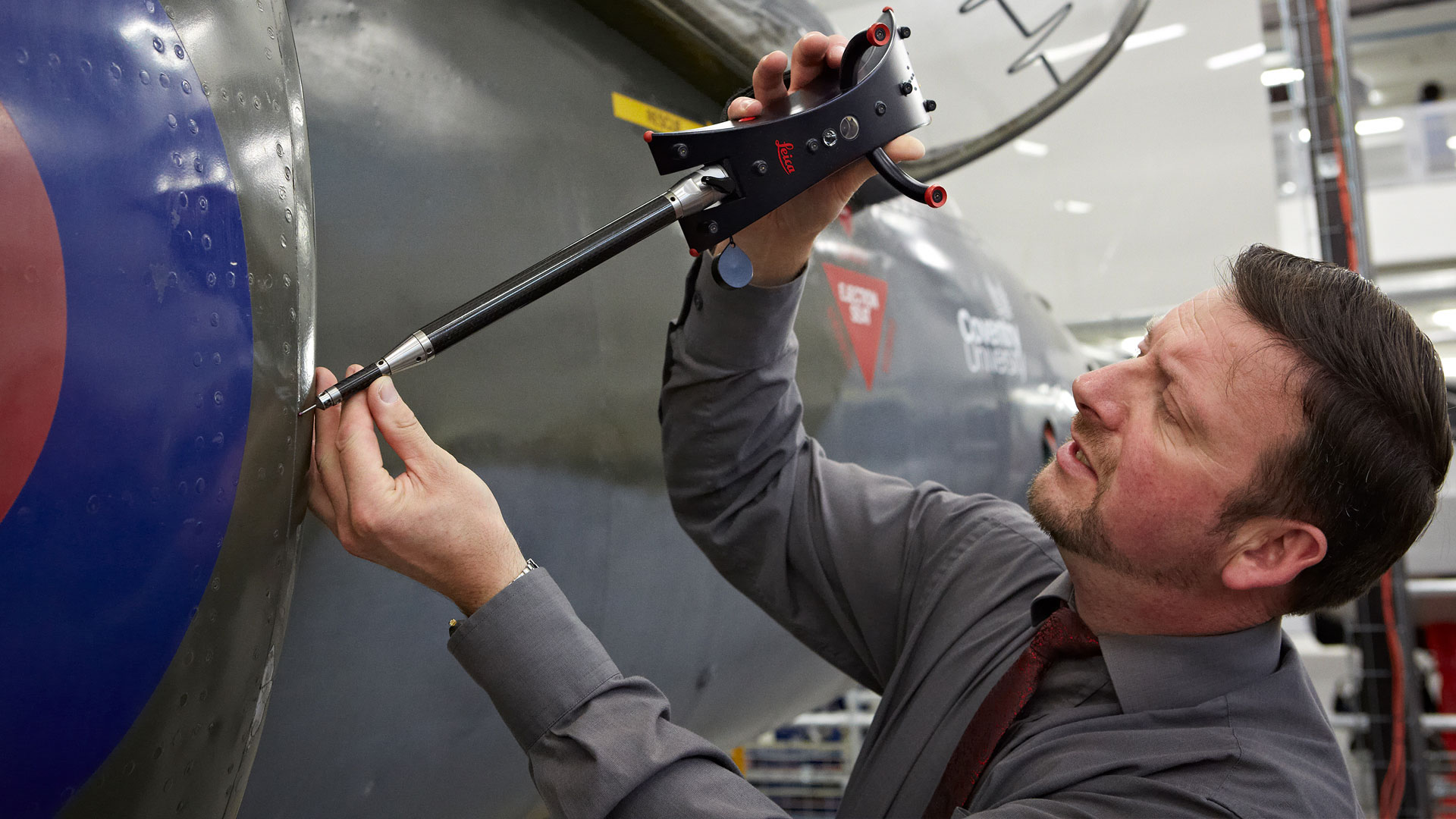
This course aims to develop your skills in advanced design and critical analysis of highly advanced aerospace systems, with hands-on practical experience of aerospace technologies.
Course features
Year of entry
Location
Coventry University (Coventry)
Study mode
Full-time
With Professional Placement
Duration
1 year full-time
Up to 2 years full-time with professional placement
Course code
EEST015
Start date
September 2027
November 2027
January 2028
March 2028
May 2028
July 2028
Course overview
Our Advanced Aerospace Engineering MSc degree is ideal for aspiring aerospace professionals seeking to develop advanced skills in sustainable design, flight dynamics and autonomous systems. It aims to prepare you for innovative roles in a rapidly evolving global industry.
- Master advanced design and sustainability in aerospace engineering to create future-ready, eco-friendly systems.
- Develop expertise in flight dynamics and autonomous systems, driving innovation in next-generation aircraft and unmanned aerial vehicles (UAVs).
- Explore propulsion, aerodynamics and structural behaviour, enhancing technical proficiency for roles in design, analysis and testing.

5 QS Stars for Teaching and Facilities
QS Stars University Ratings
Ranked 1st for Engagement
Postgraduate Taught Experience Survey (PTES) 2026
Ranked 5th for Overall Satisfaction
Postgraduate Taught Experience Survey (PTES) 2026Why you should study this course
- Gain hands-on experience with leading engineering software, including 3D CAD, finite element analysis (FEA) and computational fluid dynamics (CFD).4
- Get access to Abacus, SolidWorks, STAR-CCM+, SIMPACK and Granta Edupack, with MATLAB/Simulink available for advanced engineering simulations.4
- Access industry-standard facilities including Mercedes Petronas AMG1/5 scale wind tunnel, a materials composites lab, rapid prototyping and workshop facilities, a full-size Harrier T4 jump Jet and Cobra flight simulators providing a fully immersive flight experience.4
- Benefit from Coventry University's strong industry collaborations with global leaders such as Emirates, UTC, Airbus, Rolls-Royce and Unipart. These connections enhance research relevance and offer opportunities for industry-led projects and networking.2
- Gain practical experience and boost your CV with an additional professional placement. See the modules for more details.2
Ranked 3rd
for overall satisfaction in Engineering and Technology
Postgraduate Taught Experience Survey (PTES) 2026 (ranked out of 44 HEIs)
What you'll study
The aviation and aerospace industry is committed to a sustainable future. This course covers the appropriate techniques, methods and subjects within this industrial environment in more detail. With an emphasis on applied technical work, particular prominence is given to the developments in aircraft autonomy, the design and analysis of aircraft structures, computational fluid dynamics, advanced materials and processes, flight simulation and experimental methods.
We regularly review our course content, to make it relevant and current for the benefit of our students. For these reasons, course modules may be updated.
How you'll learn
Teaching and learning methods may include:
- lectures
- seminars
- tutorials
- presentations
- group projects
- workshops
- practical laboratory sessions.
Teaching contact hours
As a full-time postgraduate student, you will study modules totalling 180 credits each academic year. A typical 30-credit module requires a total of 300 hours of study. Study hours are made up of teaching contact hours, and guided and independent study.
Teaching hours
Teaching hours may vary, depending on where you are in your studies, but on average you will have between 8 and 12 teaching and learning hours each week. You will also have the opportunity to attend optional sessions including time with a Success Coach or to meet with staff for advice and feedback.
Guided and independent study
Throughout your studies, you will be expected to spend time in guided and independent study to make up the required study hours per module. You will be digging deeper into topics, reviewing what you’ve learnt and completing assignments. This can be completed around your personal commitments. As you progress to the end of your studies, you’ll spend more time on independent learning.
Online learning
As an innovative university, we use different teaching methods, including online tools and emerging technologies. So, some of your teaching hours and assessments may be delivered online.
Assessment
This course will be assessed using a variety of methods which could vary depending on the module. Assessment methods may include:
- reports
- tests
- essays
- exams
- practical coursework
- assignments
- viva
- presentations.
The Coventry University assessment strategy aims to ensure that our courses are fairly assessed and allows us to monitor student progression towards achieving the intended learning outcomes.

Focus with block learning
Most courses use block learning. You study one module for six weeks, then move on to the next. It's a simple, structured way to stay organised and build confidence in your studies.
Explore block learningEntry requirements
Typical entry requirements:
Fees and funding
| Student | Full-time | Part-time |
|---|---|---|
| UK, Ireland*, Channel Islands or Isle of Man | 2027/28 fees TBC 2026/27 fees: £11,700 2027/28 professional placement fee TBC 2026/27: £1,575 professional placement fee (if placement secured) |
Not available |
| EU | 2027/28 fees TBC 2026/27 fees: £11,700 per year with EU Support Bursary** 2027/28 professional placement fee TBC 2026/27: £1,575 professional placement fee (if placement secured) per year with EU Support Bursary** 2027/28 fees TBC 2026/27 fees: £19,500 per year without EU Support Bursary** 2027/28 professional placement fee TBC 2026/27: £1,900 professional placement fee (if placement secured) per year without EU Support Bursary** |
Not available |
| International | 2027/28 fees TBC 2026/27 fees: £19,500 2027/28 professional placement fee TBC 2026/27: £1,900 professional placement fee (if placement secured) |
Not available |
For advice and guidance on tuition fees3 and student loans visit our Postgraduate Finance page and see the University's Tuition Fee and Refund Terms and Conditions.
We offer a range of international scholarships. For more information, visit our International Scholarships page.
Your tuition fees cover teaching, assessments, access to course facilities and university support services. You will need to budget for additional costs that are not included in your tuition fees, such as accommodation and living costs, recommended books, stationery, printing and any reassessment fees (if you need them).
Additional costs may include:
- optional field trips or visits: from £400 per trip or visit
- placement-related costs, such as travel, accommodation and any other costs associated with securing, attending or completing a placement. These will vary depending on the placement location and your individual circumstances.
*Irish student fees
The rights of Irish residents to study in the UK are preserved under the Common Travel Area arrangement. If you are an Irish student and meet the residency criteria, you can study in England, pay the same level of tuition fees as English students and utilise the Postgraduate Master's Loan.
**EU Support Bursary
Following the UK's exit from the European Union, we are offering financial support to all eligible EU students who wish to study an undergraduate or a postgraduate degree with us full-time. This bursary will be used to offset the cost of your tuition fees to bring them in line with that of UK students. Students studying a degree with a foundation year with us are not eligible for the bursary.
How do you know if you need to pay UK or international tuition fees?
Facilities
Facilities you will have access to include:
- Cobra Virtual Flight Simulators
- Mercedes Patronas Wind Tunnel
- Unmanned Aerial Vehicle Systems Laboratory
- High Performance Engineering Centre.
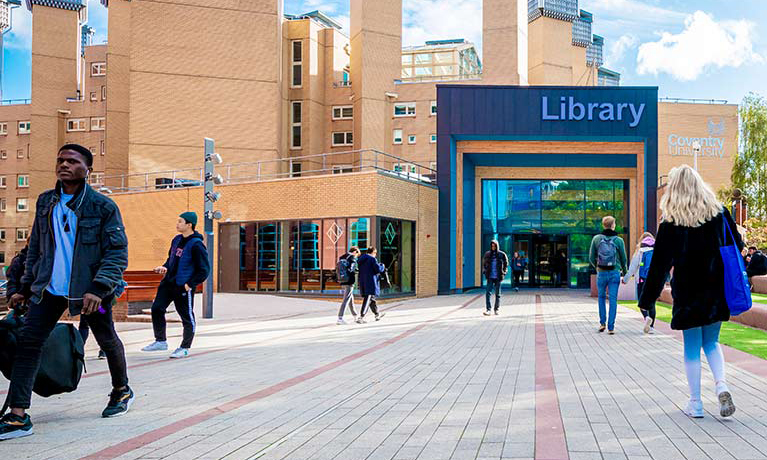
Lanchester Library
The library is usually open 364 days a year. It’s where you can access your course’s specialist Academic Liaison Librarian. It’s also home to specialist teams which can support you with your academic writing and maths and statistics questions.
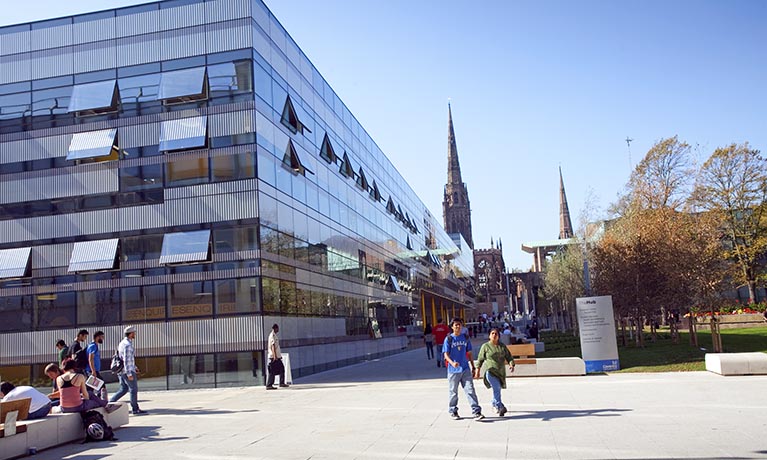
The Hub
The Hub is the centre of student life on campus. Facilities include a food court, convenience store, multi-faith centre, medical centre, hairdresser, coffee shops and the Your SU offices. It has fully licensed function spaces and a bar.

Careers and employability
Get one-on-one guidance lasting up to 18 months from the end of your course. We’ll help you find placements and graduate roles, offer CV and application checks, mentoring, skills workshops, employer events and more.
You’ll use facilities through timetabled teaching, practical activities and relevant independent study. Access may vary by module, activity, capacity, supervision or safety requirements. Access may change or be limited where the University needs to follow public authority guidance, decisions or orders.
Careers and opportunities
The specialist topics studied on the programme are designed to prepare you for work in companies involved with aeronautical engineering, but there are also many roles in related industries that rely on the same technology, such as the automotive industry. Possible destinations could include the fields of design, development, operations and management, as well as projects, systems, structural and avionics engineers.
On successful completion of this course, you should have developed a wide range of transferrable professional and technical skills, including the ability to produce technical, written reports and deliver oral presentations, engage in self-directed study, operate as part of a team, demonstrate a critical awareness of professional, legal, social and ethical issues.
Where our graduates work
Coventry University aerospace graduates have gone on to work for companies including:
- General Electric
- Rolls-Royce
- BAE Systems
- Airbus
- Collins Aerospace
- Red Bull Racing
- ALTEN Ltd
- Safran
- Tata Consultancy Services
- NP Aerospace.
How to apply
UK students
International students
Disclaimers
You may also like
Coventry University (Coventry)