Search
Opinion: The UK must push past its net zero limbo – here’s what it needs to do
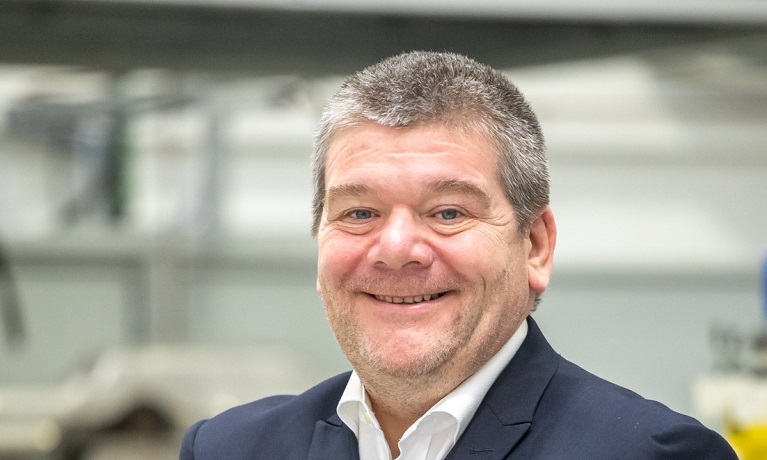
Professor Carl Perrin, Pro-Vice Chancellor (Research and Enterprise) at Coventry University Group
University news / Research news / Business news / Opinion / Sustainability, Clean Growth and Manufacturing
Friday 03 July 2026
Press contact
Following more uncertainty surrounding electric vehicle targets and warnings that weakening the UK’s net zero policy could damage economic growth, Professor Carl Perrin, Pro-Vice Chancellor (Research and Enterprise) at Coventry University Group, examines the challenges hindering the UK's net zero transition and what must change to get it back on track.
The impacts of climate change are becoming more visible. The UK has always had hot spells, but what’s changing is how often they occur, how extreme they are and when they happen. Last month, temperature records were broken and rare red extreme heat warnings were issued, with temperatures above 40°C now estimated to be 20 times more likely than in the 1960s.
While extreme weather is reinforcing net zero as critical to reduce future emissions, fears persist that net zero will cause economic harm as the UK struggles to find growth. However, if it is approached consistently and realistically, net zero is one of our best opportunities for long-term growth and industrial renewal.
The work we do with businesses has net zero as its north star but is deliberately focused on clean growth, improving the bottom line in a sustainable way.
Net zero isn’t losing support – the current approach is
I emphasise a consistent and realistic approach because the UK is currently caught in something of a net zero limbo. Ambitious targets for 2030 and 2050 are still set, but the cost-of-living crisis is making it harder for people and businesses to fund their part in the transition. Two-thirds of UK businesses are delaying investment in net zero because of rising costs and a similar share of the public are fearing the pressure net zero could place on their finances.
None of this amounts to a collapse in support for net zero itself, with almost two-thirds of Britons recognising both its necessity and long-term benefits, but when only 2% express confidence that the UK will meet its net zero target by 2050, it becomes pretty obvious that people are losing faith in the current approach and pace of the transition and that some things need to change.
Targets won’t drive the transition – but the right conditions will
The phase-out date for new petrol and diesel car sales – which has already seen a fair amount of back-and-forth over recent years – is doing little to hurry electric vehicles (EVs) adoption and is instead making long-term planning more difficult for manufacturers and businesses.
The mass adoption of EVs is critical to cutting transport emissions and while uptake is increasing in the UK, sales to ordinary working people remain sluggish as they are put off by high costs and charging access. EV charging points are still not where they need to be, with regional gaps, compatibility issues and demand for rapid chargers continuing to exceed supply.
Rather than treating EV targets as the be-all and end-all and then pulling away again, the focus should be on creating the conditions that make the transition feasible. In Coventry alone, almost half of households cannot charge an EV at home, so we've been examining the barriers facing residents and how they could be overcome. More broadly, we've contributed to a new technology that could enable vehicles to recharge as they drive on power-enabled roads. The UK must prioritise making EVs accessible and affordable or it will only find itself pushing the phase-out date back again.
Reducing dependence on imported raw materials
As electrification technologies rely on large volumes of raw materials, the UK also needs to think more seriously about how it sources them, given its reliance on imports and how it only produces 6% of its critical mineral needs domestically. Our involvement in the UK’s first homegrown production of Lithium Hexafluorophosphate, alongside our use of bioleaching to recover precious metals from EV batteries has shown how we can both manufacture and reuse these materials rather than source them abroad.
Reducing dependence on imported raw materials is becoming just as important as developing the green technologies themselves, as these materials are concentrated in a handful of countries and are difficult to extract. We must expand domestic processing and scale recycling initiatives to stabilise and secure our own supply chains.
The energy affordability crisis
High energy costs are placing enormous financial pressure on households and businesses, leaving many unable to invest in the technologies needed to achieve net zero. The UK is still far too dependent on imported gas and has limited storage capacity, leaving us vulnerable to global gas shocks.
Despite major investments in renewable energies and low-carbon infrastructure, many projects are hindered by red tape and planning processes. The UK could improve energy security and sustainability, while lowering energy costs in the long run, by clearing grid connection backlogs, speeding up planning approvals and investing in infrastructure ahead of demand.
Net zero needs business
If energy costs were lower and the conditions for delivery were predictable, businesses would be far better placed to embed net zero into their operations and investment decisions. Through the Clean Futures programme, which provides SMEs with funding, expertise and access to facilities to develop and commercialise green transport technologies, we’ve seen firsthand how committed businesses are to pursuing clean growth when they have the right funds, support and clarity of impact on their bottom line. We need to scale that approach for the sake of our economy as well as our planet.