Search
Stories of young people in global conflicts told in Coventry University comic exhibition
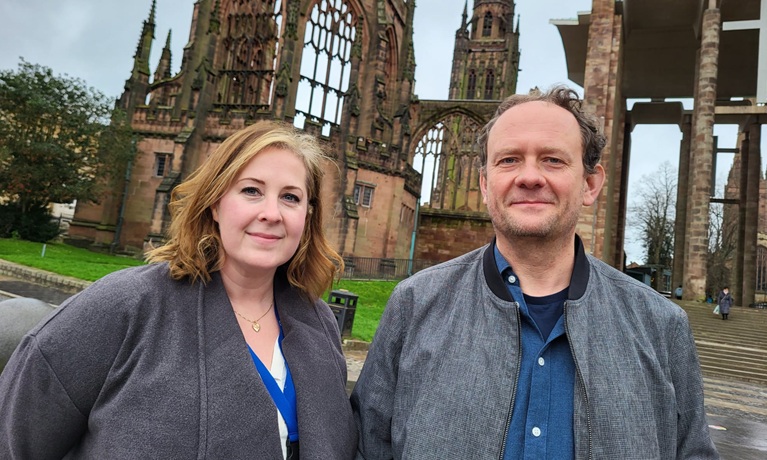
Dr Michaelina Jakala and Dr Chas Morrison outside Coventry Cathedral where the exhibition will be held
University news / Research news
Thursday 19 March 2026
Press contact
The stories of young people caught up in global conflicts have been turned into comic-book style stories for an inspiring exhibition coming to Coventry.
The real-life experiences of young people actively working towards peace around the world have been shared by award‑winning comics producer PositiveNegatives as part of a Coventry University research project.
I Couldn’t Stand By presents stories of young people in countries such as Algeria and Colombia which make up an exhibition heading to Coventry Cathedral in May, before settling permanently at the Coventry Refugee and Migrant Centre.
Lead researcher Dr Michaelina Jakala, from Coventry University’s Research Centre for Peace and Security, says the exhibition’s message feels particularly timely given the ongoing conflict in the Middle East.
With conflict dominating the headlines, this exhibition offers something different - a reminder that peace is built gradually by ordinary people taking action. We hope it encourages young people here in the UK to see themselves as part of that story.
Dr Michaelina Jakala, from Coventry University’s Research Centre for Peace and Security
The exhibition, which was funded by the Allan and Nesta Ferguson Charitable Trust, draws on a six‑year research programme where the team worked with PositiveNegatives and education specialists Lifeworlds Learning to explore how young people experience conflict, contribute to peacebuilding and how research can be shared through accessible formats such as comics and podcasts.
The characters featured in the comics are composites based on interviews, representing real experiences including former child soldiers in Bosnia adjusting to adulthood, youth activists advocating for change in Algeria and Colombia, and displaced families in Iraq rebuilding their lives. While the full comic series spans five regions, the exhibition focuses specifically on the stories from Algeria and Colombia, selected because they best highlight the project’s central message of hope.
The wider research project also led to the Generation Peace podcast series, which includes testimonies from the Bosnian case studies, and created new Citizenship, Agency and Peace workshops for secondary schools that use the comics to help students explore identity, agency and positive social change. Schools in London, the Midlands, and the North West of England will pilot the sessions later this year.
The study, led by Dr Jakala and Coventry University colleague Dr Chas Morrison, gathered hundreds of interviews across Algeria, Colombia, Bosnia and Herzegovina, Iraq and the Kurdistan region. Findings show that despite experiencing conflict, displacement and trauma, young people often demonstrate leadership, resilience and determination - qualities researchers say are too often overlooked.
Our research shows that young people are far too often excluded from decisions about conflict and peace. Yet in every context we studied they were shaping their communities in meaningful ways - through activism, culture, education or simply refusing to give up. We wanted the exhibition - and the comics behind it - to communicate that message of agency and possibility.
Dr Chas Morrison, from Coventry University’s Research Centre for Peace and Security
The team identified an overarching theme of hope, supported by three key conditions: access to opportunities, feeling recognised and heard, and being able to process trauma.
Hope emerged again and again in our interviews. Young people showed incredible resilience, even when living through displacement, war or long‑term post‑conflict recovery. What they need most is to be recognised, to feel heard and to have genuine opportunities. Without those, hope can quickly turn into disaffection - but where they exist, young people make extraordinary contributions to peace.
Dr Michaelina Jakala, from Coventry University’s Research Centre for Peace and Security
Discover more about the research project and exhibitions, read the comics and listen to the podcasts.
--
This project was supported by Coventry University’s Economic Social Research Council (ESRC) Impact Acceleration Account to further its impact.