Search
Coventry University researcher to uncover novel behaviours of quantum matter
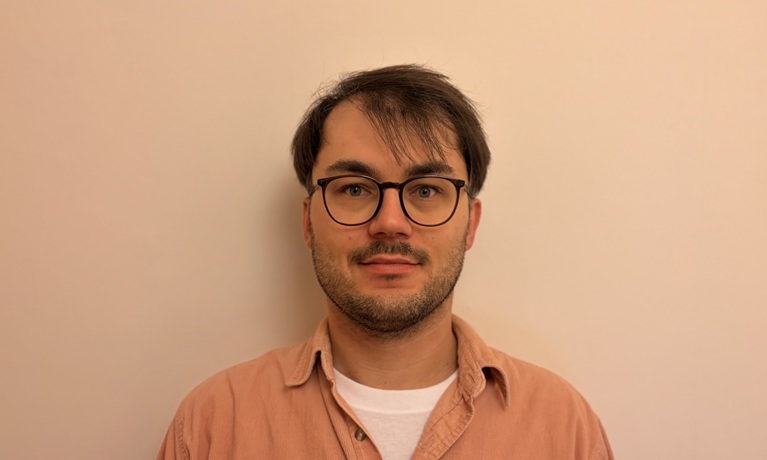
Dr Sascha Wald
University news / Research news
Thursday 08 January 2026
Press contact
A researcher at Coventry University has received a prestigious New Investigator Award to fund a pioneering project that will explore whether the flocking behaviour of animals can be imitated in quantum systems.
Dr Sascha Wald, from Coventry University’s Research Centre for Fluid and Complex Systems, is leading Aqua Nova (Active Quantum Matter: Novel Quantum Phases), a project that investigates whether microscopic particles can exhibit coordinated motion similar to birds flying in formation or fish swimming in schools.
Dr Wald has demonstrated through advanced simulations that particles can form “quantum flocks.”
Unlike the flocks found in nature, these do not simply move together but develop long-range quantum correlations that link particles across large distances.
Dr Wald believes that uncovering such behaviour could open new scientific and technological avenues including novel mechanisms for information processing in quantum computers or even underpin new types of quantum devices. The team also suggests this phenomenon could be observed in experiments using Rydberg atom arrays, a cutting-edge platform that enables precise control of individual atoms.
If confirmed, this would be the first time flock-like collective behaviour has been observed in a quantum system and would demonstrate how concepts from the natural world can inspire breakthroughs in fundamental physics.
It is a great honour to receive the New Investigator Award, which will give us three years to pursue this research. Collective active behaviour has never been observed at the quantum level, and establishing it as a new phase of quantum matter has both fundamental importance and significant technological promise.
Dr Sascha Wald
The New Investigator Award (NIA) scheme, funded by UK Research and Innovation, supports exceptional early career researchers in establishing their independent research programmes.