Search
Coventry schoolchildren to benefit from expanded allotment scheme
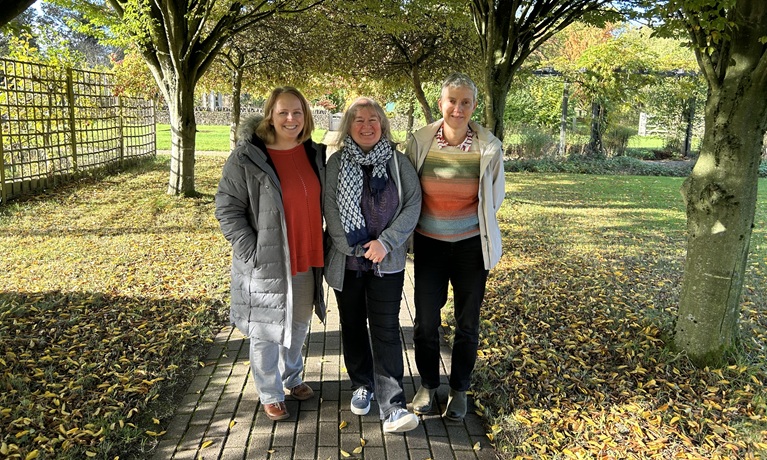
Dr Jana Fried, Dr Liz Trenchard and Dr Katharina Dehnen-Schmutz from the Research Centre for Agroecology, Water and Resilience
University news / Research news / Sustainability, Clean Growth and Manufacturing
Wednesday 10 June 2026
Press contact
Coventry University is helping children in the city grow their own food and improve well-being by expanding a successful school allotment initiative.
Dr Jana Fried, Assistant Professor at the university’s Research Centre for Agroecology, Water and Resilience (CAWR), has co-led a UNESCO award-winning pilot project with Earlsdon Primary School and Grow Coventry CIC since 2023. Now, with grant funding from the Nature Towns and Cities programme - a partnership initiative between Natural England, the National Trust and The National Lottery Heritage Fund, launched to enable millions more people to enjoy nature and green spaces close to home - Dr Fried’s project is set to expand the scheme to more schools across Coventry.
The initiative is part of Coventry City Council’s ‘Green for All’ programme, with Dr Fried aiming to build a network that brings together schools, council departments, academics, civil society organisations and allotment groups to promote hands-on nature experiences for children.
Coventry has 45 allotment sites across the city but many people either don’t know how to access them or face long waiting lists. If you enable schoolkids and their parents to get involved, you’re opening up allotments to families who wouldn’t normally enter these spaces.
This model could also encourage involvement from families who don’t want to take on a whole plot themselves, making participation more accessible and manageable. That can create more access for wider populations, including migrant communities who often have deep knowledge of food growing but lack access to green space. This funding will allow us to expand the pilot to new schools and build a network to support further growth. More people engaging with nature also helps protect it.
As researchers in Coventry, it’s important to give back to the city. Coventry has many beautiful green spaces but not everyone knows or is interested in them. We want to change that.
Dr Jana Fried, Assistant Professor at the Research Centre for Agroecology, Water and Resilience
Earlsdon Primary School is one of the city schools to have already seen the benefits.
Two years ago we took over a community allotment ten minutes from the school due to our lack of green space. Every week a class spends an afternoon there, supporting science learning and teaching food citizenship. Pupils grow beans, potatoes, chard, raspberries, sweetcorn, leeks, pumpkins, rhubarb and more. The produce is used in school meals, shared with families and donated to food banks.
The impact has been huge - practical work helps pupils retain learning, being in green space boosts wellbeing, and they’re more willing to try new fruit and vegetables. We’re keen to share our experience with other schools because many more children could benefit from outdoor learning.
Rebecca Bollands, headteacher at Earlsdon Primary School
Securing money from the Nature Towns and Cities programme provides a great opportunity for us to work with partners, many of whom are part of our Climate Change Board, to introduce more local people to the green space on their doorstep. We will also be working with a range of partners and local people to develop plans and opportunities to help ensure our green and water-based spaces can deliver more benefits for both local people and nature.
Introducing young people to allotments is a great way for them to learn about nature, pick up new skills and of course grow produce to share. Allotments are great assets in the heart of our communities; they support biodiversity and sustainable growing and it will be fantastic for more young people to have the chance to recognise them as part of the future too.
Cllr Lynnette Kelly, cabinet member for jobs, regeneration and climate change at Coventry City Council
Dr Liz Trenchard, Assistant Professor, and Dr Katharina Dehnen-Schmutz, Associate Professor, both from CAWR, will also receive funding from the NTC grant to lead a digital mapping project. The project is a key part of the ‘Green for All’ programme, providing an evidence-based foundation to guide future planning that will improve the city’s green and blue spaces.
Working with The University of Warwick and Coventry City Council, they will map the city’s green and blue spaces - parks, meadows, ponds and canals - to help residents discover and engage with nature. The University of Warwick will focus on participatory mapping - working with communities to understand what they want from their green spaces.
The initiative responds to Coventry’s low ranking in the ENDS Green Cities Index 2024, where it placed 52nd out of 55 UK urban areas, underscoring the need to improve access to and awareness of natural spaces across the city.
We will use spatial datasets and Geographical Information System (GIS) mapping to map these areas and develop a Coventry green and blue score to guide future initiatives.
The final product will be a freely available digital resource showing local green and blue spaces. We want to know which areas are valued, how they are used and which need improvement. Improving connectivity between green spaces is also key - for wildlife and for people.
Dr Liz Trenchard, Assistant Professor at the Research Centre for Agroecology, Water and Resilience
Discover more about CAWR and residents interested in finding out more about allotments in the city can visit Allotments – Coventry City Council.