Meet Mark Hewitt a Coventry University graduate about to publish his first book
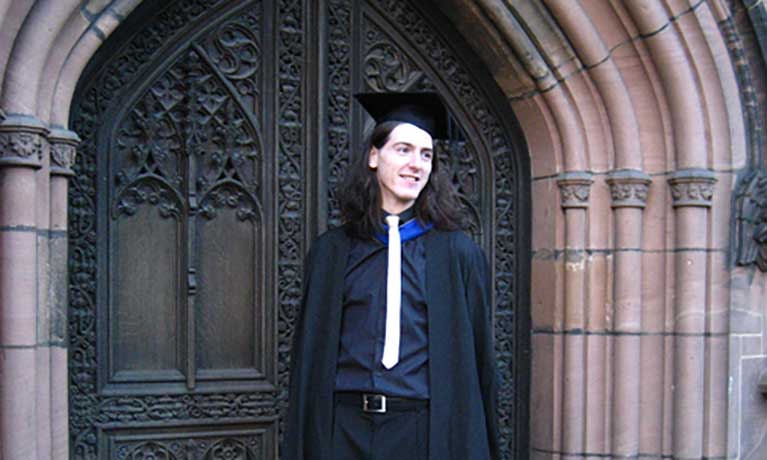
Mark Hewitt studied International History at Coventry University between 2003 and 2006. Today, he’s in the final stages of publishing his new book, Especially Dangerous The Snowshill Collection, which explores the fascinating journey of objects from Snowshill Manor in the Cotswolds to the Museum of Witchcraft in Boscastle during the 1960s. The book has already received glowing pre-reviews from leading academics and experts in heritage and occult studies. We caught up with Mark to learn more about his time at Coventry and how it shaped his path.
What drew you to study International History at Coventry, and how did those years shape your interests?
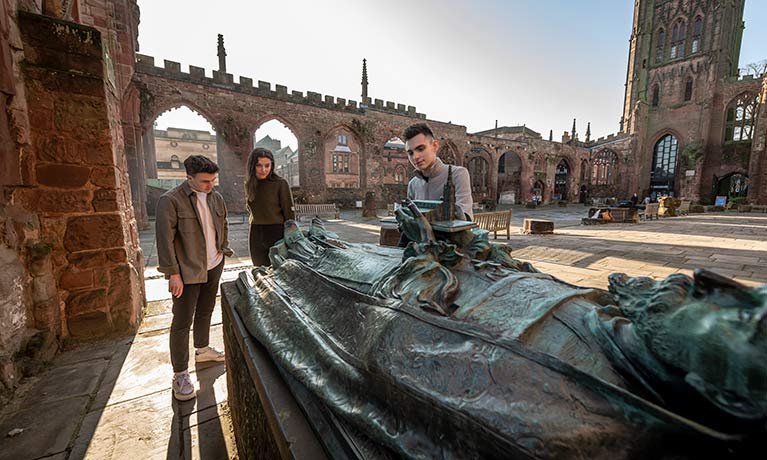
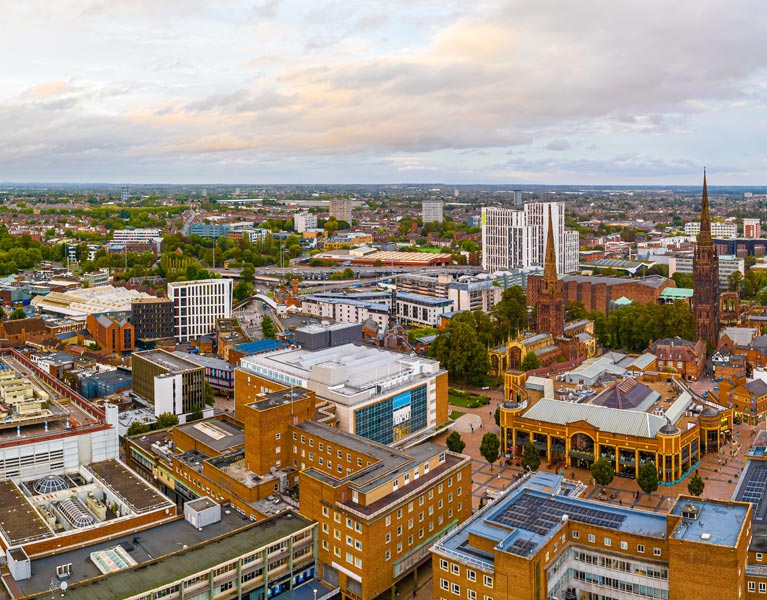
Since childhood, I’ve always been drawn to history, something I owe a great deal to the city itself. Growing up in Coventry, I was keenly aware of the many historical layers present in its fabric: rubble, romantic ruins, and rough concrete all formed the foundations of this interest. History felt like an active force rather than an abstract concept, and my time at Coventry University helped me define that feeling.
I actually fell into the International History course through the clearing process after a gap year working various jobs. The degree’s broad scope and holistic approach appealed to me, as did the chance to keep my part-time jobs and save money by living at home.
Do you have a standout memory from your time at Coventry, a lecturer, project, or moment that influenced your path?
My time at Coventry was framed by gratitude; I genuinely thought I’d never get the chance to study a subject I loved. That gratitude also extends to my grandparents, who kindly paid my tuition fees, which had only recently been introduced.
It was an interesting period to study history so much discourse was framed around globalisation, the 2001 terrorist attacks, and the conflicts in Iraq and Afghanistan. Sometimes seminars were lively; other times, we didn’t know where to start!
How did your studies prepare you for the research and writing involved in your book?
Coventry gave me invaluable practice in thinking methodically and crafting thoughts into essays, something I initially struggled with. The critique and guidance I received helped me appreciate the process of creating a strong argument. Having access to the Lanchester Library was a watershed moment; it felt like stepping into a modern-day Alexandria!
Can you tell us the story behind the Snowshill Collection and why it fascinated you enough to dedicate a book to it?
I first became aware of a link between Snowshill Manor and the Museum of Witchcraft and Magic around the time I graduated in 2006. What started as an interest quickly escalated into a quiet obsession as I discovered the story of how Cecil Williamson, the founder of the Museum of Witchcraft, was loaned a series of items from the Witch’s Garret at Snowshill Manor by the National Trust in 1965.
This room had been created by Charles Paget Wade architect, artist, and collector during the mid-1920s as an authentic-looking theatrical set. After Wade’s passing, without his presence to contextualise it, this element of the collection became shadowed by an undeserved sinister reputation. The objects loaned to Williamson were briefly displayed at his museum in Bourton-on-the-Water before being transported to Boscastle spirited away under the pretence of being the working tools of “an especially dangerous black magician” which Williamson claimed would require ritual destruction on a certain night.
What actually happened was a process in which the original provenances of the collection were dramatically changed, with new identities created once installed at Boscastle. I was fascinated by this story and set out to explore Williamson’s motives, framed by his collecting habits, his background in the Secret Intelligence Service, and his interests in West Country magical practices. This research led me into material culture studies, anthropology, philosophy, and occulture, particularly in the context of the re-emerging paradigm of animism within contemporary western magical practices.
How do you see your work contributing to the wider museological and heritage fields?
My priority is to tell the story of Wade, Williamson, and the collection honestly and transparently, supported by the best contemporary academic and magical frameworks. I hope the book introduces these figures and their legacies to new audiences, while also championing thinkers like Dr Jack Hunter, Dr David Harry, Dr Al Cummins, Dr Louise Fenton, Gordon White, and Jake Stratton-Kent.
I also want to inspire people to see historical material culture as dynamic rather than static; always in a state of becoming, never nailed down to singular definitions. Finally, I hope this work sparks further research and conversations, as I believe this collection still has much to contribute.
Have you discovered any surprising or little-known stories during your research that readers might find especially intriguing?
One highlight was being contacted by the daughter of a man who joined a ghost-hunting expedition to Snowshill Manor in the early 1960s. I’d spent years trying to trace this lead, and through sheer coincidence, she saw a presentation I gave for the National Trust on YouTube and shared wonderful documents and photos.
Frustratingly, the “especially dangerous” letter from Williamson; the single document that inspired this project is still missing. We have authoritative recollections from Prof Hutton and Dr Fenton validating its existence, but I like the romance of a loose end. Perhaps in an age of instant access, a little mystery isn’t such a bad thing or maybe its eventual rediscovery will be a good reason for a potential second edition!