Skip to main content Skip to footer
Coventry city skyline

James Dunham – Made in Coventry

Wednesday 17 June 2026

6 min read


Mapping a path to net zero: the Coventry University graduate influencing billions of pounds of infrastructure investment.

As the world races towards net zero, Coventry University graduate James Dunham is helping ensure climate change is at the heart of the investment decisions shaping our future.

Growing up in Spalding, Lincolnshire, James found the realities of climate change impossible to ignore. With much of the coastline sitting below sea level and relying on man‑made flood defences, rising sea levels posed a very real threat to the communities around him. That sparked his desire to create change and led him to study Geography at Coventry University.

Why Geography was the perfect launchpad

James said:

“The Geography degree at Coventry was broad and gave me a tremendous foundation in sustainability and sustainable development. Climate change really sparked my interest, so much so that I explored it in my dissertation, looking at how it would impact coastal defences in Lincolnshire, where I’m from. Geography was the foundation - it’s one of the most employable degrees because of the breadth of skills you gain.”

A pivotal industrial placement with the Environment Agency gave him hands‑on experience and a competitive edge. After graduating, James secured a role with Norfolk County Council’s sustainability team, helping shape their climate action strategy. That experience led to a position with consultancy Mott MacDonald in Birmingham, advising on how climate change affects major transport projects. From there, he began working directly with infrastructure investors, exploring how they could design, manage and adapt assets to respond to climate risks.

Working with multilateral development banks gave him rare insight into how major infrastructure investment decisions are made and eventually drew him into sustainable finance, where he saw the greatest opportunity to build climate risk into the way capital is allocated.

Now Sustainability Director at Dalmore Capital - an infrastructure asset manager with around £6bn of assets under management, and part of Royal London Asset Management, which manages close to £200bn - James says his proudest achievement is developing the European Investment Bank’s framework for assessing how extreme weather and a changing climate could affect its lending, which still guides 60–90 billion euros of investment each year.

Creating better futures

“The tangible outcomes are what I enjoy the most. When you feel you’ve made a difference - that you’ve helped direct capital to a project or shaped a piece of infrastructure to improve outcomes or manage risk - that’s what I get out of this job. We’re investing in infrastructure that’s climate resilient, that contributes to climate action and delivers social and environmental outcomes.”

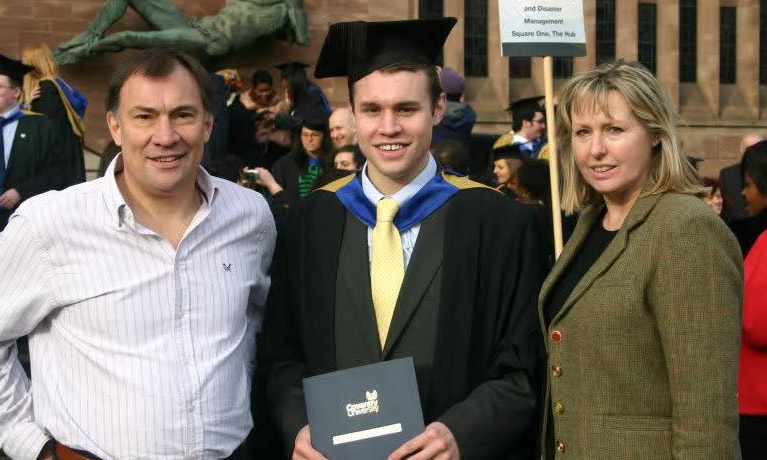
James graduated in 2006 and the skills he picked up during his time at Coventry University continue to shape how he works today.

The course equipped him with strong research skills and the ability to analyse complex environmental data - all essential in understanding real‑world challenges.
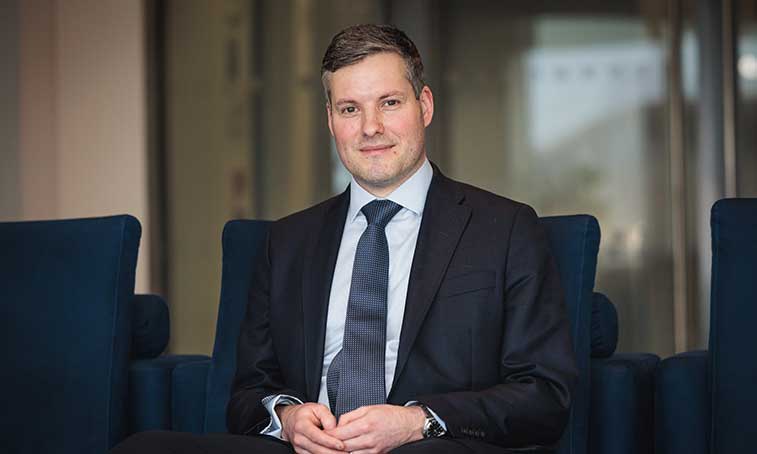
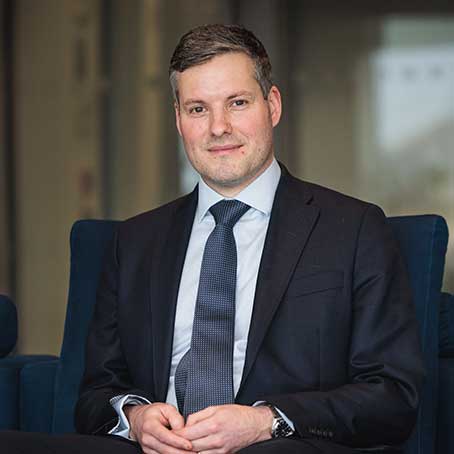
James Dunham, seated

An industrial placement that changed everything

His industrial placement with the Environment Agency was also key to helping him secure a role during the UK’s 2008 financial recession.

“The industrial placement was hugely beneficial when it came to looking for a job - it was a huge differentiator. I had work experience, I was working with the Environment Agency, and I was integrated in the team, part of day‑to‑day decision‑making. It was tremendous experience professionally and for developing my skills.”

Building a blueprint for climate-risk investment

James says his role today is very much a balancing act:

“Working in this space, there are always challenges. It’s such a fast‑evolving sector that you’re constantly keeping on top of regulatory and policy changes, as well as people’s expectations and evolving standards. Getting buy‑in is one of the biggest challenges but it’s also the most crucial part.

“In my work I have to balance many perspectives, because climate change is only one of many considerations when you’re investing in infrastructure. Infrastructure is essential to social and economic development but it often brings environmental impacts that must be managed, so it’s about getting the balance right between return, risk and sustainability outcomes. Infrastructure investment can also be part of the solution - it can cut emissions, build climate resilience and help drive the transition to net zero.”

A sector in transformation

Looking ahead, James expects the finance sector to focus far more on quantifying climate risk.

“There will be greater emphasis on quantifying impact. It can be hard to quantify climate-related risks and opportunities to inform valuations or financial models, and a lot of my work has been about identifying methods for better informing that process.”

Words of wisdom

His advice to others is to consider studying Geography and to stay patient.

“If you have an interest or ambition, set yourself on that pathway and keep doing things that take you in that direction - you’ll ultimately achieve it. It took me some time to move from my studies into investment decision‑making and then into private markets but I was always doing something that moved me forward.

“Geography gave me that grounding in sustainability and the broad understanding I needed. That combination of skills enables me to work in this space and understand the different perspectives involved.”

Inspired by James? Choose Geography.

Headshot of James Dunham

James Dunham

Graduate of Geography BSc

Students sat on a step

Ultimate UCAS Guide

The ultimate guide to the UCAS process

Find out more

 Queen’s Award for Enterprise Logo
University of the year shortlisted
QS Five Star Rating 2023
TEF Gold 2023