Introduction
Motorsport is often seen as the fastest and most demanding area of automotive engineering. Cars are pushed to their limits, development happens quickly, and small changes can make a big difference. For Raoul Popescu-Ghimis, an alumnus of the Motorsport Engineering BEng (Hons) (formerly European Engineering Studies) and the former Vehicle Dynamics MSc course at Coventry University, this environment did more than shape a career in racing. It laid the foundations for building a global engineering software company.
This is a story about how a fascination with vehicle dynamics, developed through study and hands-on projects, grew into a career spanning top-level motorsport, consultancy, and entrepreneurship.
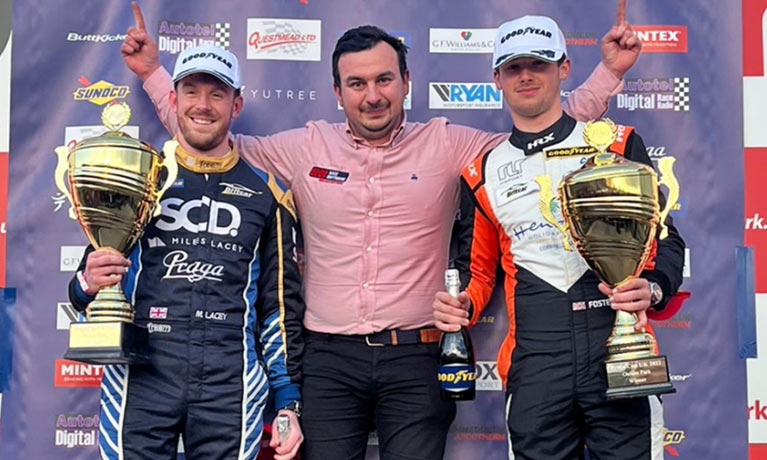 From Coventry University to the podium — Raoul, a Motor Engineering graduate celebrating success in motorsport.
Why motorsport engineering?
Raoul’s interest in motorsport engineering was driven by how closely theory and reality come together in the racing world. What stood out most was vehicle dynamics – the relationship between tyres, suspension, stiffness, damping and setup, and how these choices change how a car behaves on track.
Motorsport provided instant feedback, but the thinking behind it was never limited to racing alone. “Motorsport sits at the pinnacle of automotive engineering innovation, where development happens fast and every detail matters.”
Early ambitions and first steps into industry
Like many students, Raoul’s career goals became clearer as his studies progressed. “When I started the course, as my knowledge grew, I envisaged working in motorsport once I completed my studies.”
By the time he completed his Vehicle Dynamics MSc, he had a clear vision to build a career centred on vehicle dynamics. An ambition which became a reality when he joined Multimatic in 2010. “Joining Multimatic made that feel realistic. I worked on suspension and chassis engineering for top Formula 1 teams, other motorsport series, and high-performance vehicles.
“The role required turning simulation and analysis into practical development choices – a direct extension of the skills developed on the Motorsport Engineering course.”
Moving beyond traditional motorsport roles
Even while working in elite motorsport, Raoul was already looking ahead. “I have always had a mindset of pushing my limits and taking on new challenges.”
After a year at Multimatic, he realised he wanted to apply his engineering skills differently. “I realised I wanted to build something of my own, applying my engineering skills while also learning how to run a business.”
In 2011, he set up a one-person company, subcontracting his vehicle dynamics and simulation expertise to a range of companies. This marked a move beyond traditional motorsport roles while still relying on the same engineering principles he had developed during his degree.
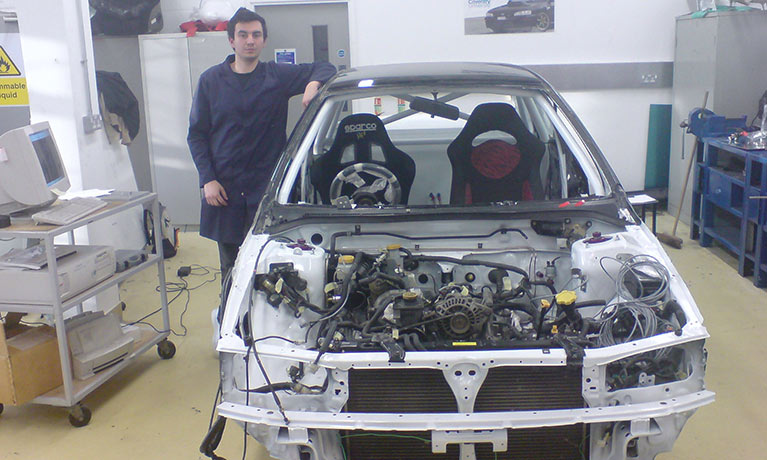
Applying engineering theory to real vehicle systems in Coventry University’s specialist facilities.
Skills shaped at Coventry University
Looking back, Raoul highlights the breadth of the Motorsport Engineering course as one of its biggest strengths. “The degree prepared me across the complete engineering of a vehicle, from fundamentals through to practical delivery. Students are introduced to industry-standard tools, but just as importantly, the course develops how engineers think and communicate.
“That breadth built a structured approach to problem solving, a focus on correlating simulation with real behaviour, and the ability to communicate engineering decisions clearly, backed by objective data.”
Projects that left a lasting impact
Two projects from Raoul’s master’s degree stand out as especially influential. The first was a group project focused on developing a real rally car. “It was a great lesson in teamwork, practical constraints, and turning theory into something that can perform.”
Alongside this, his individual project pushed him to explore new ideas in simulation. “My individual project pushed me to innovate in the simulation world and aim to do something that had not been done before.”
Learning to perform under pressure
Motorsport engineering demands clear thinking under tight deadlines, and the course reflects that reality. “It trained me to break complex issues into testable chunks and iterate quickly with the best available evidence.”
Raoul also learned the importance of discipline when time is limited. “You learn discipline under pressure: document changes, compare like for like, and keep a clear process even when timelines are tight.” Those habits have stayed with him throughout his career.
Founding RACE Software
This way of thinking eventually led Raoul to found RACE Software. “I founded RACE Software to reduce development time and cost by improving existing simulation processes and making vehicle dynamics capability more accessible.”
The company name reflects its purpose. “RACE stands for Rapid Axle Concept Evolution, reflecting the goal of iterating suspension and chassis concepts precisely and confidently.”
RACE Software now supports engineers across motorsport, road car programmes, and commercial vehicles. “The approach applies across racing programmes and mainstream automotive, from road vehicles to commercial vehicles.”
A former Coventry University colleague is also part of the team, showing the long-term value of connections made during the course.
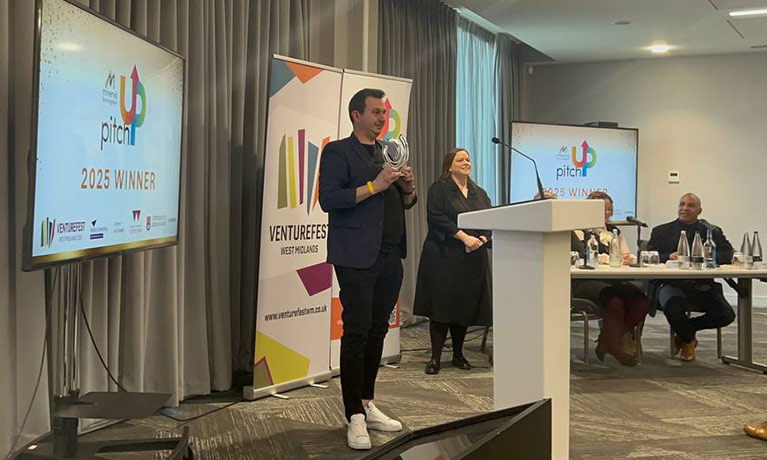
Recognition for academic and engineering excellence at the Minerva competition.
From engineer to CEO
Moving from engineering into leadership required a significant shift. “As an engineer, my main focus was solving engineering problems. Moving into a leadership role meant expanding far beyond that.”
Raoul had to build skills in product direction, marketing, finance and team leadership. “The challenge was shifting from being the person doing the technical work to being the person responsible for setting direction and ensuring the right outcomes.”
Once again, his engineering background played a key role. “It trained me to define the problem precisely, focus on what matters most, and use evidence to support decisions.”
Advice for current and future students
Raoul’s advice to students considering Motorsport Engineering is straightforward and practical. “Treat it as a highly competitive environment and take it seriously from day one.”.
He also encourages students to focus on tangible outcomes. “Focus on producing real outputs you can show and explain, such as a solid report, a validated model, a test plan, a data analysis, or a design you can justify.”.
And finally, relationships. “Build relationships with lecturers, classmates, and industry contacts – those networks matter long term.”.
Raoul Popescu-Ghimis’ journey shows how studying Motorsport Engineering at Coventry University can open doors well beyond the racetrack. With strong technical foundations, practical experience and the right mindset, the course prepares students for careers in motorsport, automotive engineering, and even building their own businesses.
Find out more on our Motorsport Engineering BEng (Hons) course page.