Skip to main content Skip to footer
Intensive Care Unit

What ICU survivors can teach us about growth after trauma

Wednesday 10 June 2026

3 min read


Introduction

Getting treatment in an Intensive Care Unit (ICU) can be a terrifying experience, with patients often experiencing life-threatening illness, complex treatments and a long road to recovery.

Each year, around 200,000 people in the UK survive a stay in intensive care. This study found that, despite the challenges they face, many go on to experience positive growth following their trauma.

In this blog, I’ll explore what ICU survivors can teach us about growth after trauma and how these lessons could enrich NHS support for people recovering from critical illness.

What do we mean by growth after trauma?

One way people adapt after a traumatic experience is through ‘post-traumatic growth’. This describes the positive psychological changes that can occur as people come to terms with a major life challenge. This could involve developing a greater appreciation of life, stronger relationships, a renewed sense of purpose or more confidence in your ability to overcome future challenges and means you’ve gained something new and positive from a difficult experience.

How do ICU survivors grow after trauma?

As part of my research study, eleven ICU survivors spoke openly about their journey to recovery.

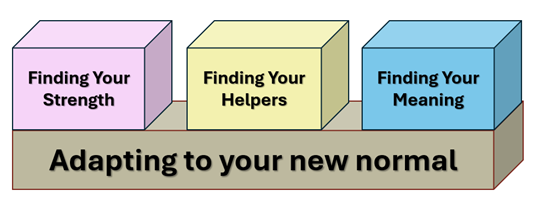
The shock of the experience in ICU was like a bulldozer to all the ‘building blocks’ of survivors’ lives. Their work, security and finances felt as though they had been knocked apart. Below are three ways that helped them rebuild their lives:

Three building blocks that represent research into ICU survivors

Finding your strength

Rebuilding life after ICU requires both physical and mental strength. Survivors described working through new challenges and a ‘rollercoaster of emotions’ as they adjusted to life after critical illness Slowly but surely, many began to see themselves as stronger and capable of doing things they might not have thought possible before.

Finding your helpers

Rebuilding is challenging to do alone. Survivors reached out for support from their loved ones or ‘building experts’ such as psychologists or others who had been through similar situations. These helpers made survivors feel hopeful and understood.

Finding your meaning

Survivors searched for purpose in their in their recovery and rebuilding journey. Some did this through gratitude for what they’d overcome, while others found meaning in supporting others. As survivors developed a greater sense of purpose, they became more positive about their future.

Adapting to your new normal

As they rebuilt their strength, found helpers and rediscovered meaning, survivors began to realise that their life had improvements that were not there before. Recovery and readaptation are not straightforward and setbacks remained part of the journey.

However, survivors adapted to and embraced a ‘new normal’, learning to move forward with greater resilience to the one that allowed for the new challenges life can bring, alongside a newfound strength, community and purpose.

This study found that ICU survivors can experience positive personal growth following critical illness, but it also shows that they often need support to achieve it. Access to healthcare services such as psychologists or support groups can help survivors navigate the challenges of recovery and adjustment.

Jess Saunders

Jess Saunders

Jess is in her final year as a trainee Clinical Psychologist at Coventry University and The University of Warwick. She worked as an Assistant Psychologist in an Intensive Care Unit before training and has an interest in physical and mental health.

 Queen’s Award for Enterprise Logo
University of the year shortlisted
QS Five Star Rating 2023
TEF Gold 2023