Search
Opinion: What COP31 should focus on and what Coventry University Group is already doing to make a real difference
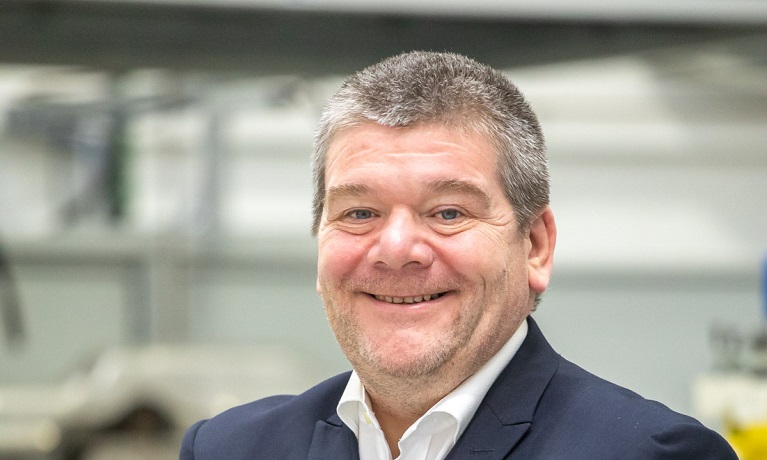
Professor Carl Perrin, Pro-Vice-Chancellor – Research and Enterprise
University news / Research news / Business news / Opinion / Sustainability, Clean Growth and Manufacturing
Monday 09 November 2026
Press contact
As we approach the start of the 31st edition of the Conference of the Parties (COP 31), Professor Carl Perrin, Pro-Vice-Chancellor – Research and Enterprise, explores the need to tackle emissions, rising global temperatures and the energy transition.
Professor Perrin also examines the role of universities to combat climate change and shares how Coventry University Group is acting through research projects, degree programmes, partnerships with business and student action.
About COP 31 and role of universities
COP is the most prestigious global summit for action on climate change with its 31st edition convening between November 9 – 20 in Turkey. It brings together governments, scientists, business leaders and civic society representatives to move from commitments to action. Conversations are held across three strategic pillars – emission targets and implementation, climate finance and resilience.
This year's summit should focus on becoming a catalyst for real change through policy that encourages private sector investment in green technologies, enable universal availability for climate adaptation tools and ensure climate finance supports real world asset deployment.
The summit comes at a critical time as global temperatures are expected to rise by 1.5 degrees Celsius in the coming years. Combatting this change would require partners that boost sustainability efforts to join forces and move from commitment to action. One key partner that can help drive real change is universities, as they lay the foundation for students’ mindset on sustainability and support researchers to develop solutions that help protect our planet.
At Coventry University Group, we recognise the pressing need to lead on climate change and sustainability. We’ve pledged to reach Net Zero by 2030 and have secured the Green Flag Award for twelve consecutive years for supporting biodiversity, greenery and sustainable spaces across our Coventry campus.
Groundbreaking research that drives long-term impact
We approach our sustainability research holistically, ensuring scientific innovation is delivered with social equity and environmental policies in mind.
Through the Centre for Agroecology, Water and Resilience, projects are conceptualised and commercialised to ensure we lead with intention in our drive to make the world more climate- conscious and sustainable.
Sustainability in procurement can drive measurable positive change. The Procurement for Good project aims to tackle high carbon footprints resulting from long and fragile global supply chains and poor nutritional quality in public catering. To combat these issues, methods to shorten supply chains and agroecological farming practices are being developed. As a result, public institutions will benefit from healthier, fresher meals while improving food system resilience across local communities.
The ROOTED project aims to tackle rising urban food insecurity, social isolation among vulnerable populations and industrial agriculture’s high environmental footprint. Through this project, 26 partners, including Coventry City Council, are connected across eight European countries to scale and establish landed community kitchens (LCK) linked with local agroecological farmers.
Social, economic and policy alignment is equally necessary for success in sustainability projects. This is being explored through Project DAISY which is being funded by EU's Horizon Europe research and innovation programme, aiming to accelerate action toward protecting ecosystems and species by tackling root political and socio-economic drivers of environmental degradation. This ensures environmental policies and technological advancements are designed with fairness and social equity.
Sustainability education lays the foundation for global changemakers
With a multitude of degree programmes dedicated to sustainability and modules being offered across courses, our students are encouraged to build their knowledge of sustainable practices irrespective of their field and become responsible citizens.
This is assisted by the opportunity to work towards becoming a Chartered Environmentalist, aligned with standards from bodies like the Institute of Environmental Management and Assessment (IEMA).
As an institution, our effort has always been to deliver education that prepares graduates to create tangible, real-world value in their fields. Nothing illustrates the impact of our commitment better than the journey of our alumnus James Dunham, now Director of Sustainability at Dalmore Capital. Through his role, James ensures that large-scale infrastructure asset management is executed with climate resilience, environmental responsibility, and social value at its core.
Looking at our alumni take the foundational knowledge and critical thinking developed with us and translate them into ideas that transform societies is precisely why we do what we do. Their success is a testament to the real-world relevance of our curriculum and its power to shape the sustainability leaders of tomorrow.
Academic-industry engagement can shape the next era of sustainability innovation
Industries hold transformational power when partnering with academia in sustainability research and commercialisation. Universities excel in scientific innovation, intensive testing and long-term research while industries provide commercial market access, data and infrastructure.
Coventry University Group has partnered with businesses for decades to deliver impactful partnerships, which unlock long-term strategic value.
One of the latest partnerships is between Centre for Advanced Low-Carbon Propulsion Systems (C-ALPS) and Oxford nanoSystems' to accelerate the development of next-generation hydrogen energy solutions. This will allow researchers to push the boundaries of electrochemical testing and material science under real-world conditions.
Through our strong credentials for future mobility research and development, we are working in partnership with global engineering firm FEV to advance the progression to zero-carbon mobility via research into enabling technologies, including the key areas of battery development and manufacture of hydrogen fuel cells.
Through such successful partnerships, university research capabilities combined with corporate market reach can serve as a critical catalyst for the next era of sustainability.
Looking ahead
Universities can no longer operate in isolation but need to lead by example through their position of being research and development powerhouses and developing talent that is prepared to protect our planet's future. By working with governments and enterprises, universities can leverage their scientific rigor to accelerate the development of scalable solutions needed to mitigate climate change.