Search
Coventry University leads international effort to create more community kitchens across Europe
The ROOTED project will take place in countries across Europe
University news / Research news / Sustainability, Clean Growth and Manufacturing
Friday 23 October 2026
Press contact
Coventry University is leading an international project battling food poverty and social issues all around the kitchen table.
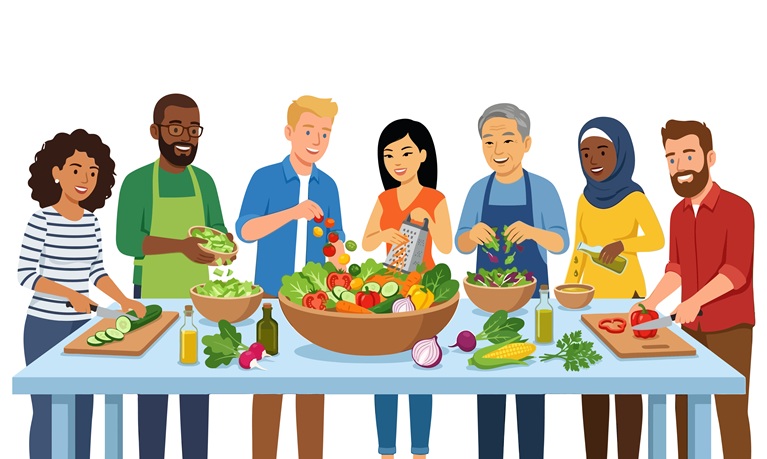
The ROOTED project will enhance the work and development of landed community kitchens (LCK) which are shared cooking and eating spaces directly linked to and supplied by local agroecological farmers and producers, meaning they are “rooted” within their community.
They also look to improve the wellbeing and opportunities of their communities rather than just providing much-needed food to those who need it most.
This includes offering access to education and training, social support and helping farmers, producers and the kitchens themselves to work closely for their mutual benefit. Currently some farmers who want to help are unable to get their food and produce to the kitchens or some LCKs may be unable to pay farmers or their cooks properly.
The research will look at the current network of LCKs across Europe and understand what makes each one work best and share that knowledge to help those that already exist, hone the creation of new LCKs and inform policy makers on how best to support them.
ROOTED involves a network of more than 50 kitchen-farmer coalitions across 20 cities in eight countries - the UK, Belgium, France, Italy, Netherlands, Finland, Hungary and Romania – as well as an array of 26 partners helping to make it a reality, including Coventry City Council and other public authorities across the continent, and educational institutions such as the University of Gent. The project is funded by the European Commission.
Dr Chiara Tornaghi from Coventry University’s Research Centre for Agroecology, Water and Resilience, who is leading the project, would eventually like to see LCKs in every neighbourhood in the same way there is a primary school.
It is not just about food. These grassroots initiatives understand the complex needs that exist in their communities. They care and repair for a range of forms of oppression and exclusion that impacts upon a diverse range of social groups and aim to address these issues around the kitchen table.
There is very real care for both people and the environment and a desire to transform the food system towards equity, justice and sustainability, by creating the needed neighbourhood infrastructures that can support this.
Some kitchen-farmer coalitions are working to develop economic models, menus and logistics that can enable a steady supply of food throughout the year, while paying the farmers fairly. Others are training people to become cooks or professional growers, which shows it is not just about feeding people but rather about addressing some of the root causes of why people need help with food in the first place, such as poverty and exclusion from the labour market.
People may have been discriminated against because of their race, neurodiversity, class or sexual orientation and been unable to remain in the formal education system due to this, so the kitchens can create a caring environment where learning takes a variety of forms and is more adapted to different needs.
Through facilitated hands-on and collaborative activities with artists, medical herbalists, chefs or somatic therapists - on farms, in kitchens and community gardens - these landed kitchens are breeding grounds for the type of people-centred social infrastructures and institutions that we need in a context in which food poverty is growing and conventional food systems are becoming increasingly unsustainable.
We want to harness the amazing work these landed community kitchens do and strengthen these environments by fostering more learning across these international examples.
Dr Chiara Tornaghi from Coventry University’s Research Centre for Agroecology, Water and Resilience
We’re proud to be working with Coventry University on ROOTED, a project that puts our city at the centre of an international conversation about how communities can feed themselves well, fairly and sustainably.
Community kitchens do so much more than put food on the table. They bring people together, help them learn new skills and build their confidence, and can open the door to training and work.
At the same time, by linking kitchens with local growers, they support a food system that is better for our environment and more resilient to rising prices and a changing climate. They also give communities space to grow fresh, seasonal food, building on our new Coventry Grows initiative.
By learning from what works in cities across Europe, we can help these grassroots projects grow and make sure more Coventry residents benefit from them.
Councillor Lynnette Kelly, Cabinet Member for Jobs, Regeneration and Climate Change at Coventry City Council
Find out more about the Research Centre for Agroecology, Water and Resilience.
--
The project is funded by the European Commission – grant number 101288015.