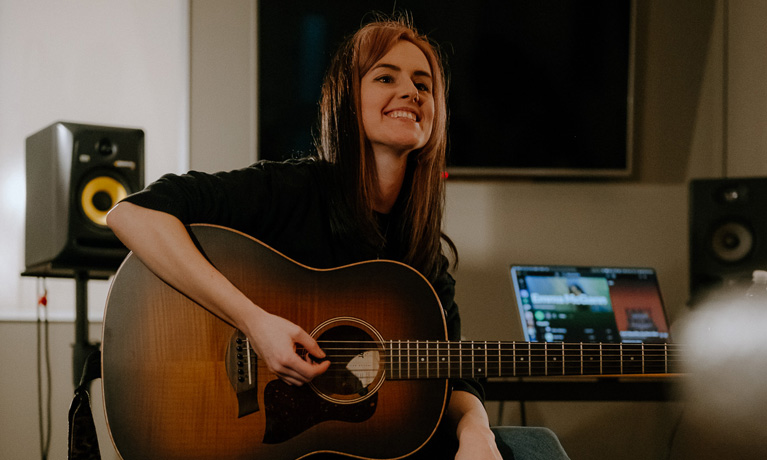
Emma McGann is an independent artist, songwriter and musician who graduated from Coventry University in 2016. For the past 16 years, she has toured worldwide, collaborated with some of her musical heroes and supported emerging artists as they navigate the ever-changing music industry.
We caught up with Emma to explore her journey from Coventry University to a global music career, and the defining moments that helped shape her creative path, including her track Teary Eyed, which was produced by Mike Shinoda.
Your journey to Coventry: why did you study Music Composition and Professional Practice?
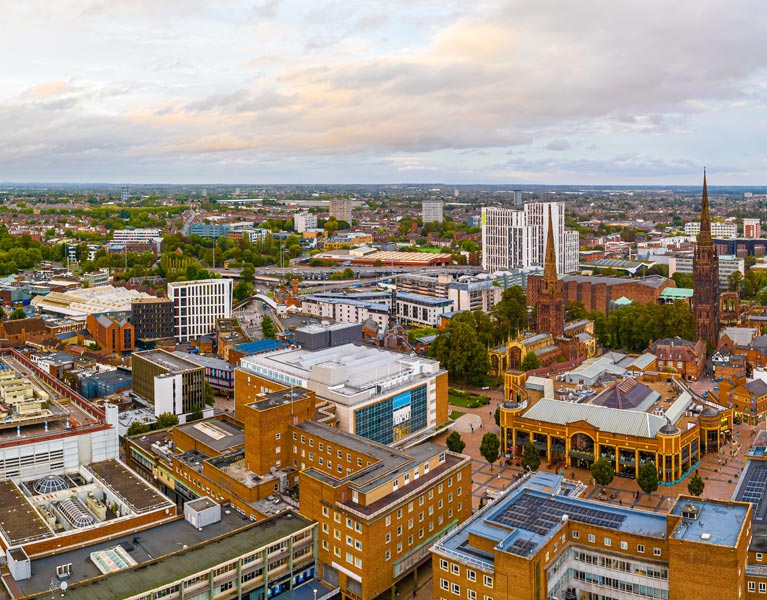
I’m originally from Coventry, and although I wanted to stay close to family, I still chose to move out and live independently during my studies. Music had been a passion of mine from a young age, so discovering that such incredible facilities had been sitting on my doorstep all along was pretty mind‑blowing.
My partner was already on the course a year ahead of me and couldn’t praise it enough, so I applied. I was surrounded by wonderful students, many of whom have become lifelong friends and colleagues.
Your student experience: what stands out most?
Graduation day will always be a standout memory. I was so excited that I turned up far too early to collect my cap and gown.
Alongside my studies, I worked part‑time behind the bar at The Phoenix, just across from the Ellen Terry Building. I asked my boss if I could start a weekly live showcase night for students and touring musicians, a space where people from any course could drop in, listen, perform and feel part of a creative community. Building that inclusive weekly event became one of the biggest social highlights of my time at Coventry University.
A defining moment: what shaped who you are today?
My defining moment actually happened before my course even began. I had an audition with lecturer Marcus Cornell, who we sadly lost recently. At a time when I was doubting myself, he completely shifted my perspective. He reminded me that music is for everyone, that confidence grows with experience, and that every musician, no matter their level, is always learning. That conversation stayed with me and shaped how I approach my career to this day.
Career path after graduation: how did your degree help you progress?
During my time at Coventry, I was constantly travelling to London, Brighton, Oxford and anywhere there was a music‑industry‑aligned event. The course offered a lot of independent study time, which meant I could use those windows to network and build connections.
But the most valuable part of my degree was the community. The friends I made on the course are still my closest collaborators, and some continue to perform in my band 16 years later.
Your music and songwriting: what does your day to day life look like?
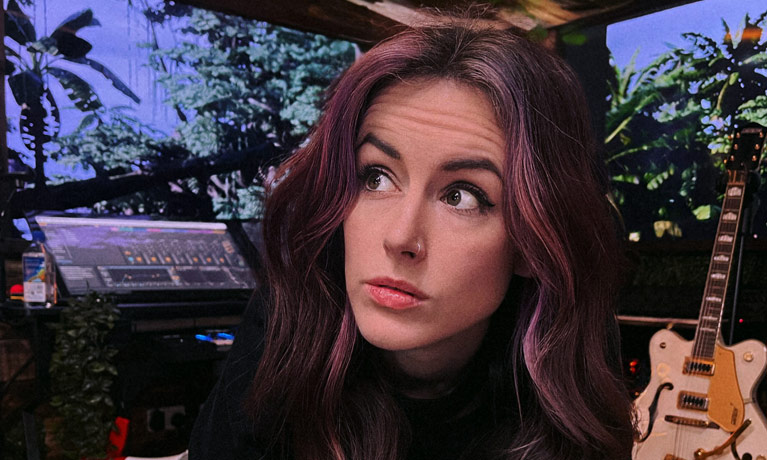
No two days look the same, but they’re always creative and always noisy in the best way. When I’m not travelling for shows, panels or industry events, I’m usually writing in my home studio. That might be for my own artist project, for other songwriters, or for TV and film music libraries.
My studio also doubles as a livestreaming suite. I was one of the first UK musicians to integrate livestreaming into my main artist strategy back in 2011, something that’s now become standard for many artists. It’s still a huge part of my daily routine.
Your proudest achievement so far
As a teenager, I was a die‑hard Linkin Park fan. I still have my original Hybrid Theory CD. Years later, I wrote a song called Teary Eyed that Mike Shinoda went on to produce. Hearing someone whose sound shaped your childhood imprint their style onto something you wrote is surreal and incredibly special. It’s one of my proudest career moments.
Advice for future students and aspiring songwriters
Starting university is a fresh chapter, and if you embrace it, those years can become some of the best of your life.
If you’re considering studying songwriting, then write, relentlessly! Write every single day. Immerse yourself in the city’s musical history. Collaborate. Attend local events. Become part of the furniture in your local music community. Support one another. In my experience, the people you meet and the communities you build will become the backbone of your future career.
Looking ahead: what’s next?
I’m currently working on my next project, which explores growing up in the 90s, losing people you love and stepping into motherhood. It’s a huge project, and I can’t wait to share it!