Welsh Mountain Equine Rescue – Ensuring Legacy, genetic Identity and continuing Nature based solutions (MERLIN)
Funder
Economic and Social Research Council – Rapid Response Fund
Project Team
Donna Oldbury-Thomas - Coventry University
Judith Conroy - Coventry University
Hollie Maddison - Coventry University
Matthew Hegarty - Aberystwyth University
Tia Jones - Aberystwyth University
Duration
1 year
Collaborators
Professor Mariecia Fraser, Aberystwyth University
Professor Emeritus Roy Brown, Bangor University
Friends of the Hill Pony Societies.
Torcoed Traction



Project overview
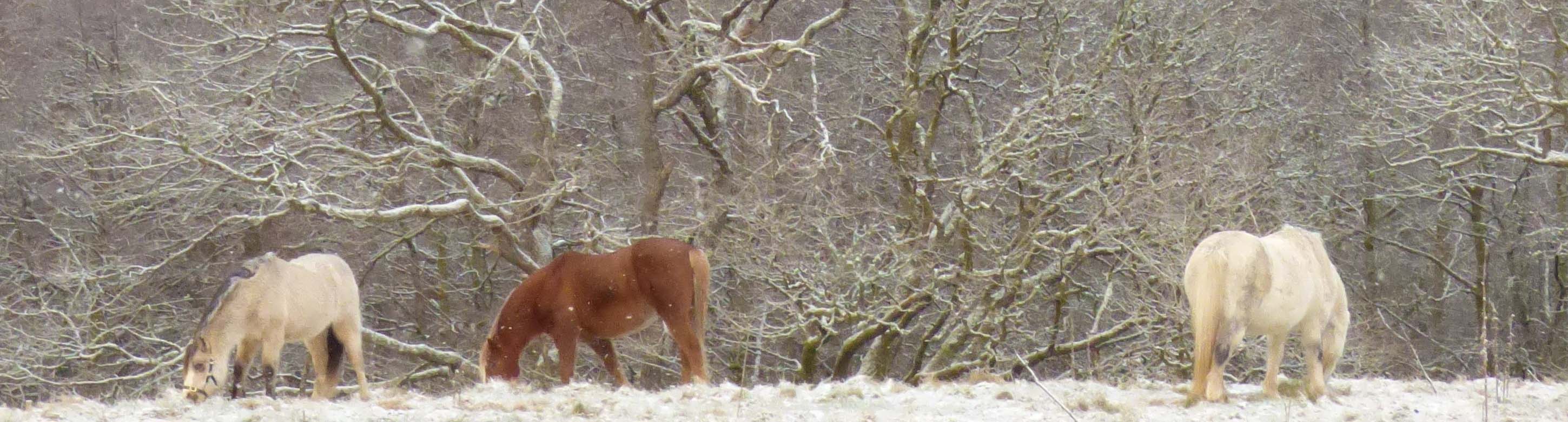
Using native Welsh Mountain Ponies in conservation grazing, alongside strategic firebreak creation, offers a powerful nature-based solution to reduce wildfire risk, restore biodiversity, and support rural livelihoods. A derogation under the Horse Passports (Wales) Regulations (2005) allows Semi‑feral Welsh Mountain Section A ponies, managed by the Hill Pony Improvement Society of Wales, to remain on the common / marshes throughout the year (feeding is allowed in severe weather conditions). Yet this approach depends on the survival of the near-extinct wild-foaled Welsh Mountain Pony. This project will deliver the first comprehensive genetic analysis of this critically threatened population, providing the evidence needed to secure protection through the Rare Breeds Survival Trust and support its more definitive inclusion within DEFRA's UK Genetic Livestock Evaluation (UKGLE) framework. This scientific work is not an end in itself; it is a direct pathway to social, environmental, and cultural impact. By safeguarding the future of these ponies, the project also protects the unique landscape management benefits they provide, ensuring the continued delivery of sustainable grazing, wildfire mitigation, biodiversity enhancement, and the preservation of an important part of Wales' natural and cultural heritage.
Project objectives
This project’s main goal is to help save the wild‑foaled Welsh Mountain Pony, a rare and threatened native breed, by securing official protection from the Rare Breeds Survival Trust (RBST). To do this, we will:
- Collect solid genetic evidence showing that these wild‑foaled ponies are genuinely different from other Welsh ponies.
- Use this evidence to apply for formal conservation status with the RBST.
- Build stronger links between researchers, conservation groups, and local communities to support long‑term work in biodiversity, land management, and cultural heritage.
- Produce clear results that influence research, policy, and public awareness.
Impact statement
Preserving the wild‑foaled Welsh Mountain Pony delivers wide‑ranging environmental, social, and economic benefits. These ponies are central to conservation grazing schemes that lower wildfire risk, restore habitats, and maintain resilient landscapes. Their presence also supports rural livelihoods by reducing land‑management costs, sustaining traditional farming practices (such as bashing bracken), and creating opportunities for eco‑tourism and community engagement. Yet this nature‑based solution depends on the survival of the ponies themselves. By providing the first comprehensive genetic evidence needed for official protection through the RBST, this project secures the long‑term viability of the breed and the cultural, environmental, and economic value it enables.
Outputs
- A high‑quality genetic sample set collected from wild‑foaled Welsh Mountain Pony herds and processed through an established commercial laboratory, ensuring reliable and comparable genetic data.
- A robust genetic analysis report demonstrating the distinctiveness of the wild‑foaled population, shared with academic partners and used to inform student research projects in genetics and conservation science.
- A fully evidenced conservation submission prepared for the Rare Breeds Survival Trust and DEFRA’s UKGLE committee, supporting the case for official protection and long‑term breed recognition.
- Academic and public‑facing research outputs, including an academic journal article in preparation and contributions to the RBST report, strengthening knowledge exchange in pony genetics, landscape management, and conservation practice.