Search
Opinion: Creation of knowledge economies is imperative for sustainable growth – here’s how we are helping do just that
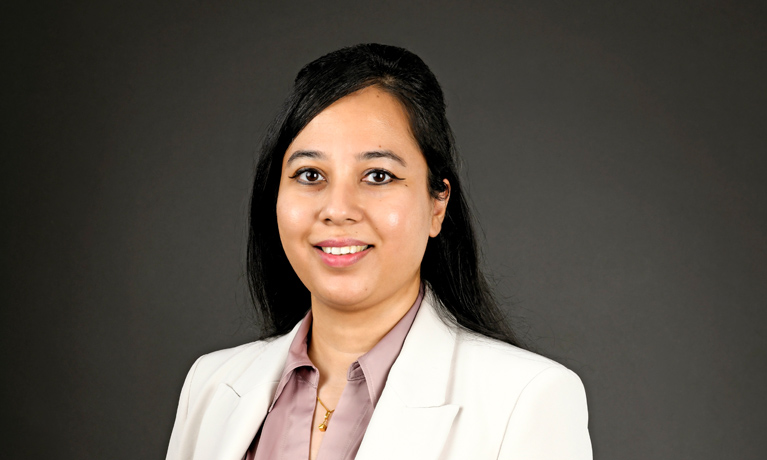
Yashodhara Dasgupta, Managing Director of Coventry University Group’s India Hub
University news / Research news / Opinion
Monday 12 October 2026
Press contact
Yashodhara Dasgupta, Managing Director of Coventry University Group’s India Hub, explores why universities have a vital role to play in building knowledge economies – and how education, research and international partnerships equip people to adapt and innovate as industries evolve.
Living in an age of constantly evolving technology, especially with the rapid growth of use cases in operations, innovation and tactical work across industries, there is a necessity for strategic and higher order thinking. This is facilitated by the creation of knowledge economies, where the focus is towards developing the skillset that helps in conceptualising the future and creates a mindset for lifelong learning and evolvement.
Governments are also acknowledging the importance of the creation of knowledge economies and including it as part of their future vision. One of the most recent examples is the launch of Viksit Bharat 2047 by the Government of India that aims to make the country a developed nation through economic and societal development.
Universities have a critical role to play in the creation of knowledge economies as there is a shift in mindset from the proportion completing higher education to creating graduates that are ready to deliver tangible value upon joining the workforce.
University education lays the foundation for knowledge fundamentals within a chosen discipline; however, continuous learning and development is critical for growth and staying on par with development in the industry.
Through strategic education and projects delivered by Coventry University Group’s India Hub, we have been able to inspire rising professionals across creative economies to STEM in developing skills needed to thrive in their role and shape the future of their respective industries.
One of our leading success stories is the Women in Space Leadership Programme (WiSLP) in partnership with India’s Department of Science and Technology, the UK-India Research and Education Initiative and the British Council.
Through this programme, 196 female scientists acquired leadership credentials, creating a community of practice that will also serve to promote progressive strategies within the field.
A proportion of the cohort went onto receive trainer education and can pass on the learnings to future female leaders in Space Sciences, STEM and potentially other disciplines. Combined with the WiSLP framework, this will provide a formal foundation for driving continued transformation by institutions integrating intersectionality and culturally sensitive approaches along with leadership.
Additionally in the creative sector, Coventry University Group partnered with Hamilton Studios to digitally preserve over 35,000 images, prints and documents from the two decades following India’s Partition as well as training young graduates/students to care for the Indian heritage by developing skillset in archival preservation, digitisation, and cultural data management.
Apart from training partnerships, knowledge and research collaborations are critical to harness synergies between institutions across countries. Coventry University Group's dual degree PhD programme with GITAM will bring together a core group of globally connected doctoral researchers leveraging joint supervision and access to expertise / facilities at both institutions.
Over the next decade or so, we will jointly lead future-focused research across healthcare, clean transport, arts and culture, agroecology and water resilience.
The success of these projects show that transnational partnerships can deliver knowledge exchange to power economic growth, leveraging combined strengths and aligning academic prowess with industry needs.
To connect with Coventry University Group’s India Hub and learn more about our business partnering vision, visit our website.