Search
Opinion: Young people are embracing change – and it's reshaping what they expect from universities
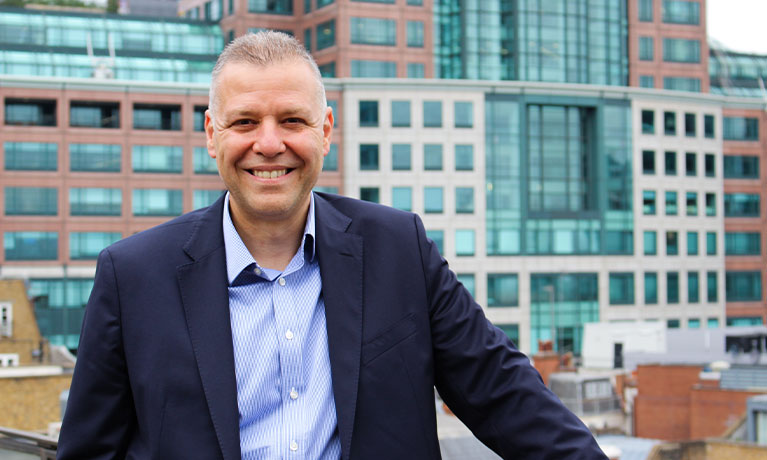
Professor Socrates Karidis, Pro Vice-Chancellor at Coventry University Group
University news / Student news / Opinion
Wednesday 12 August 2026
Press contact
Ahead of Results Day, Professor Socrates Karidis, Pro-Vice-Chancellor at Coventry University Group, reflects on why young people are becoming more open to changing their plans for higher education and what this reveals about their expectations of universities.
Results Day is often presented as a moment when young people's futures are decided.
For some, it will bring relief as plans unfold as expected. For others, it will prompt a reassessment of where and what they want to study. Increasingly, however, it is becoming an opportunity to make informed decisions and identify the path that feels right for them.
One of the most encouraging developments of recent years has been the way attitudes towards changing plans have evolved, reflected in part by changing perceptions of Clearing.
Embracing the prospect of change
Although it has been often viewed as a last resort for students who missed their target grades, Clearing is increasingly recognised for what it really is: an opportunity to reassess options, access support and make informed decisions about the future.
The year before last, more than two-thirds of students who went through Clearing did so for reasons other than missing their expected grades, including changing course or university, applying late or exploring alternative options. Nearly 70% of young people also view it as a positive option for those whose circumstances or aspirations have changed.
The growing use of Clearing for reasons beyond missed grades suggests students are approaching higher education with greater agency. Rather than feeling committed to decisions made months earlier, many are prepared to reconsider their options and choose the route that best aligns with their ambitions and circumstances.
Change remains daunting and often uncomfortable, but the willingness to embrace it may prove to be one of the most important strengths young people carry into the future.
Young people are preparing for a different world of work
This openness to change reflects a generation that has grown up amid rapid technological advances, shifting labour markets and evolving ways of working.
Many understand instinctively that careers are unlikely to follow a straight line. People are increasingly moving between roles, sectors and areas of expertise throughout their working lives and this reality is reshaping expectations of higher education.
Students want to know that the university and course they choose will give them more than a qualification. They want the knowledge, skills, confidence and experience needed to thrive in a changing world.
Far from diminishing the value of higher education, this makes it more important than ever. Choosing a university remains one of the most important decisions a young person can make, not because it determines their future, but because it helps prepare them for a future that cannot be fully predicted.
The value of higher education is critical for but also extends beyond employment outcomes and economic metrics. At its best, it develops curiosity, critical thinking and the confidence to question, challenge and contribute. It creates opportunities for individuals, while helping to strengthen communities, support innovation and shape society more broadly.
Universities must anticipate and evolve
Universities cannot rely on models designed for a different era and expect them to meet the needs of today's students and tomorrow's economy.
If students are becoming more adaptable, universities must do the same. Our role is not simply to provide knowledge, but to equip students with the confidence, skills and experiences they need to navigate careers that will continue to evolve.
At Coventry University Group, we have never shied away from staying ahead of the curve and doing things differently, rethinking and changing how, where and when students learn, placing greater value on international and professional experiences and embedding skills development and technological literacy in our courses.
We have also introduced more flexible study options, including moving initially some courses to six intakes a year and now extending that approach to the vast majority of our provision. For many students, flexibility is not simply desirable; it is what makes higher education accessible in the first place.
Ultimately, however, it is not about the opportunities themselves. It is about what those opportunities enable students to become.
That is why we place as much value on the experiential, professional, vocational and technical aspects of Higher Education as we do on academic rigour and critical thinking.
It's what students do with opportunity that matters
Universities have a responsibility to instil confidence in students that they will gain the knowledge, skills and experiences they need to own their future, succeed and make a positive contribution to society.
There is no better time than Results Day to reflect on the journeys of our alumni. Some came to us through Clearing. Some chose us from the outset. Others returned later in life to develop new knowledge and skills.
What mattered was never how their journeys began, but the impact they went on to make.
That is worth remembering on Results Day. Changing a plan is not the same as abandoning an ambition. Often, it is how people find a better route towards it, and universities should be prepared to help them do so.
Clearing has become much more than a process for allocating university places. It reflects a growing recognition among young people that success is not defined by a single decision or a single day.
What matters most is finding the right opportunity, making the most of it and remaining open to new possibilities as circumstances evolve. We are proud to believe that we can match that mindset with the flexibility, support and opportunities students need and that makes us confident that our graduates will be better prepared for the future.