Skip to main content Skip to footer
Rollercoaster ride

"Being pulled under”: Caring for someone with borderline personality disorder

Tuesday 11 August 2026

3 mins


What if being there for someone you love meant never fully switching off?

Across the UK, 8.9 million unpaid caregivers provide critical practical, emotional and financial support to family members and friends, forming the backbone of a care system that would struggle to cope without them. Yet despite the essential role they play, their experiences often go unseen.

For those supporting someone with borderline personality disorder (BPD), caring can involve navigating intense emotional situations over long periods. BPD is a mental health condition characterised by rapidly shifting emotions, difficulties in relationships, fear of abandonment and periods of crisis, including self-harm and suicidal thoughts.

Caring can take a toll

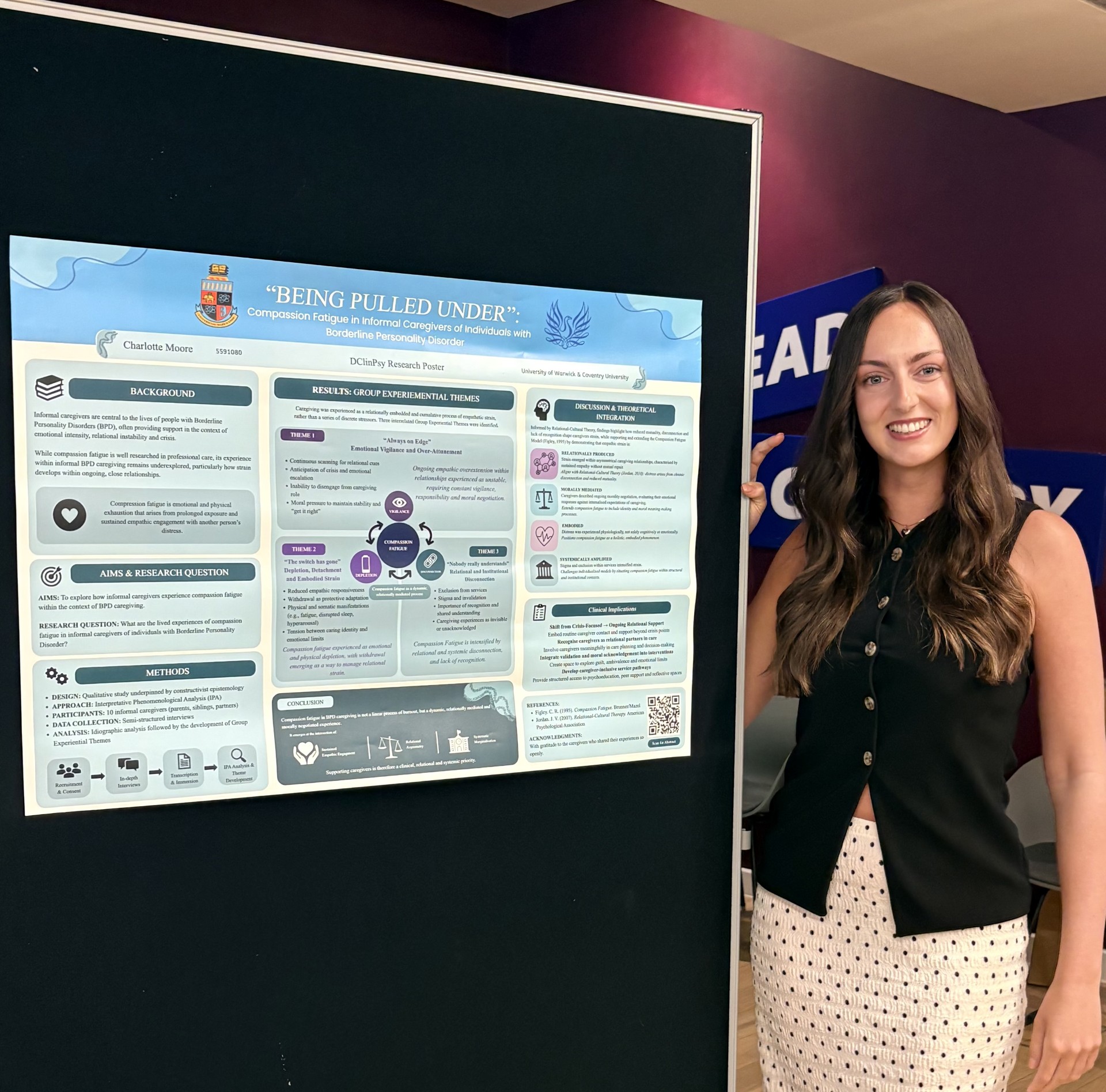
New research sheds light on “compassion fatigue” — the emotional and physical exhaustion that can emerge when someone stays emotionally attuned and responsive through long periods of distress.

In this study, caregivers described compassion fatigue as what happens when they stay “always on” for long periods, remaining emotionally responsive and alert until their own capacity feels worn down. It isn’t about caring less; it’s about the strain of caring continuously. One participant captured this feeling with the image of being slowly “pulled under,” trying to stay afloat while supporting someone else.

We often hear about compassion fatigue in healthcare professionals, but many people experience it at home too as informal caregivers. These are family members, partners, siblings or close friends providing unpaid support to people who struggle to manage daily life independently. They do this emotional work every day, often without training, guidance or a reprieve.

Understanding BPD caregiving

Supporting someone with BPD can mean living with uncertainty. Caregivers often stay emotionally responsive, adapt constantly and try to keep things steady when situations change quickly. Over time, this can feel overwhelming — like treading water without a chance to rest.

Yet caregivers also described moments of deep connection, shared humour, small breakthroughs, and a strong sense of commitment to the person they love. These positive moments mattered. They helped caregivers keep going, even when things felt difficult.

This research spoke directly to people caring for someone with BPD through in-depth interviews. It explored what that experience feels like and how it affects their wellbeing.

Three key themes stood out.

1. “Always on edge”

Many described feeling constantly alert, watching for changes and anticipating what might happen next. A missed message or unexpected silence could quickly turn into worry about a loved one’s safety.

Even calmer periods often felt temporary — like briefly coming up for air before being pulled back under again.

2. When compassion becomes harder to sustain

Over time, some caregivers felt emotionally drained. Others described becoming more detached or less able to respond with the same level of empathy.

This wasn’t about not caring. It was about coping.

Sometimes, stepping back was what allows people to keep going.

But caregivers also spoke about moments of renewed closeness, shared understanding and relational repair — reminders that caregiving can involve connection as well as strain.

3. Feeling “unseen” within care systems

Many caregivers felt overlooked or excluded by services, even when they were providing most of the daily support. Being listened to, understood and not having to explain from scratch made a difference.

Why these themes matter

As mental health services face increasing demand, more and more support is happening at home. But without recognition, that support comes at a cost.

When caregivers are better supported, relationships are more stable and those relationships are a key part of recovery and ongoing care.

Caring for someone with BPD can involve ongoing emotional strain, and that impact often goes unrecognised. Compassion fatigue isn’t a personal failing; it’s a natural response to sustained pressure.

If we want better mental health care, we need to support the people providing it every day- before they feel completely pulled under.

If this sounds familiar, know that you’re not alone. Reach out to local services or organisations like Carers UK for support.

Charlotte Moore

Charlotte Moore

Charlotte is a third year trainee on the Doctorate in Clinical Psychology at Coventry University and The University of Warwick. Her doctoral research focuses on compassion fatigue in informal care-giving for people with borderline personality disorder.

 Queen’s Award for Enterprise Logo
University of the year shortlisted
QS Five Star Rating 2023
TEF Gold 2023