Search
Coventry University research takes metal recycling to the next level allowing deep decarbonisation of advanced structural materials
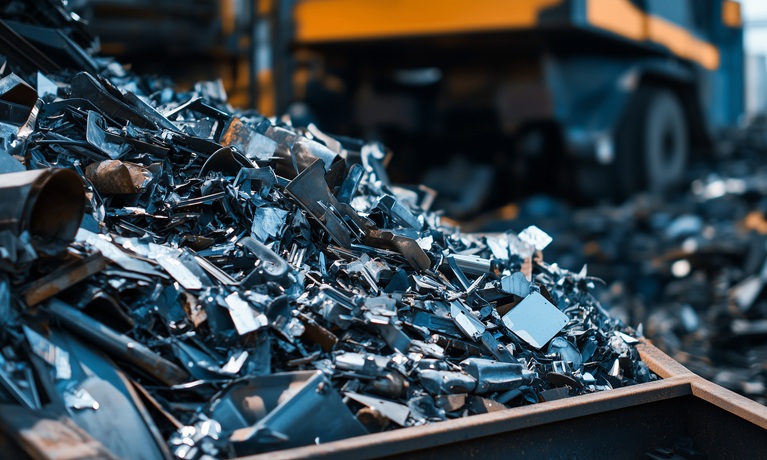
A host of Coventry University projects explore how to make the most of recycled steel and aluminium
University news / Research news / Sustainability, Clean Growth and Manufacturing
Friday 20 November 2026
Press contact
Coventry University is leading pioneering research exploring how recycled steel and aluminium could be used in next generation aerospace, automotive and construction applications.
As world leaders prepare to bring COP31 - the most prestigious global summit for action on climate change - to an end, researchers at Coenfventry University's Research Centre for Manufacturing and Materials are helping create a more sustainable future.
Future propulsion and modern construction method technologies will rely on low carbon materials and advanced engineering should deliver those while also supporting onshoring and strengthening of UK manufacturing supply chains.
The university’s portfolio of projects in this sector - which total more than £6m of investment from UK government and industrial partners - generate a systems approach to understanding how we can extract and utilise materials from end-of-life sources in more efficient ways.
Key projects include:
- Direct Repurposing of End-of-Life Strip Steels: Technical, Economic and Environmental Viability (Nigerian Government scholarship) - exploring how much need for steel globally could be met through the recovery and downstream processing of steel products, avoiding the high-energy, high-carbon intensity melting step of scrap-based production. Researcher: Ebilayefa Gbakena.
- SCRAPPY (EPSRC SUSTAIN steel research hub technology transfer project) - piloted the recovery of ultra-high purity, high-application flexibility scrap from end-of-life automotive. Principal investigator: Dr Darbaz Khasraw.
- Innovative solutions to deliver improved circular economy outcomes for materials within UK / EU end-of-life passenger vehicles (Coventry University Scholarship) - taking a systems-based combinatorial (linked impacts measuring) approach to discover the scientific and economic interplay between opportunities to recover, remanufacture, refurbish and recycle parts and materials from end-of-life vehicles (ELVs).
- Data-Driven Control and Valorisation of Scrap Steel and Aluminium (DCVS) (EPSRC and industry funded consortium as part of the National Materials Innovation Program (NMIP) UKRI grant reference: UKRI6579) - a collaborative supply chain approach to building an end-to-end efficiency model of scrap-based advanced material production. The project utilises advanced sortation methods, digital twins and complex process and optimization models with a four-year plan of work to deliver a step change in how scrap is produced and used.
Our portfolio of projects look at how we can unlock even greater value from recycled materials and end-of-life goods, opening up new opportunities for their use in manufacturing.
What we're trying to do is characterise the material and products to reduce the risk and uncertainty of their use, so companies are more confident in using them.
We're also trying to capture a more complete picture of what's in the material, components and complex portfolio of products we see reaching end-of-life, so we can use them in their most valuable applications both environmentally and economically.
Stephen Spooner, Professor of Sustainable Manufacturing at Coventry University
While recycled materials are already widely used in manufacturing, developing a greater understanding of their composition could help expand their use in applications with increasingly demanding material specifications.
The environmental benefits could also be significant as recycling metals requires substantially less energy than producing them from raw materials, with Prof Spooner estimating potential energy savings of up to 60% for steel and 85–90% for aluminium, semi-finished products.
Scrap metal is really interesting and important because it offers a lower energy route to producing these materials. The refining has already been done and we are able to focus on optimising melting processes and adjusting the composition for the new application.
Professor Stephen Spooner
The portfolio of research combines advanced laser technology, materials testing, standards interrogation, advanced disassembly, material processing and digital modelling to identify the chemical composition of scrap metal, component integrity and combined optimization opportunities to determine how best we can use our waste in the most demanding of manufacturing and societal applications.
Working with industry partners the projects also create research opportunities for Coventry University students, across both undergraduate and postgraduate programs.
The projects represent inputs from across six UK universities and more than 20 industrial partners with Coventry University’s team keen to share information resource and collaborate with the community on the opportunities available.
We're turning scrap into a high-value raw material which aligns with the advanced manufacturing processes and economies that the UK is reliant on.
We're converting an end-of-life material that is currently turned into scrap and exported into a quality of material that can actually be used to support the realistic delivery of the The UK's Modern Industrial Strategy, and supports the reversion of the offshoring of emissions (through supply chain exploitation) the UK has prolifically relied on to meet enviromental targets over the last 30 years.
Professor Stephen Spooner
Find out more about the work of the Research Centre for Manufacturing and Materials.
--
EPSRC
The UKRI Engineering and Physical Sciences Research Council (EPSRC) is the main funding body for engineering and physical sciences research in the UK. Our portfolio covers a vast range of fields from digital technologies to clean energy, manufacturing to mathematics, advanced materials to chemistry.
EPSRC invests in world-leading research and skills, advancing knowledge and delivering a sustainable, resilient and prosperous UK. We support new ideas and transformative technologies which are the foundations of innovation, improving our economy, environment and society. Working in partnership and co-investing with industry, we deliver against national and global priorities.