Search
Opinion: Are we mistaking ChatGPT confidence for AI competence?
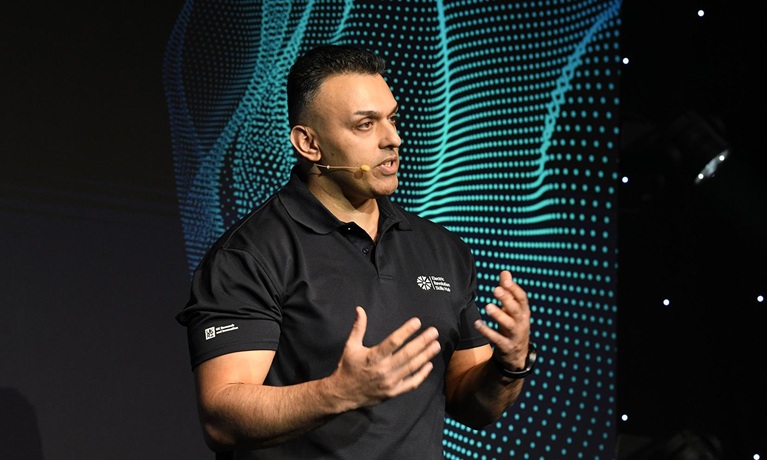
Deepak Farmah, Director of Research and Innovation at Coventry University
University news / Research news / Business news / Opinion / AI and Digital Technologies
Friday 09 October 2026
Press contact
Are we mistaking ChatGPT confidence for AI competence? Deepak Farmah, Director of Research and Innovation at Coventry University, explores what sets people apart when using artificial intelligence.
When someone tells you they are confident using AI, what can they actually demonstrate?
There is real value in being able to use the likes of ChatGPT well. It can help us produce a clearer report, work through unfamiliar information and save time. But I think we need to be more demanding about what we mean by AI competence, particularly when we talk about preparing people for the changing job market.
Confidence with a conversational tool is a useful starting point. The next step is being able to apply AI to a problem, understand its limitations and judge whether it has improved the work.
AI in industry
Recently, speaking with colleagues at Renault in France, I heard how AI is being used within manufacturing automation to improve efficiency and optimise assembly lines. Vision AI is also being used to support quality assurance and checks against regulatory requirements. What stood out was the in-house engineering expertise behind these applications, with AI treated as part of the engineering toolset.
For me, this is a practical example of AI competence. Engineers bring an understanding of the production environment and the requirements an application must meet. Their professional knowledge provides the basis for deciding where AI can help and assessing whether it performs as needed.
That matters because AI capability extends well beyond conversation. A chat window can support sophisticated work too. The distinction lies in how we apply the technology and how thoroughly we assess the result.
Workers' skills just as important
My colleague Professor Elena Gaura recently highlighted why AI adoption should be judged by improvements to the business, rather than tool purchases or user numbers. Her example of a task completed in minutes then waiting days for approval makes the point tangible. For me, this has a direct implication for skills: people need to understand the whole process and recognise whether AI has solved a problem or simply moved it elsewhere.
We can also see these expectations in recruitment. Investment firm Janus Henderson Investors has advertised for an AI Enablement Partner who can turn business problems into working AI solutions, measure their benefits and help teams adopt them. The advert also asks candidates to distinguish between problems that need AI and problems that need better processes. That is a useful test of professional judgement.
Nottingham Trent University made a similar distinction in a recent Senior Research Fellow advert. It asked for demonstrated AI application beyond conversational chatbot use, with shortlisted candidates expected to show how they use AI to address a challenge. Familiarity alone would not meet the requirements.
These are specialist roles, so they cannot describe the whole labour market. But they give us concrete examples of the capability employers are seeking. My view is that practical application will matter in more roles as organisations build AI into their everyday work.
Standing out from the crowd
For people seeking those opportunities, being able to explain what they have achieved will become increasingly valuable. What problem did they tackle? What contribution did AI make? How did they check the result? Listing a tool on a CV tells an employer very little about any of this.
The depth of capability will vary by role. Some people will develop systems. Others will apply them within their profession or assess whether a proposed solution is suitable. Leaders will need enough understanding to make informed investment decisions and take responsibility for the outcomes.
Our approach to skills development needs to reflect that range.
Introductory courses have an important place but people need a route to progress. We should be asking what they can do after the training and how they can demonstrate it. Course completion and greater confidence are useful measures but they give us an incomplete picture of capability.
Employers have a responsibility here too. If expectations are rising, people need opportunities to develop alongside them. That means access to suitable tools and time to practise on real challenges, with feedback from experts who understand the work.
Leadership and accountability matter
This is the broader understanding of AI we are pushing for at Coventry University. We want people to recognise how much more it can offer and develop the capability to guide its use. Connecting learning to the challenges organisations face is central to that ambition.
There is a wider responsibility as well. If adoption moves faster than our ability to question and shape it, poor decisions can become embedded in everyday systems. People need the confidence to challenge an output and recognise who could be disadvantaged by the way it is used.
Skills alone will not guarantee positive outcomes. Leadership and accountability also matter. But people who understand how to apply and challenge AI are better equipped to influence what organisations build and whose needs those systems serve.
I want us to be ambitious about that. Greater personal productivity is valuable. The wider opportunity is to help people use AI to improve the organisations and services we all depend on, while retaining the judgement to decide when it is appropriate.
Find out more about AI innovation at Coventry University.