When Richard Green looks back on his path into paramedicine, he recalls a route far from straightforward. Like many school leavers, he lacked a firm career plan. He was worried that his grades, including an A in drama followed by study at catering college, would limit his future options.
Today, Richard is a Paramedic Science Lecturer at Coventry University. His career shows that school exam results do not define your long-term potential. Whether you are leaving school, changing careers, or returning to study as a mature student, a route into paramedic science exists for you.
Below, Richard addresses the most frequent questions future applicants ask about entering the profession.
Do I need a science background to study paramedic science?
You do not need an extensive background in science to apply. While an interest in science helps, the degree programme introduces and develops the scientific knowledge needed for contemporary paramedic practice, including anatomy, physiology, pharmacology and pathophysiology.
Paramedicine relies as heavily on clinical decision-making, clear communication and compassionate care as it does on biology. Richard started his post-16 education at catering college before building the scientific grounding required to practice as a paramedic and teach at university level. A commitment to learning matters far more than your starting point.
Can I study paramedic science as a mature learner or career changer?
Universities welcome mature students and career changers. Returning to study after years away can feel daunting, but non-traditional applicants bring valuable life experience, resilience and practical problem-solving skills to the classroom. Your educational journey does not need to follow a straight line to lead to a successful healthcare career.
What qualifications do I need?
Entry requirements vary across higher education institutions. Coventry University accepts a range of Level 3 qualifications for the Paramedic Science BSc (Hons) course, including A-levels, BTECs and Access to Higher Education Diplomas.
Coventry University also offers a degree with a foundation year option for applicants who require additional academic preparation. If you worry your school results fall short, don’t assume paramedicine is out of reach. Contact university admissions teams directly to discuss your individual background and explore available entry routes.
What role do clinical placements play?
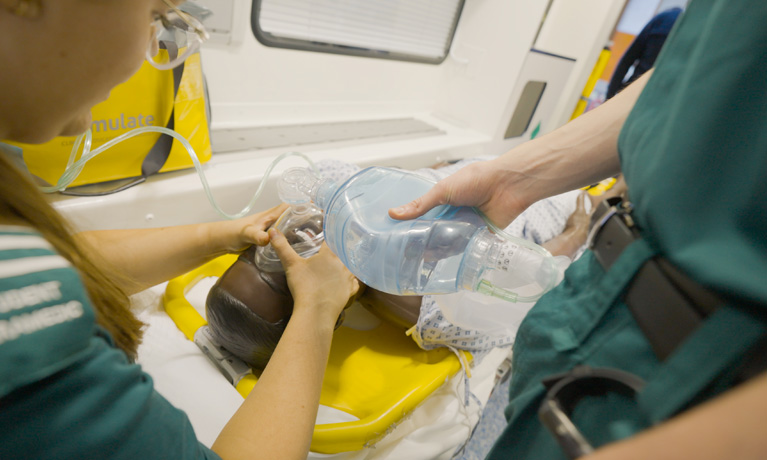
Clinical placements form a core component of accredited paramedic science degrees. At Coventry University, practice placements are arranged through the University's network of providers, placing you in real emergency medicine, urgent care and ambulance team settings.
You work alongside experienced healthcare professionals to build clinical confidence, master practical skills, and care for patients across diverse demographics. These placements show that paramedicine involves far more than responding to blue-light emergencies; it centres on holistic patient assessment and compassionate care.
Will a degree fully prepare me for the job?
Coventry University designs its Paramedic Science BSc (Hons) degree to help prepare graduates for professional registration. The curriculum combines academic study, practical simulation, virtual simulated placements and clinical experience.
Beyond clinical procedures, the course develops vital professional attributes, including teamwork, resilience, communication and decision-making in challenging environments. On successful completion of the programme, graduates are eligible to apply for registration with the Health and Care Professions Council (HCPC) as a paramedic.
Do I need a driving licence?
Driving forms an essential practical requirement for most paramedic roles within NHS ambulance trusts. While university course entry requirements focus on academic and personal suitability, ambulance service employers expect paramedics to hold a full driving licence, often with C1 entitlement to drive emergency vehicles. Check the specific driving criteria of regional ambulance trusts early in your application process.
Can I switch to paramedicine with a degree in another subject?
A previous degree in an unrelated subject, such as business, management, or the arts, will not prevent you from retraining as a paramedic. University admissions teams value the transferable skills gained from prior higher education and employment, including leadership, organisation, critical thinking and performing effectively under pressure.
What career paths open after graduation?
While most graduates register and work as frontline paramedics, a paramedic science degree opens doors across the wider healthcare sector. Experienced paramedics can advance into specialist clinical practice, primary care, research, management, or university education.
Why study Paramedic Science at Coventry University?
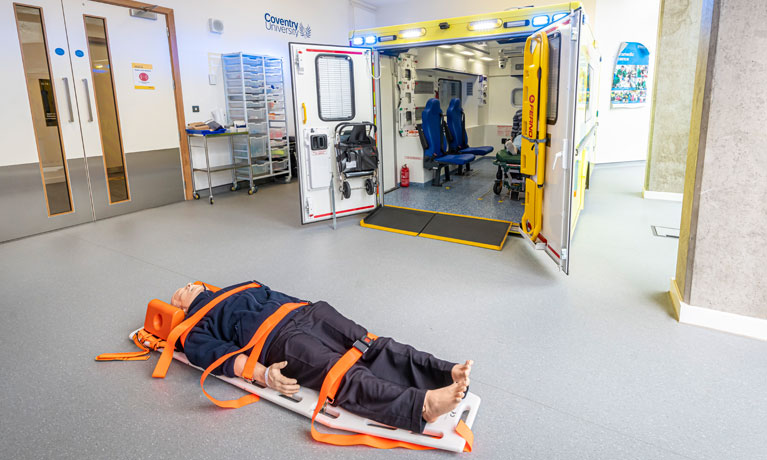
Coventry University prepares student paramedics through modern simulation facilities, structured academic teaching and university-sourced clinical placements. You practice essential procedures in controlled simulation environments before applying your knowledge during practice placements.
Academic staff with direct frontline experience will guide you through every stage of learning, ensuring a close link between classroom theory and real-world patient care. Attending an Open Day or Applicant Event provides a clear view of campus facilities and an opportunity to speak directly with lecturers and current students.
Is funding available?
Financial support is available for eligible healthcare students in England. Applicants can access standard student finance for tuition fees and living costs alongside the NHS Learning Support Fund, which currently provides a non- repayable training grant of at least £5,000 per academic year. Check the latest NHS Student Bursaries and Student Finance England guidance for full eligibility criteria.
Richard Green's journey demonstrates that career paths rarely follow a rigid template. Uncertain beginnings, non-traditional subject choices, and grade concerns do not have to block your progress. If you want to care for others and have the determination to learn, Paramedic Science BSc (Hons) at Coventry University offers a clear and achievable path forward.