Search
Electro-Mechanical Engineering BEng (Hons)
Study level: Undergraduate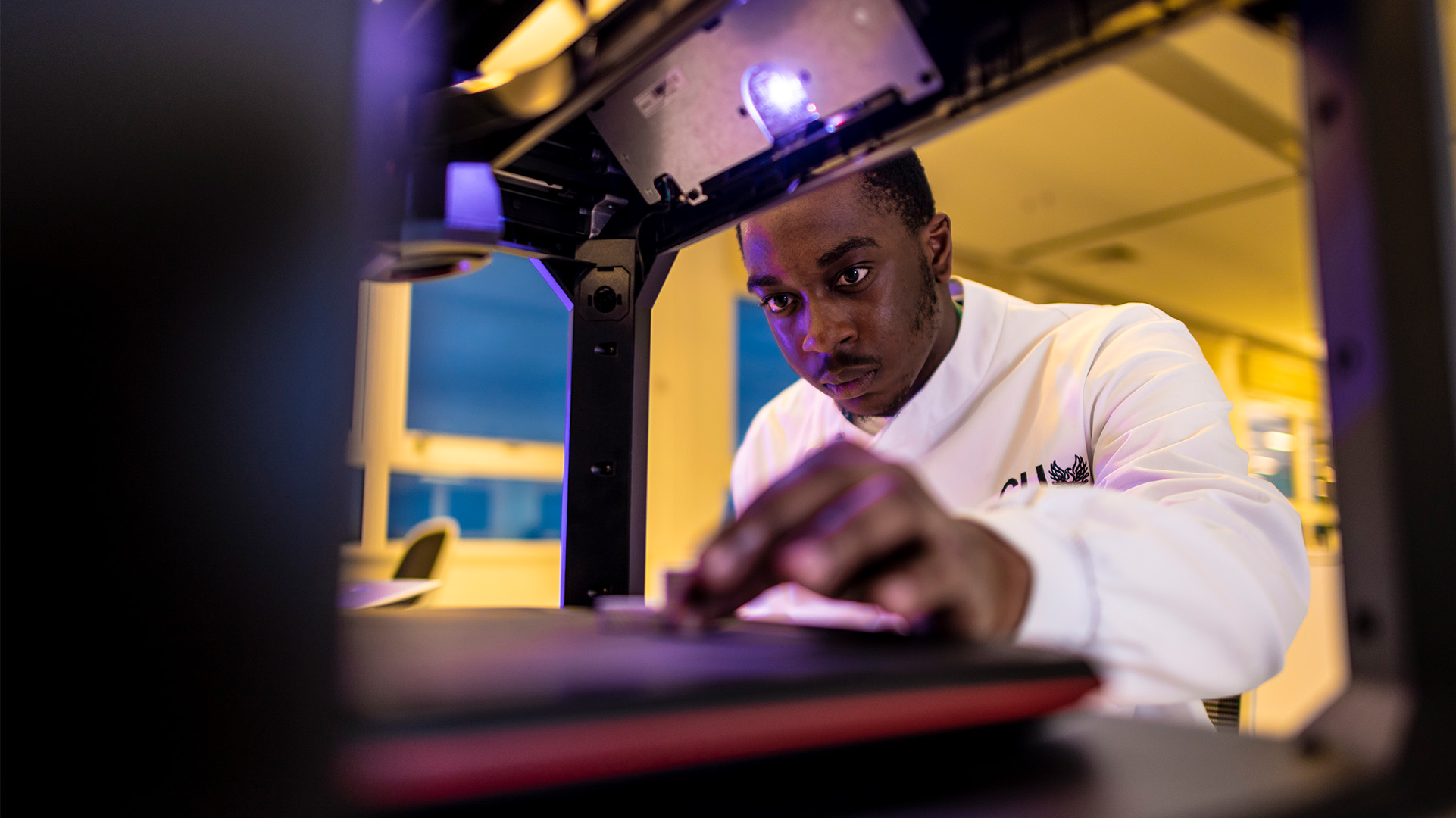
Build engineering skills for modern mechanical and electrical systems.
Course features
Course option
Year of entry
Location
CU London (Dagenham, London)
Study mode
Full-time
Sandwich
Duration
3 years full-time
4 years sandwich
UCAS codes
HH36
Start date
September 2027
Course overview
Explore how mechanical, electrical and digital engineering come together to shape the systems, technologies and industries influencing modern life.
Electro-mechanical engineering brings together mechanical design, electrical power, electronics, software, control and data. This course is designed to help you understand how these areas connect, and how engineers use them to design, test and improve practical systems.
You’ll study core areas of mechanical, electrical and electronic engineering alongside mechatronics, control systems, embedded systems, smart manufacturing and renewable engineering. You’ll also build mathematical, analytical and digital skills that can support engineering modelling, simulation, design and problem-solving.
Practical learning is built into the course. You’ll use engineering software, laboratory activities, simulation, design tasks and project-based learning to apply theory to engineering problems. In your final year, you’ll work on an individual engineering project, giving you the chance to investigate a topic linked to your interests, work-related activity or future career plans, as appropriate.
Why study this course
- Build interdisciplinary engineering knowledge and understanding
Develop the ability to connect mechanical, electrical and digital engineering ideas, helping you approach problems from different technical perspectives. - Apply theory through practical learning
Put engineering principles into practice through laboratory work, simulation, design tasks and problem-solving activities. - Develop design and analysis skills
Use engineering methods and digital tools to model, test and evaluate technical solutions. - Explore modern engineering systems
Examine how automation, control, manufacturing and connected technologies are used in practical engineering settings. - Consider engineering in a wider context
Explore how engineers respond to technical, environmental, ethical and professional responsibilities when developing products, systems and processes. - Build adaptable professional skills
Develop skills in planning, research, teamwork, technical reporting, problem-solving and using engineering information to support decisions. - Study one module at a time
Focus on one 30-credit module over a six-week block. Many modules use practical assessments with no end-of-year exams to build your knowledge step by step with regular feedback.
What you'll study
We regularly review our course content to keep it relevant and current for our students. Consequently, we may update modules to reflect the latest industry standards.
How you'll learn
Teaching and learning methods may include:
- lectures: gain expert insights and a structured overview of key concepts and current developments in the field
- seminars: engage in discussion and debate, deepening understanding and critical thinking
- tutorials: receive personalised guidance to solve complex problems and consolidate learning
- group projects: build teamwork and collaboration skills while tackling real-world challenges such as practical engineering scenarios
- workshops: apply knowledge hands-on, enhancing practical skills and problem-solving abilities
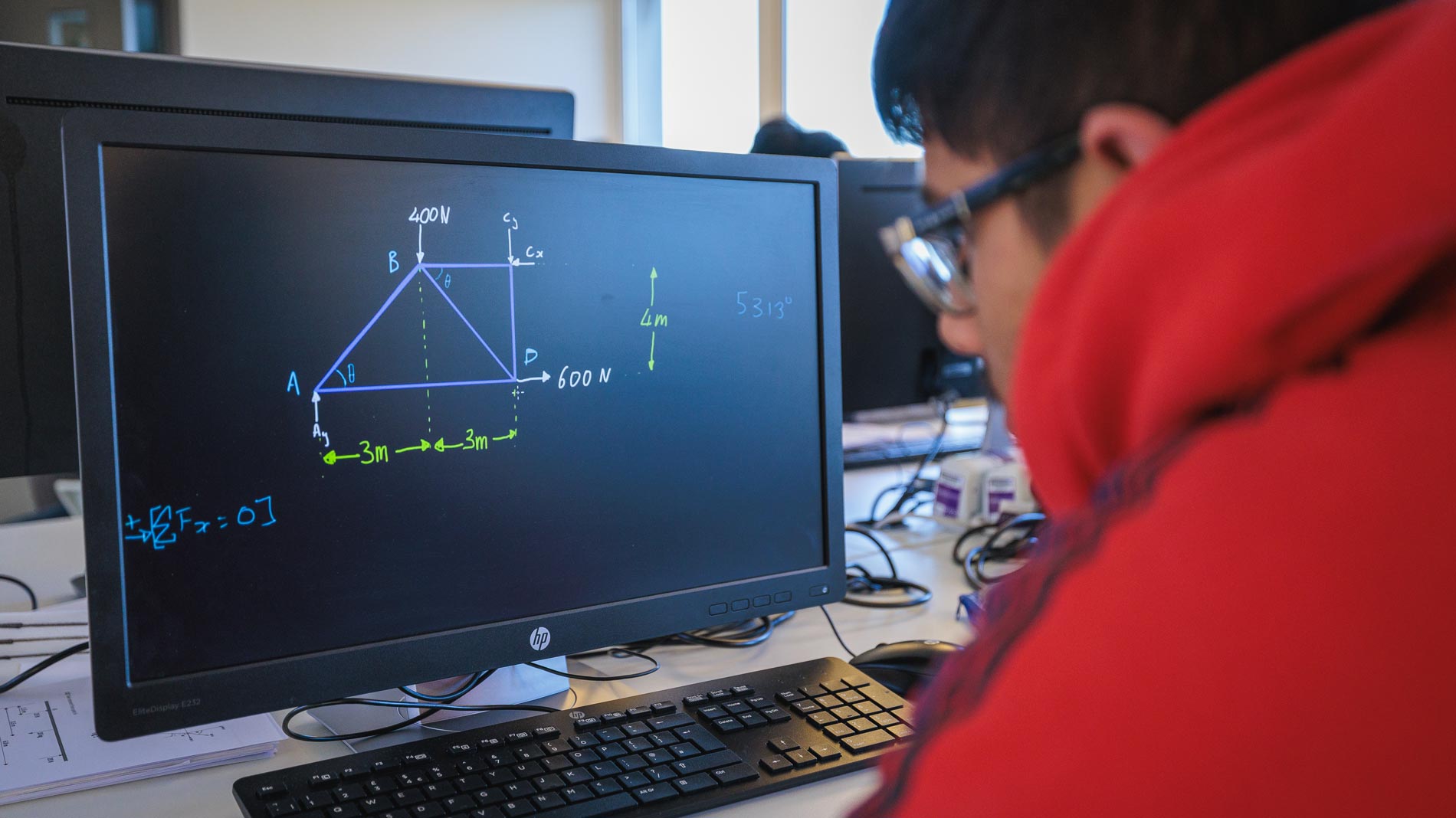
- computer laboratory sessions: learn to use specialised software for modelling, analysis, and simulations
- simulations laboratory sessions: explore complex systems safely and efficiently, testing scenarios that are difficult to replicate physically
- online learning: access flexible resources for self-paced study and reinforcement of key concepts.
Teaching contact hours
As a full-time undergraduate student, you will study modules totalling 120 credits each academic year. A typical 30-credit module requires 300 hours of study. Study hours are made up of teaching contact hours and guided and independent study.
Teaching hours
Teaching hours may vary, depending on where you are in your studies, but on average, you will have between 10 and 12 teaching and learning hours each week. You will also have the option to attend additional sessions, including time with a progress coach or to meet with staff for advice and feedback. As you progress through your studies, teaching hours may reduce.
Guided and independent study
Throughout your studies, you will be expected to spend time in guided and independent study to make up the required study hours per module. You will be digging deeper into topics, reviewing what you’ve learnt and completing assignments. This can be completed around your personal commitments. As you progress to the end of your studies, you’ll spend more time on independent learning.
Online learning
As an innovative university, we use different teaching methods, including online tools and emerging technologies. So, some of your teaching hours and assessments may be delivered online.
Assessment
Assessment methods vary by module and may include:
- coursework
- online quizzes
- calculation-based assignments
- lab reports
- group project work
- design assignments
- computer-aided drawings
- case studies
- presentations
- video recordings
- project reports
- technical reports
- dissertation / thesis-style project work
- time-constrained assessment
- poster presentation.
The Coventry University Group assessment strategy ensures that our courses are fairly assessed and allows us to monitor student progression towards achieving the intended learning outcomes.
Entry requirements
Typical entry requirements:
Not got the required grades? We offer this degree with an integrated foundation year.
Fees and funding
| Student | Full-time | Part-time |
|---|---|---|
| UK, Ireland*, Channel Islands or Isle of Man | 2027/28 fees TBC 2026/27 fees: £9,790 per year |
Not available |
| EU | 2027/28 fees TBC 2026/27 fees: £9,790 per year with EU Support Bursary** 2027/28 fees TBC 2026/27 fees: £15,500 per year without EU Support Bursary** |
Not available |
| International | 2027/28 fees TBC 2026/27 fees: £15,500 per year |
Not available |
If you choose to study this course with a professional placement2 or study abroad year, you will need to pay a tuition fee3 to cover your academic support throughout your placement year. Students commencing their professional placement in the academic year 2028/29 will pay £1,575 if they are paying UK fees, or £1,900 if they are paying international fees.
For advice and guidance on tuition fees and student loans visit our Fees and Funding page and see The University’s Tuition Fee and Refund Terms and Conditions.
The University will charge the tuition fees that are stated in the table above for the first Academic Year of study. The University will review tuition fees each year. For UK (home) students, if Parliament permits an increase in tuition fees, the university may increase fees for each subsequent year of study in line with any such changes. Note that any increase is expected to be in line with the Retail Price Index (RPI), a UK measure of inflation that tracks changes in the cost of living.
If you choose to study this course with a professional placement or study abroad year, the University will charge the tuition fees stated above for those on a placement during Academic Year 2028/29. The University will review professional placement tuition fees each year. For UK (home) students, the University may increase fees for each subsequent year of study, but such that it will be no more than 5% above RPI.
For international students, we may increase fees each year, but such increases will be no more than 5% above inflation. If you defer your course start date or have to extend your studies beyond the normal duration of the course (e.g. to repeat a year or resit examinations) you may be charged the tuition fees in force at the time you take that additional period of study, and/or in line with any legislative changes that apply at that time.
We offer a range of International scholarships to students all over the world. For more information, visit our International Scholarships page.
Tuition fees cover the cost of your teaching, assessments, facilities and support services. There may be additional costs not covered by this fee such as accommodation and living costs, recommended reading books, stationery, printing and re-assessments should you need them. Find out what's included in your tuition costs.
The following are additional costs not included in the tuition fees:
- Any optional overseas field trips or visits: £400+ per trip.
- Any costs associated with securing, attending or completing a placement (whether in the UK or abroad) which may include costs of travel, accommodation, equipment or uniform required for the placement and any visa-related costs.
*Irish student fees
The rights of Irish residents to study in the UK are preserved under the Common Travel Area arrangement. If you are an Irish student and meet the residency criteria, you can study in England, pay the same level of tuition fees as English students and utilise the Tuition Fee Loan.
**EU Support Bursary
Following the UK's exit from the European Union, we are offering financial support to all eligible EU students who wish to study an undergraduate or a postgraduate degree with us full-time. This bursary will be used to offset the cost of your tuition fees to bring them in line with that of UK students. Students studying a degree with a foundation year with us are not eligible for the bursary.
How do you know if you need to pay UK or international tuition fees?
Facilities
Course-specific facilities include:
- computer labs providing access to a range of engineering software
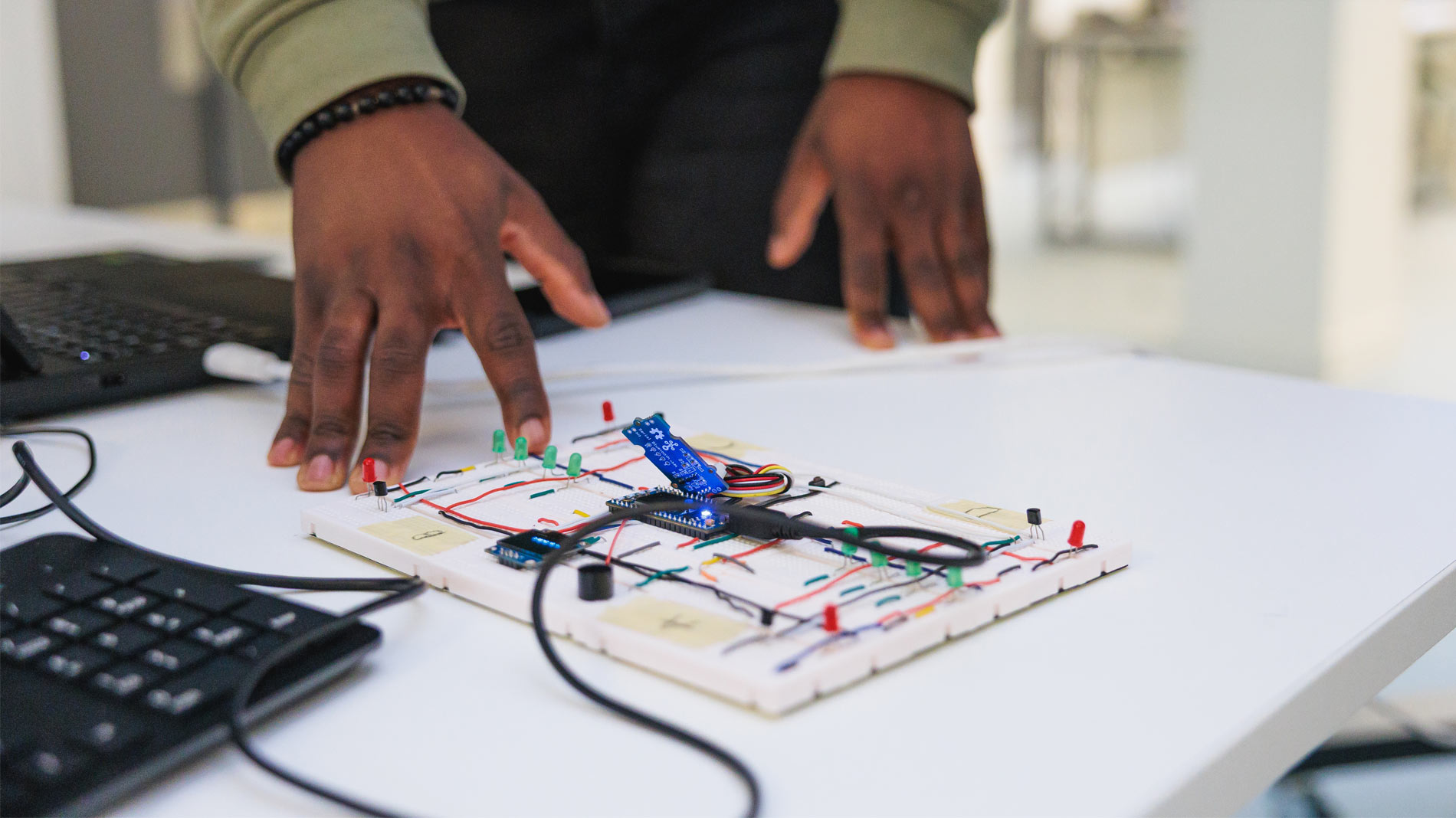
- a virtual instrumentation suite for electrical and electronic circuits
- a range of mechanical testing kits covering numerous mechanical engineering principles.
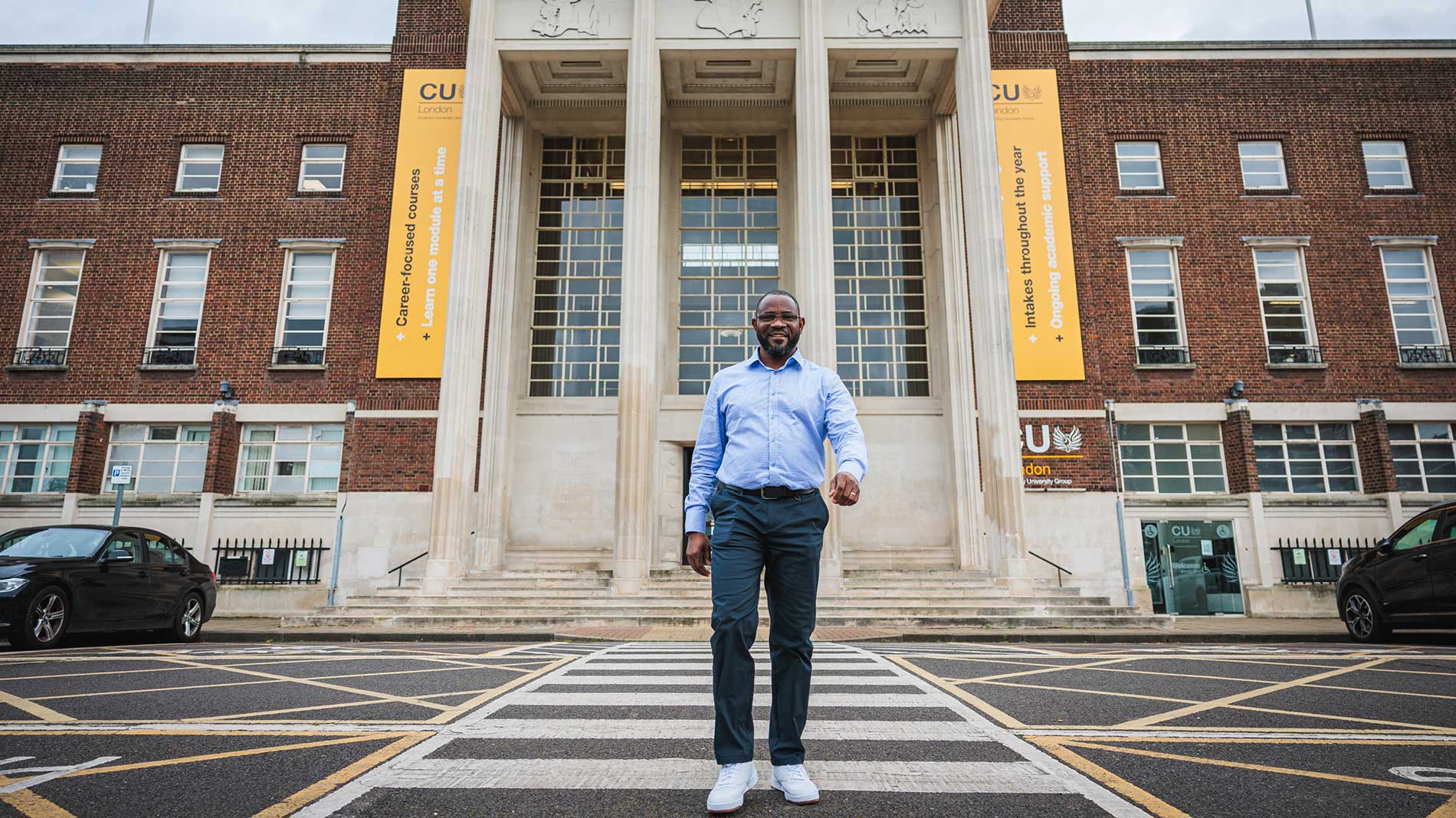
Our Dagenham campus is in the stylishly renovated Civic Centre, offering a unique mix of classic architecture and modern learning spaces. You can study in our modern library, use the open-access IT suites or find a quiet spot in one of the many breakout areas designed for group work.
When you need a break, the on-site café is the perfect place to grab a snack and socialise with friends. The campus is just a short walk from local shops and transport links, making it easy to balance your studies with your life outside of university.





You’ll use facilities through timetabled teaching, practical activities and relevant independent study. Access may vary by module, activity, capacity, supervision or safety requirements. Access may change or be limited where the University needs to follow public authority guidance, decisions or orders.
Careers and opportunities
Engineering employers increasingly need graduates who can understand how mechanical, electrical and digital systems work together, adapt to changing technologies and work across different technical areas.
This course is designed to help you build the technical, practical and transferable skills that can be useful in a career in engineering, technology, manufacturing, automation and sustainable systems.
You could apply your skills across a range of engineering sectors, including product design, manufacturing, automation, control systems, mechatronics, embedded systems, software-related engineering, process engineering, technical support, renewable energy, nuclear engineering, project engineering or research and development. This course can also support progression to postgraduate study in engineering or related fields, which may be useful for students interested in research or teaching routes.
Examples of possible career paths include:
- electro-mechanical engineering roles
- mechanical engineering roles
- electrical or electronic engineering roles
- mechatronics roles
- automation or control systems roles
- manufacturing or process engineering roles
- embedded systems, IoT or software-related engineering roles
- renewable, sustainable or nuclear engineering roles
- technical support or engineering technician roles
- project engineering or project management roles
- postgraduate study, research or teaching-related routes.
These are examples of possible career paths. Some roles may require further training, professional qualifications, accreditation or experience.
How to apply
UK students
International students
Disclaimers