Search
Nursing Associate Foundation Degree
Study level: UndergraduateFoundation degree
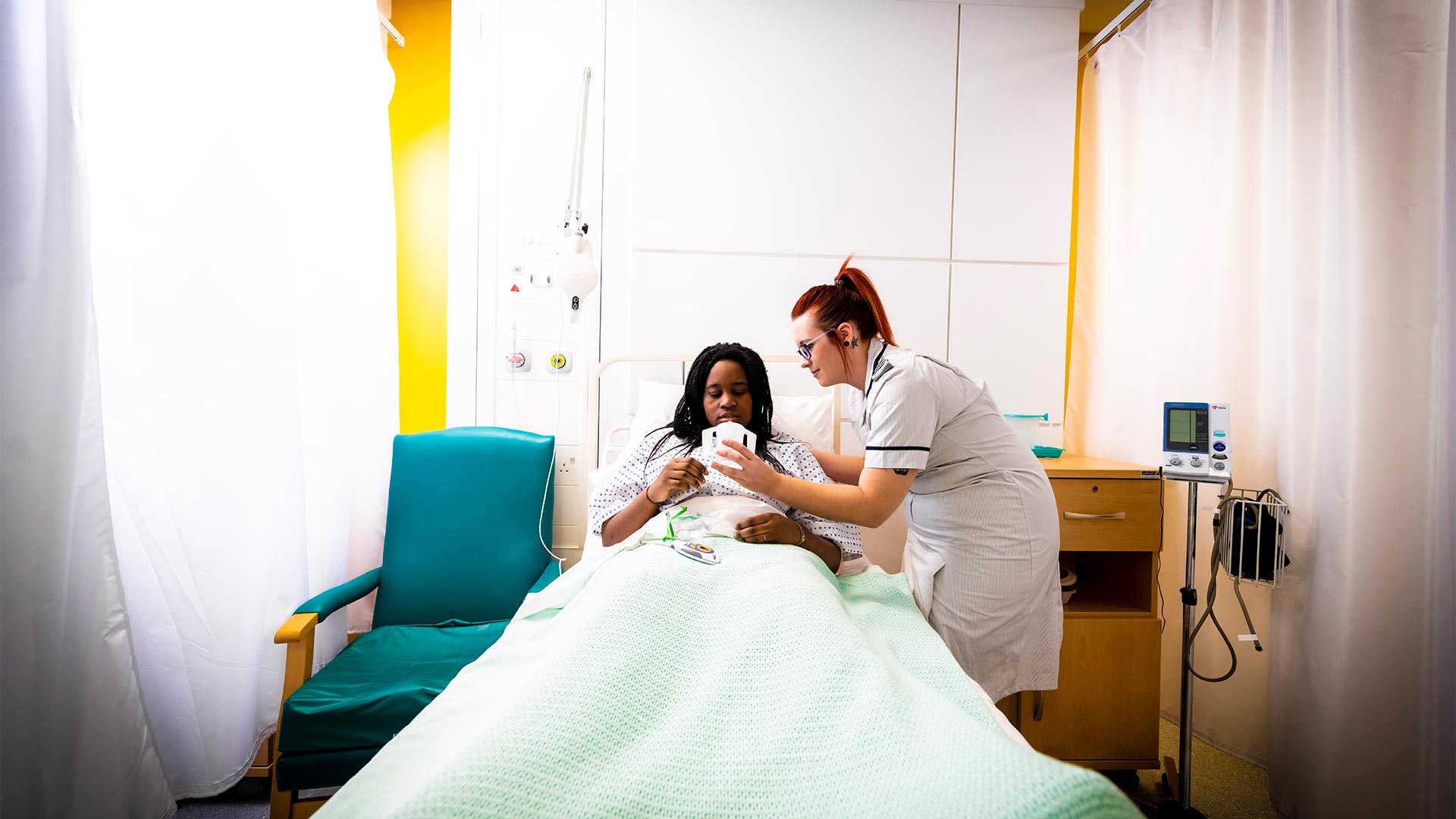
Our two-year Foundation Degree prepares you for professional registration as a Nursing Associate where you can make a real impact on the quality of life and care for people of all ages in a range of healthcare settings.
Course features
Year of entry
Location
CU Scarborough (Scarborough)
Study mode
Full-time
Duration
2 years full-time
Course code
HF12
Start date
September 2027
January 2028
Course overview
A registered nursing associate plays a crucial role in patient care, administering a variety of treatments, monitoring health and preventing ill-health and supporting individuals and families. Working as part of a team alongside registered nurses, you’ll provide hands-on care in diverse clinical settings, including hospitals and community health and care environments.
- Successful completion of this course makes you eligible to apply for professional registration as a Nursing Associate with the Nursing & Midwifery Council (NMC)1.
- Explore healthcare holistically, going beyond physical wellbeing to recognise the emotional, social and psychological aspects of patient needs.
- Practice-based learning, simulation and clinical placements develop your hands-on experience under the guidance of experienced professionals2,5.
- Develop your ability to provide compassionate, empathetic care and effective communication, essential qualities that lie at the heart of your practice.
- Advocacy and social justice are integral to the course, empowering nursing associates to champion patients’ rights and promote equitable health and care access.
Why you should study this course
As a nursing associate, you can make a real and meaningful impact, providing essential care, support and advocacy across various health and care settings. Whether it’s managing chronic conditions, assisting with rehabilitation or promoting wellbeing, your contributions will directly enhance patients' lives.
- Access to expert staff with nursing, health and care backgrounds
- Your voice matters - you will contribute to quality outcomes within diverse communities.
- Be part of a learning community committed to excellence, mutual respect and growth - diversity is celebrated and inclusion is paramount.
- While fully preparing you for the role of nursing associate, the course may also offer a pathway to other nursing roles, including that of a graduate nurse through progression onto a pre-registration programme (subject to application and additional costs).
- Able to enter the workplace after just two years and can work across different specialisms.
Studying nursing at CU Scarborough
Gain the skills and experience to transform lives, communities and the future of healthcare delivery. We aim to empower you to become a stand-out healthcare professional, capable, competent and confident in your field and role within the wider healthcare team.
Continuously developing your sense of professional identity as a nursing associate from day one, you'll learn in an environment that puts inclusivity, diversity and dignity at its heart.
Joint 10th
for Nursing
The Times and Sunday Times Good University Guide 2027
Accreditation and professional recognition
Nursing and Midwifery Council
The Nursing Associate Foundation degree programme is approved by the Nursing & Midwifery Council (NMC) for the 2027-28 intake.1

From the frontline to the classroom
Sophie Pickard, a Scarborough nurse who returned early from maternity leave to support patients during the COVID‑19 pandemic, is now teaching at CU Scarborough to inspire the next generation of NHS professionals.
Read Sophie's storyGet to know your lecturer
Donna Royle, a lecturer on the Nursing Associate Foundation Degree course at Coventry University, shares her insights and passion for teaching nursing.
What you'll study
This course gives you the opportunity to develop a range of practical skills and the underpinning knowledge to allow you to make a real difference to quality of life and care of people of all ages and in a range of healthcare settings.
Equal time and weighting are given to the practical and theoretical components of the course. The course is taught by experienced nurses and healthcare professionals who will support you in your journey to becoming an NMC-registered Nursing Associate.
We regularly review our course content to keep it relevant and current for our students. Consequently, we may update modules to reflect the latest industry standards.
How you'll learn
We understand that everyone learns differently, so this course will consist of structured teaching sessions which can include:
- on-campus lectures, seminars and workshops
- clinical skills teaching
- group work
- self-directed learning
- online learning activities
- videos
- quizzes
- practice placement opportunities2,5.
Teaching contact hours
As a full-time undergraduate student, you will study modules totalling 120 credits each academic year. A typical 20-credit module requires a total of 200 hours study. Study hours are made up of teaching contact hours and guided and independent study.
Teaching hours
Teaching hours may vary, depending on where you are in your studies, but on average, you will have between 10 and 12 teaching and learning hours each week. You will also have the option to attend additional sessions, including time with a progress coach or to meet with staff for advice and feedback. As you progress through your studies, teaching hours may reduce.
Practice-based learning
Practice-based learning is a vital part of this foundation degree. You will have access to university staff, but you should expect to spend most of your contact time with practice collaborators during your placement activities. These professionals will mentor you as you apply your skills in real-world settings. To qualify for your profession, you must satisfy the eligibility requirements set by the NMC. You must complete at least 1,150 practice-based hours throughout your foundation degree. We calculate these hours through a combination of hands-on placements and simulated learning.
To help ensure the safety and wellbeing of both you and those you work with during placements, you’ll need to complete satisfactory occupational health clearance and an enhanced criminal record disclosure (DBS) as part of the admissions process. These checks are required to confirm your eligibility for practice-based learning.
Guided and independent study
Throughout your studies, you will be expected to spend time in guided and independent study to make up the required study hours per module. You will be digging deeper into topics, reviewing what you’ve learnt and completing assignments. This can be completed around your personal commitments. As you progress to the end of your studies, you’ll spend more time on independent learning.
Online learning
As an innovative university, we use different teaching methods, including online tools and emerging technologies. So, some of your teaching hours and assessments may be delivered online.
Assessment
This course will be assessed using a variety of methods which will vary depending upon the module.
Assessment methods may include:
- coursework
- practice placement2,5
- phased tests
- simulations
- Objective Structured Clinical Examinations
- presentations
- case study
- reflections.
The Coventry University Group assessment strategy ensures that our courses are fairly assessed and allows us to monitor student progression towards achieving the intended learning outcomes.
Entry requirements
Typical entry requirements:
Fees and funding
| Student | Full-time | Part-time |
|---|---|---|
| UK | 2027/28 fees TBC 2026/27 fees: £9,790 per year |
Not available |
For advice and guidance on tuition fees and student loans visit our Fees and Funding page and see The University’s Tuition Fee and Refund Terms and Conditions.
The University will charge the tuition fees that are stated in the table above for the first Academic Year of study. The University will review tuition fees each year. For UK (home) students, if Parliament permits an increase in tuition fees, the university may increase fees for each subsequent year of study in line with any such changes. Note that any increase is expected to be in line with the Retail Price Index (RPI), a UK measure of inflation that tracks changes in the cost of living.
For international students, we may increase fees each year, but such increases will be no more than 5% above inflation. If you defer your course start date or have to extend your studies beyond the normal duration of the course (e.g. to repeat a year or resit examinations) you may be charged the tuition fees in force at the time you take that additional period of study, and/or in line with any legislative changes that apply at that time.
We offer a range of International scholarships to students all over the world. For more information, visit our International Scholarships page.
Tuition fees cover the cost of your teaching, assessments, facilities and support services. There may be additional costs not covered by this fee such as accommodation and living costs, recommended reading books, stationery, printing and re-assessments should you need them. Find out what's included in your tuition costs.
The following are additional costs not included in the tuition fees:
- Any optional overseas field trips or visits: £400+ per trip.
- Any costs associated with securing, attending or completing a placement (whether in the UK or abroad) which may include costs of travel, accommodation, equipment or uniform required for the placement and any visa-related costs.
How do you know if you need to pay UK or international tuition fees?
Facilities
You will use equipment found in the real world of practice, such as medical devices to assist with all elements of care including medication administration, to help build confidence before you go on placement4.
Our purpose-built campus building is arranged around an open central atrium and includes:
- indoor social spaces, including a café
- a library that includes loan laptops and a silent study area
- open-access computers, free wi-fi
- student support and careers advice teams.
The campus itself is located next to Scarborough’s Sports Village, a complex that includes an Olympic Legacy swimming pool, a sports hall, a fitness suite, all-weather pitches, and the Scarborough Athletic Football Club ground.
The campus is just a 10-minute walk from the Yorkshire seafront. North Bay is Scarborough’s Blue Flag beach, meaning it is one of the best in Europe for cleanliness, both on the sand and in the water, for facilities, and safety.
Simulation facilities
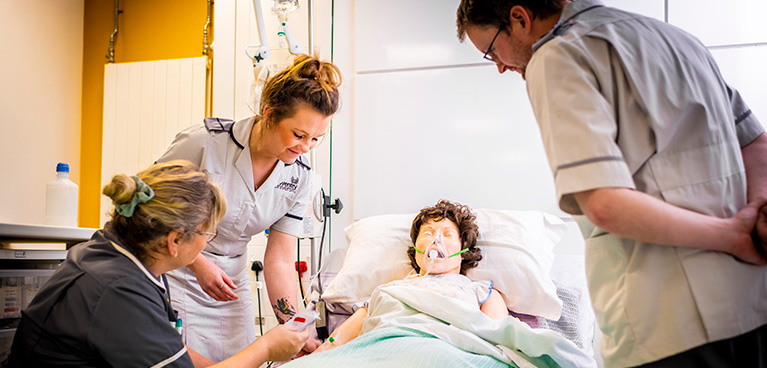
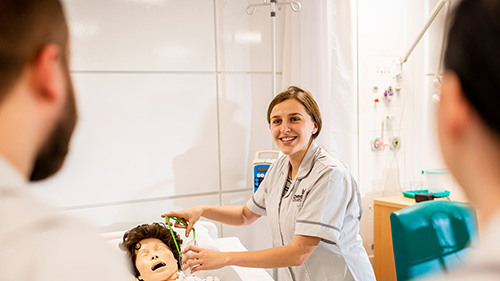
You’ll be able to make use of our extensive simulation facilities – from basic life support mannequins to high tech simulation dummies, which emulate patient responses and test resuscitation skills.
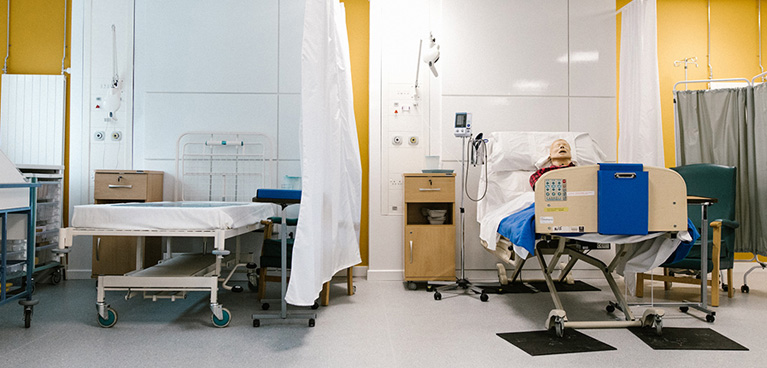
Mock hospital ward
Gaining experience using simulation across a range of care settings is aimed at building your confidence and knowledge about how to act in these situations. You can practise and develop your clinical and interpersonal skills in a safe but realistic environment.

Realistic scenarios
We use actors to enhance your experience, giving you the opportunity to replicate real-life situations including breaking bad news, demonstrating emotional resilience, conflict, aggression, teaching and child protection conference.
You’ll use facilities through timetabled teaching, practical activities and relevant independent study. Access may vary by module, activity, capacity, supervision or safety requirements. Access may change or be limited where the University needs to follow public authority guidance, decisions or orders.
Careers and opportunities
Whether you choose to continue your education or embark on a fulfilling career as a nursing associate, this foundation degree equips you with the essential skills and knowledge you will need.
Beyond the nursing associate role, this degree can serve as a stepping stone to various nursing pathways. On successful graduation, you are eligible to apply for other pre-registration degree courses.
Where our graduates work
Our graduates are employed in acute care organisations, community care settings and within general practice and social care.
How to apply
UK students
Disclaimers
You may also like

CU Scarborough (Scarborough)
Health and Social Care BA (Hons)
CU Scarborough (Scarborough)
Learning Disabilities Nursing BSc (Hons)
CU Scarborough (Scarborough)