Search
Computing for England (Cyber Security) HTQ
Study level: UndergraduateHNC/HND courses
HTQ courses
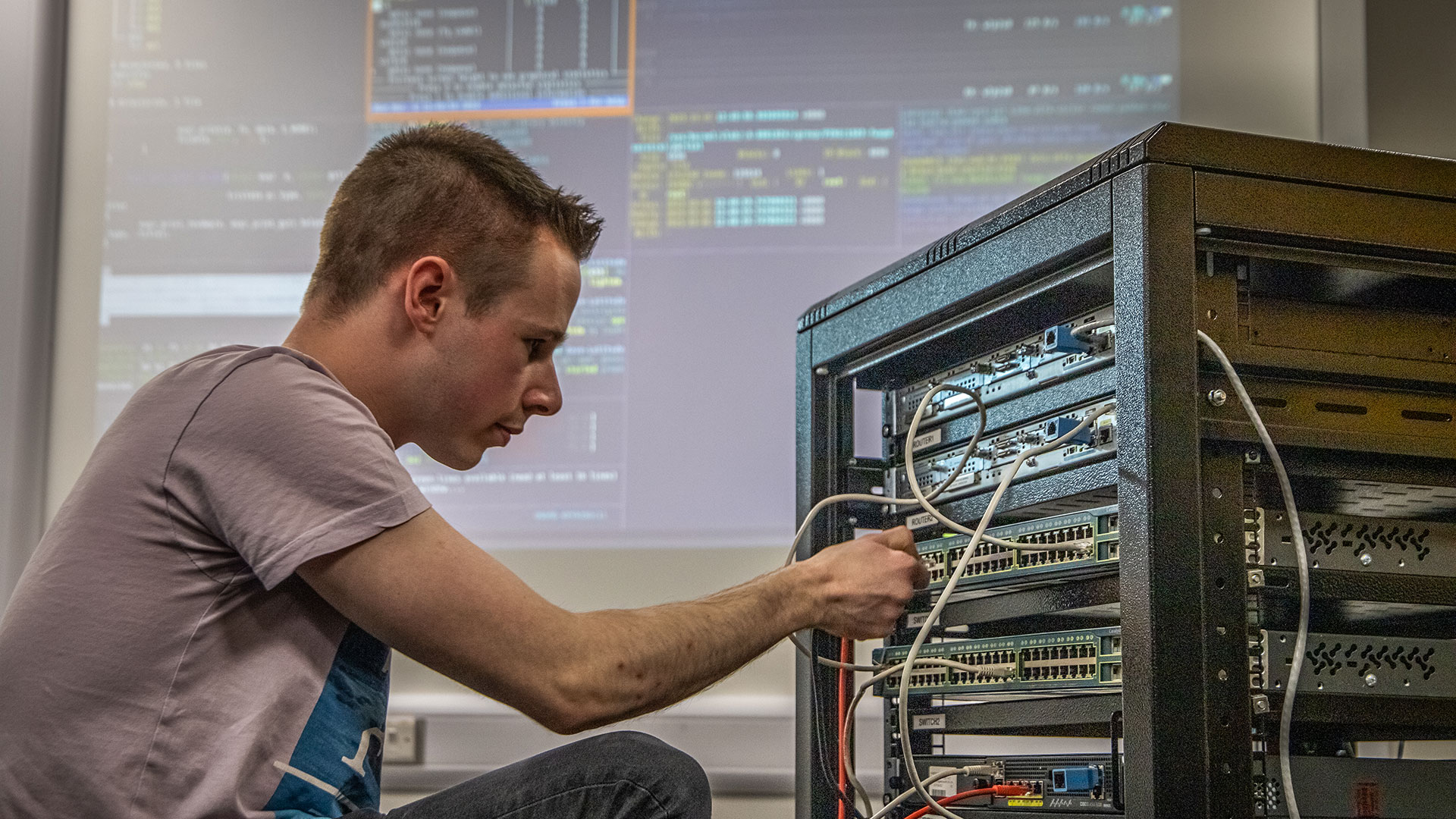
This Computing for England (Cyber Security) HTQ course has been designed to develop your knowledge and understanding in relation to cyber threats and vulnerabilities, cyber defence techniques and incident response.
Course features
Year of entry
Location
CU Scarborough (Scarborough)
Study mode
Full-time
Duration
2 years full-time
Course code
HQ02
Start date
September 2027
November 2027
January 2028
March 2028
May 2028
July 2028
Course overview
Explore the fundamental principles, leading-edge concepts, terminologies, models and hardening methods of computing.
- Assess the types of malicious activity, potential targets and the role everyone has in maintaining cyber resilience.
- Explore the nature of cybercrime and cyber threat actors
- Look into roles and responsibilities in relation to information assurance
- Assess the threats to and vulnerabilities in Information and Communications Technology (ICT) infrastructure
- Investigate strategic responses to cybersecurity threats.
The pathways at both Level 4 and Level 5 are mapped to the Institute for Apprenticeships and Technical Education’s Occupational Standards and professional body standards with the aim of providing professional status Level 5 HND and progression to direct employment, upon successful completion of this course. The vendor-accredited certification indicates that the course meets industry standards and prepares students with the necessary knowledge and skills required to enter the workforce. Additionally, obtaining a vendor-accredited certification can demonstrate to employers that a student has achieved a certain level of expertise and competence in a particular area.
Why you should study this course
With the continuing digital revolution, computer systems now involve almost every aspect of our lives. While this connectivity offers significant advantages, it also introduces vulnerabilities regarding personal data, device interference and hijacking. Because devices are complex and interconnected, it can be difficult to predict where these risks may occur.
To navigate this landscape, you will:
- engage in laboratory-based practical work to build, test and evaluate complex systems
- participate in peer learning by critiquing the work of your colleagues in a supportive, professional environment
- analyse case studies and scenarios drawn from real-world issues
- have opportunities to use gaming approaches and immersive technologies to help deepen your engagement with the subject
- undertake both mini-projects and large-scale work2, gaining experience in individual and collaborative settings
- join a community of practice2 where you are encouraged to experiment and innovate
- have the opportunity to develop a critical mindset that encourages reflection and constructive questioning
- develop an understanding of legal, social, ethical and professional issues throughout your studies.
Higher Technical Qualification (HTQ) status
This course is approved as a Higher Technical Qualification (HTQ) by the UK government as part of its Skills for Careers initiative. This means it meets employer-led standards for technical knowledge and skills and is aligned to specific occupational requirements.
For the most up-to-date information, please refer to the Skills for Careers website.


For SASIG to hold their first national networking event in North Yorkshire at CU Scarborough highlights the strength of our cyber security course, gives our cyber security students who have registered to the event access to industry experts and shows that Scarborough is fast becoming a major player and a centre of excellence within the cyber sector.
Jackie Mathers, Associate Pro Vice Chancellor at CU Scarborough

What you'll study
We regularly review our course content to keep it relevant and current for our students. Consequently, we may update modules to reflect the latest industry standards.
How you'll learn
Teaching contact hours
As a full-time undergraduate student, you will study modules totalling 120 credits each academic year. A typical 30-credit module requires 300 hours of study. Study hours are made up of teaching contact hours and guided and independent study.
Teaching hours
Teaching hours may vary, depending on where you are in your studies, but on average, you will have between 10 and 12 teaching and learning hours each week. You will also have the option to attend additional sessions, including time with a progress coach or to meet with staff for advice and feedback. As you progress through your studies, teaching hours may reduce.
Guided and independent study
Throughout your studies, you will be expected to spend time in guided and independent study to make up the required study hours per module. You will be digging deeper into topics, reviewing what you’ve learnt and completing assignments. This can be completed around your personal commitments. As you progress to the end of your studies, you’ll spend more time on independent learning.
Online learning
As an innovative university, we use different teaching methods, including online tools and emerging technologies. So, some of your teaching hours and assessments may be delivered online.
Assessment
This course will be assessed using a variety of methods which will vary depending upon the module. The assessment methods may include:
- formal examinations
- phase tests
- essays
- group work
- presentations
- reports
- projects
- coursework
- exams
- individual assignments.
The Coventry University Group assessment strategy ensures that our courses are fairly assessed and allows us to monitor student progression towards achieving the intended learning outcomes.
Entry requirements
Typical entry requirements:
Fees and funding
| Student | Full-time | Part-time |
|---|---|---|
| UK | 2027/28 fees TBC 2026/27 fees: £9,790 per year |
Not available |
For advice and guidance on tuition fees and student loans visit our Fees and Funding page and see The University’s Tuition Fee and Refund Terms and Conditions.
The University will charge the tuition fees stated in the table above for the first Academic Year of study. The University will review tuition fees each year. For UK (home) students, if the Parliament permits an increase in tuition fees, the University may increase fees for each subsequent year of study in line with any such changes. Note that any increase is expected to be in line with the Retail Price Index (RPI), a UK measure of inflation that tracks changes in the cost of living.
For international students, we may increase fees each year, but such increases will be no more than 5% above RPI. If you defer your course start date or have to extend your studies beyond the normal duration of the course (e.g. to repeat a year or resit examinations), you may be charged the tuition fees in force at the time you take that additional period of study, and/or in line with any legislative changes that apply at that time.
We offer a range of International scholarships to students all over the world. For more information, visit our International Scholarships page.
Tuition fees cover the cost of your teaching, assessments, facilities and support services. There may be additional costs not covered by this fee such as accommodation and living costs, recommended reading books, stationery, printing and re-assessments should you need them. Find out what's included in your tuition costs.
The following are additional costs not included in the tuition fees:
- Any optional overseas field trips or visits: £400+ per trip.
- Any costs associated with securing, attending or completing a placement (whether in the UK or abroad) which may include costs of travel, accommodation, equipment or uniform required for the placement and any visa-related costs.
*Irish student fees
The rights of Irish residents to study in the UK are preserved under the Common Travel Area arrangement. If you are an Irish student and meet the residency criteria, you can study in England, pay the same level of tuition fees as English students and utilise the Tuition Fee Loan.
How do you know if you need to pay UK or international tuition fees?
Facilities
Our purpose-built campus building is arranged around an open central atrium and includes:
- Cyber labs, a space designed to give you - computing and cyber course students - a practical learning experience for conducting research, testing and experimentation related to cyber security.
- indoor social spaces, including a café
- a library that includes loan laptops and a silent study area
- open-access computers
- student support and careers advice teams.
The campus itself is located next to Scarborough’s Sports Village, a complex that includes an Olympic Legacy swimming pool, a sports hall, a fitness suite, all-weather pitches, and the Scarborough Athletic Football Club ground. The campus is a 10-minute walk from the East Yorkshire seafront. North Bay is Scarborough’s Blue Flag beach, meaning it is one of the best in Europe for cleanliness both on the sand and in the water, facilities, and safety.
You’ll use facilities through timetabled teaching, practical activities and relevant independent study. Access may vary by module, activity, capacity, supervision or safety requirements. Access may change or be limited where the University needs to follow public authority guidance, decisions or orders.
Careers and opportunities
Our careers and employability team will help you in searching for work experience while you study and employment on graduation.
Coventry University is committed to preparing you for your future career and giving you a competitive edge in the graduate job market. The careers and employability team provide a wide range of support services to help you plan and prepare for your career.
Further study
The Level 5 Higher National Diploma is recognised by higher education providers as meeting admission requirements to many computing-related courses. Within CU Group you could progress onto Level 6 in:
How to apply
UK students
Disclaimers