Health and Social Care BA (Hons) with foundation year

Study level: Undergraduate
HNC/HND courses
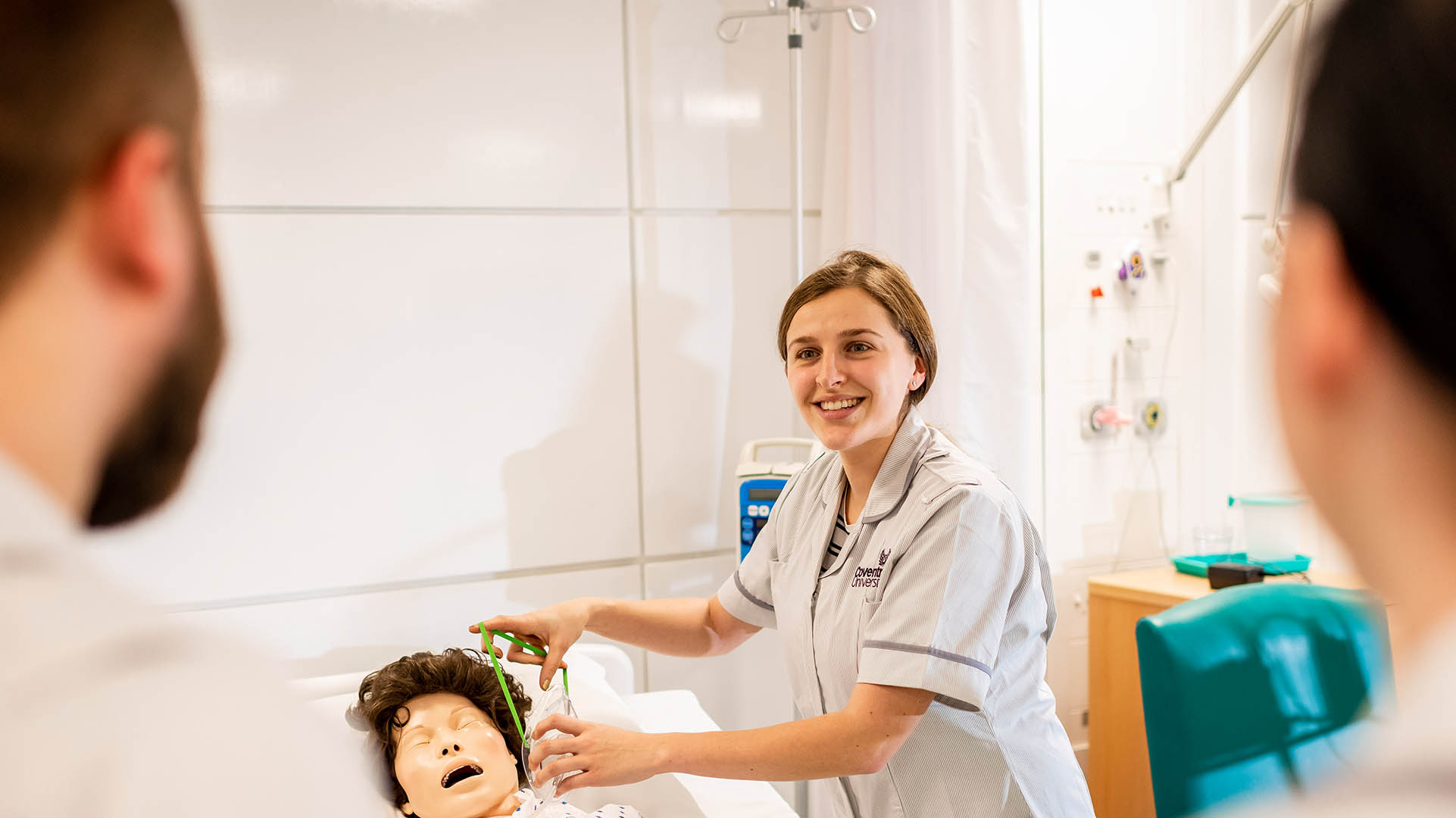
Health & Social Care students using a dummy

This Health and Social Care BA (Hons) course explores the core concepts of healthcare through theoretical and practical learning.

Course option

Year of entry

Location

CU Scarborough (Scarborough)

Study mode

Full-time
Part-time
Sandwich

Duration

4 years full-time
5 years sandwich

UCAS codes

L509

Start date

January 2026
March 2026
May 2026
June 2026


Course overview

Foundation year

The foundation year aims to provide you with a solid grounding for building a career in health and social care-related disciplines.

Degree

This course aims to help you become a knowledgeable, enthusiastic and skilled individual ready to support the delivery of health and social care within the NHS, local authority services, private health provision or third sector services. It provides the opportunity for the development of the knowledge and skills required of healthcare support workers, community healthcare workers and those with roles in health and social care, and can offer a Continuing Professional Development opportunity for those in the sector.

Why you should study this course

The course is designed to:

  • analyse the interaction between sociology, social policy and health 
  • prepare you to work in this dynamic and demanding sector by exploring health on an individual and societal level 
  • explore how society is organised and how we care for the vulnerable, the challenges facing modern society and the importance of caring for our environment.  

Collaborations with other organisations

CU Scarborough collaborates with a range of local service providers to enhance the student experience.

Health and Social Care BA (Hons) at CU Scarborough taught me how to be more empathetic and understanding, whilst debating different current policies and laws that both help and hinder the services everyone in the world accesses. However, health and social care goes beyond services, laws and policies, it encompasses wider influencing health factors, diving into topics such as epidemiology, giving students access to a broader view on national and global health. The course allowed me to develop my views and be confident in my abilities to make a difference in society.

Holly Webster, Health and Social Care BA (Hons) graduate, 2023

Two students stood at a balcony talking
Two students facing each and talking

Working in care event

Visiting students will have the opportunity to understand more about the range of careers that are available for people who want to work in communities to support children, young people and families. 

Learn more about the event

What you'll study

The first stage (HNC) of the degree element of the course gives you a theoretical grounding in the fundamentals of health and social care. There is an early focus on safe and effective practice and safeguarding. The course also provides you with an introduction to the sociological perspectives of health, the importance of environmental issues and community approaches to healthcare. You will learn about health and social care delivery and the importance of collaborative working. This stage aims to develop your understanding of the wider determinants of health and allows you to explore historical approaches as well as understand the challenges of modern society.

Students who successfully complete year one are eligible for a Higher National Certificate (HNC) in Health and Social Care.

Modules

The second stage (HND) of the course allows you to develop an in-depth understanding of life stage development, exploring the physical and psychological development of individuals from pre-conception to end of life. Consideration will be given to the factors that impact this and how we identify and support the vulnerable and marginalised in society. Critical discussion will be introduced to discuss the challenges facing health and social care systems supporting these groups. You will also be introduced to the topic of mental health and social policy ensuring that you are prepared for health and care-associated issues across a wide spectrum of age ranges. At this stage you will also be introduced to research methods which will be used in the research project at the final stage of the course.

Students who successfully complete year one are eligible for a Higher National Diploma (HND) in Health and Social Care.

Modules

There’s no better way to find out what you love doing than trying it out for yourself, which is why a work placement2 can often be beneficial. Work placements usually occur before your final year of study. They’re a great way to help you explore your potential career path and gain valuable work experience, whilst developing transferable skills for the future.

Modules

In the final stage (degree), you will engage critically with healthcare-associated issues as you explore agendas influencing current policy, theory and practice both in the UK and abroad. You will examine the challenges of communicable and non-communicable diseases and how they spread. You will also study the skills needed for leadership and management within health and social care. Finally, a research project will be undertaken to explore an area of interest and these may be shared at a research conference where local healthcare collaborators may be invited to attend.

Modules

The foundation year aims to provide the skills and knowledge relevant for progression onto degree-level study.

Modules

We regularly review our course content to make it relevant and current for the benefit of our students. For these reasons, course modules may be updated. 


How you'll learn

Your initial foundation year is focused on applied learning geared to high-intensity teaching and study throughout the course. The delivery of course content is a blend of lectures, tutorials and online mediums.


Teaching contact hours

As a full-time undergraduate student, you will study modules totalling 120 credits each academic year. A typical 20 credit module requires a total of 200 hours study. This is made up of teaching contact hours, guided and independent study.

Teaching hours

Teaching hours vary each semester, year of study and due to module selection. During your first year you can expect 15-18 teaching hours each week. You will also have the option to attend optional sessions including time with a progress coach or to meet with staff for advice and feedback. As you progress through your studies, teaching hours may reduce.

Guided and independent study

Throughout your studies, you will be expected to spend time in guided and independent study to make up the required study hours per module. You’ll be digging deeper into topics, review what you’ve learned and complete assignments. This can be completed around your personal commitments. As you progress through your studies, you’ll spend more time in independent study.

Online learning

As an innovative university, we use different teaching methods including online tools and emerging technologies. So, some of your teaching hours and assessments may be delivered online.


Assessment

During your foundation year, assessment methods vary and include, written reports, presentations, portfolios, tutorial tasks and assessments which generally take place at the end of each six-week block.

The Coventry University Group assessment strategy ensures that our courses are fairly assessed and allows us to monitor student progression towards achieving the intended learning outcomes.

This course is available as a full-time three-year or optional four-year sandwich course, with the latter incorporating a work placement or study year in a related field2.

This course is also offered part-time at CU Scarborough.

This course can be offered on a part-time basis. Whilst we would like to give you all the information about our part-time offering here, it is tailored for each course each year depending on the number of part-time applicants. Therefore, the part-time teaching arrangements vary. Request further information about the part-time study.

You should contact CU Scarborough directly for more details on how the part-time degree is delivered.

We take an active and varied approach to teaching and learning. Teaching sessions will be active and applied and utilise a variety of teaching styles. You may also have the opportunity to collaborate with local service providers to understand the local health and social care sector. We also operate an open-door policy, with additional availability via email and our current online learning platform, Aula.

Progression through the modules develops knowledge and skills, including communication (written and oral), study skills, research methods, project management, presentation and career development. We will also encourage you to consider your employability and/or entrepreneurial development.

Unlike traditional institutions, there are no end-of-year exams. Instead, learning is assessed through coursework and phase tests, which is more reflective of our learning model.


Teaching contact hours

As a full-time undergraduate student, you will study modules totalling 120 credits each academic year. A typical 20 credit module requires a total of 200 hours study. This is made up of teaching contact hours, guided and independent study.

Teaching hours

Teaching hours vary depending on year of study and due to module selection. During your first year you can expect 15-18 teaching hours each week. You will also have the option to attend optional sessions including time with a progress coach or to meet with staff for advice and feedback. As you progress through your studies, teaching hours may reduce.

Guided and independent study

Throughout your studies, you will be expected to spend time in guided and independent study to make up the required study hours per module. You’ll be digging deeper into topics, review what you’ve learned and complete assignments. This can be completed around your personal commitments. As you progress through your studies, you’ll spend more time in independent study.

Online learning

As an innovative university, we use different teaching methods including online tools and emerging technologies. So, some of your teaching hours and assessments may be delivered online.


Assessment

The learning outcomes of modules, assignments and projects will be clearly stated. Your work will be marked according to how well you achieve these learning outcomes and your final feedback will refer to each outcome, as well as providing an overall percentage grade.

Assessment methods vary and may include, practical class and project performance, written practical reports, project thesis, tutorial tasks and assessments.

The Coventry University Group assessment strategy ensures that our courses are fairly assessed and allows us to monitor student progression towards achieving the intended learning outcomes.

This course will support you in developing a valuable range of knowledge and skills required to work in health and social care. For anyone who wants to work with people to make a difference in their lives, this course is for you. By delivering one module at a time, we are able to really focus on topics, engage local service providers and make learning applied and active.

Rebecca Canning, Course Leader, CU Scarborough, 2023

Lecturer stood at a desk with four students

Entry requirements

Typical entry requirements:

40 UCAS tariff points. All Foundation courses require GCSE maths and English at grade 4 / C or Functional Skills Level 2, or other equivalent Level 2 awards.

If you don’t fulfil the entry criteria, your application may be considered on an individual basis, taking into account any work experience, other qualifications and/or any training you have completed. Speak to one of our advisers today to find out how we can help you.

Contextual/Fair Access Offers

If you meet the criteria for our Fair Access Offer, you could automatically receive a contextual offer which is 16 UCAS points lower than our standard entry requirements. View the criteria for our Fair Access Offer.


Fees and funding

Foundation year

Student Full-time Part-time
UK, Ireland*, Channel Islands or Isle of Man £5,760 Not available
International/EU Not currently available*** Not available

Degree

Student Full-time Part-time
UK, Ireland*, Channel Islands or Isle of Man £9,535 per year Request fee information
International/EU Not currently available*** Not available

If you choose to study this course with a professional placement2 or study abroad year, you will need to pay a tuition fee3 to cover your academic support throughout your placement year. Students commencing their professional placement in the academic year 2027/28 will pay £1,500 if they are paying UK fees, or £1,800 if they are paying international fees.

For advice and guidance on tuition fees and student loans visit our Undergraduate Finance page and see the University’s Tuition Fee and Refund Terms and Conditions.

The University will charge the tuition fees that are stated in the above table for the first Academic Year of study. The University will review tuition fees each year. For UK (home) students, if Parliament permits an increase in tuition fees, the university may increase fees for each subsequent year of study in line with any such changes. Note that any increase is expected to be in line with inflation.

If you choose to study this course with a professional placement, the University will charge the tuition fees stated above for those on a placement during Academic Year 2027/28. The University will review professional placement tuition fees each year. For UK (home) students, the University may increase fees for each subsequent year of study, but such that it will be no more than 5% above inflation.

Tuition fees cover the cost of your teaching, assessments, facilities and support services. There may be additional costs not covered by this fee such as accommodation and living costs, recommended reading books, stationery, printing and re-assessments should you need them. Find out what's included in your tuition costs.

Applies to degree only:

The following are additional costs not included in the tuition fees:

  • Any optional overseas field trips or visits: £400+ per trip.
  • Any costs associated with securing, attending or completing a placement (whether in the UK or abroad).

Foundation year funding

In order to receive funding for degree with foundation year courses, you will need to complete a four-year degree programme which includes the integrated foundation year, otherwise you may be responsible for your foundation year fees. For further information, please refer to the 'Tuition Fee Loan' details in the 'Funding your undergraduate course' section of our 'Fees and finance' page.

*Irish student fees

The rights of Irish residents to study in the UK are preserved under the Common Travel Area arrangement. If you are an Irish student and meet the residency criteria, you can study in England, pay the same level of tuition fees as English students and utilise the Tuition Fee Loan.

**This course with foundation year is not currently available to international students. If you do not meet the entry requirements to directly join year 1 of the degree, please take a look at our International Pathway courses for additional options.


Facilities

Our purpose-built campus building includes a library, IT suites, mock law court, engineering and science labs, cafe and lots of individual and group study spaces4.

Next to us is Scarborough’s leisure village. The complex includes an Olympic legacy swimming pool, sports hall, fitness suite, all weather pitches and the new Scarborough Athletic football ground.


Facilities are subject to availability. Access to some facilities (including some teaching and learning spaces) may vary from those advertised and/or may have reduced availability or restrictions where the university is following public authority guidance, decisions or orders.


Careers and opportunities

On successful completion of the course, you will have the knowledge and skills to be able to succeed in the health and social care sector. You will develop communication skills and the ability to work as part of a team. Through teaching and assessment, you will have developed a range of digital skills that are required for work and be able to demonstrate a range of competencies.

On successful completion you explore roles in a variety of health and social care settings, such as working with those experiencing mental health issues or domestic violence, tackling environmental health issues or in public health teams. You may wish to continue to further your studies at postgraduate level in areas such as nursing, social work or postgraduate teacher training.

Please note that further study opportunities are subject to competitive application, availability, meeting any applicable visa requirements and additional costs may apply.

The invaluable support from my tutors has made my university journey a lot more manageable and enjoyable. Support given to students, tutors' willingness to listen to feedback and the diversity of degrees offered are just a few of the reasons why I would highly recommend CU Scarborough as a place of study.

Emily Johnson, Health and Social Care BA (Hons) graduate, 2022.

Four students sat around  a table talking

How to apply

This course with foundation year is not available to international students.

You may also like

CU Scarborough (Scarborough) Young female nurse looking after her patients white wearing a light blue top

Adult Nursing BSc (Hons)

CU Scarborough (Scarborough) Applied Psychology student writing notes during a therapy session

Applied Psychology BSc(Hons)


Discover Uni stats