Search
Marketing and Public Relations BA (Hons)
Study level: Undergraduate
Gain insight into campaign planning, brand storytelling and audience engagement across marketing, PR and digital media.
Course features
Course option
Year of entry
Location
CU Coventry (Coventry)
Study mode
Full-time
Sandwich
Duration
3 years full-time
4 years sandwich
UCAS codes
N520
Start date
September 2027
Course overview
Marketing and public relations shape how organisations build trust, manage reputation and communicate with audiences in a fast-changing world.
If you are interested in creativity, communication and audience behaviour, this course allows you to explore how organisations plan campaigns, develop brand identity and respond to public expectations across marketing, PR and digital media.
You’ll study the principles and practices largely followed in professional communication, including marketing strategy, public relations planning, digital analytics, media relations, reputation management, ethical practice and international campaigns. This course also considers how social, cultural and technological change, including the use of AI-enabled tools, is influencing how messages are created, targeted and evaluated.
Through applied tasks, case studies and project work, you’ll be encouraged to develop critical thinking, communication, research, planning and creative problem-solving skills. This can help you build knowledge relevant to communications-related roles across agencies, in-house teams, public bodies, charities, start-ups and global organisations.
Why study this course
- Develop marketing and PR skills relevant to modern communications practice
Explore how marketing and PR work side by side across campaigns, communication, brand reputation and audience engagement, helping you build a broader skill set for communications-related roles in a fast-changing industry. - Build digital, analytics and AI knowledge
Develop knowledge of digital marketing, media management and strategic communication while exploring how digital analytics, ethics and artificial intelligence are shaping modern marketing and PR practice. The specific tools and examples used may change as industry practice develops and evolves. - Think creatively, entrepreneurially and ethically
Study entrepreneurial and ethical marketing, innovation in PR and sustainable thinking, helping you generate ideas, think creatively and understand the responsibilities involved in influencing audiences and building brands. - Connect learning with industry practice
Apply your learning to current marketing and PR contexts through practical projects, case studies and, where available, guest input, professional networks or employer engagement. - Study one module at a time
Focus on one 30-credit module over a six-week block with no end-of-year exams. This approach uses practical, exam-free assessments to build your knowledge step by step with regular feedback.
Memberships
What you'll study
We regularly review our course content to keep it relevant and current for our students. Consequently, we may update modules to reflect the latest industry standards.
How you'll learn
Teaching and learning methods may include:
- lectures: gain structured insight into key concepts, current thinking and research
- seminars: engage in discussion and debate, deepening understanding and critical thinking
- tutorials: receive guidance to explore ideas, address questions and consolidate learning
- presentations: develop communication skills and the ability to explain ideas clearly
- group projects: build teamwork and collaboration skills while responding to practical challenges
- workshops: apply knowledge through practical activities and problem-solving tasks
- online learning: access digital resources and activities that support study and reinforce key concepts.
Teaching contact hours
As a full-time undergraduate student, you will study modules totalling 120 credits each academic year. A typical 30-credit module requires 300 hours of study. Study hours are made up of teaching contact hours and guided and independent study.
Teaching hours
Teaching hours may vary, depending on where you are in your studies, but on average, you will have between 10 and 12 teaching and learning hours each week. You will also have the option to attend additional sessions, including time with a progress coach or to meet with staff for advice and feedback. As you progress through your studies, teaching hours may reduce.
Guided and independent study
Throughout your studies, you will be expected to spend time in guided and independent study to make up the required study hours per module. You will be digging deeper into topics, reviewing what you’ve learnt and completing assignments. This can be completed around your personal commitments. As you progress to the end of your studies, you’ll spend more time on independent learning.
Online learning
As an innovative university, we use different teaching methods, including online tools and emerging technologies. So, some of your teaching hours and assessments may be delivered online.
Assessment
Assessment methods vary by module and may include:
- coursework
- essays
- reports
- projects
- group work
- presentations
- marketing pitches
- vlogs
- time-constrained assessments
- research assignments.
The Coventry University Group assessment strategy ensures that our courses are fairly assessed and allows us to monitor student progression towards achieving the intended learning outcomes.
Entry requirements
Typical entry requirements:
Not got the required grades? We offer this degree with an integrated foundation year.
Fees and funding
| Student | Full-time | Part-time |
|---|---|---|
| UK, Ireland*, Channel Islands or Isle of Man | £10,050 per year | Not available |
| EU | £10,050 per year with EU Support Bursary** £15,900 per year without EU Support Bursary** |
Not available |
| International | £15,900 per year | Not available |
If you choose to study this course with a professional placement2 or study abroad year, you will need to pay a tuition fee3 to cover your academic support throughout your placement year. Students commencing their professional placement in the academic year 2029/30 will pay £1,615 if they are paying UK fees, or £1,950 if they are paying international fees
For advice and guidance on tuition fees and student loans visit our Fees and Funding page and see The University’s Tuition Fee and Refund Terms and Conditions.
The University will charge the tuition fees that are stated in the table above for the first Academic Year of study. The University will review tuition fees each year. For UK (home) students, if Parliament permits an increase in tuition fees, the university may increase fees for each subsequent year of study in line with any such changes. Note that any increase is expected to be in line with the Retail Price Index (RPI), a UK measure of inflation that tracks changes in the cost of living.
If you choose to study this course with a professional placement or study abroad year, the University will charge the tuition fees stated above for those on a placement during Academic Year 2029/2030. The University will review professional placement tuition fees each year. For UK (home) students, the University may increase fees for each subsequent year of study, but such that it will be no more than 5% above RPI.
For international students, we may increase fees each year, but such increases will be no more than 5% above inflation. If you defer your course start date or have to extend your studies beyond the normal duration of the course (e.g. to repeat a year or resit examinations) you may be charged the tuition fees in force at the time you take that additional period of study, and/or in line with any legislative changes that apply at that time.
We offer a range of International scholarships to students all over the world. For more information, visit our International Scholarships page.
Tuition fees cover the cost of your teaching, assessments, facilities and support services. There may be additional costs not covered by this fee such as accommodation and living costs, recommended reading books, stationery, printing and re-assessments should you need them. Find out what's included in your tuition costs.
The following are additional costs not included in the tuition fees:
- Any optional overseas field trips or visits: £400+ per trip.
- Any costs associated with securing, attending or completing a placement (whether in the UK or abroad) which may include costs of travel, accommodation, equipment or uniform required for the placement and any visa-related costs.
*Irish student fees
The rights of Irish residents to study in the UK are preserved under the Common Travel Area arrangement. If you are an Irish student and meet the residency criteria, you can study in England, pay the same level of tuition fees as English students and utilise the Tuition Fee Loan.
**EU Support Bursary
Following the UK's exit from the European Union, we are offering financial support to all eligible EU students who wish to study an undergraduate or a postgraduate degree with us full-time. This bursary will be used to offset the cost of your tuition fees to bring them in line with that of UK students. Students studying a degree with a foundation year with us are not eligible for the bursary.
How do you know if you need to pay UK or international tuition fees?
Facilities
All our facilities are located at Mile Lane, where the building has been designed to support collaboration, creativity and independent study. You can use the library, open-access IT suites and laptop loan scheme to help you study on campus or around your own schedule.
The library offers a silent study area and access to an extensive collection of eBooks and online learning resources. Teaching spaces feature large screens to support interactive learning. Between classes, you can relax in indoor and outdoor social spaces, grab a coffee in the café, or speak to our student support and careers advice teams.
When available, you can also make the most of the facilities at the main Coventry University campus.
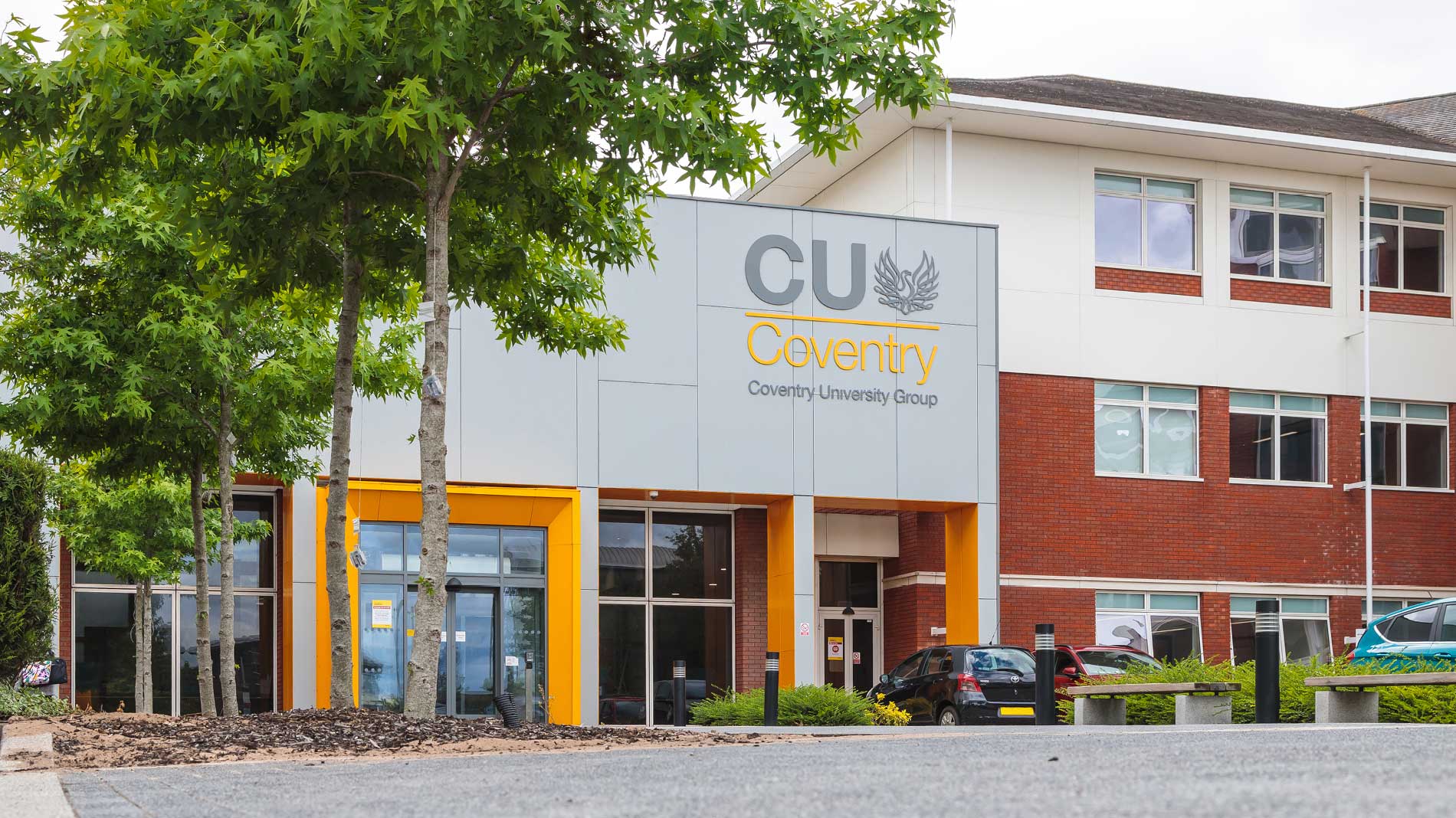




You’ll use facilities through timetabled teaching, practical activities and relevant independent study. Access may vary by module, activity, capacity, supervision or safety requirements. Access may change or be limited where the University needs to follow public authority guidance, decisions or orders.
Careers and opportunities
Marketing, public relations and digital communications skills are used across almost every sector, from agencies and consumer brands to public services, charities, start-ups and international organisations.
This course is designed to support future career paths in areas such as marketing, public relations, communications, digital media, brand management, campaign planning, social media, content creation, market research, media relations and reputation management. You’ll be encouraged to develop transferable skills in communication, teamwork, digital literacy, planning, research and creative problem-solving, which can be valuable in a wide range of graduate roles.
Possible career routes may include:
- marketing executive
- public relations executive
- communications officer
- social media executive
- digital marketing executive
- content marketing assistant
- campaign coordinator
- media relations assistant
- brand assistant
- market research assistant
- copywriter
- account executive
- events and communications assistant
- internal communications assistant
- charity communications officer.
You may also choose to continue to postgraduate study or professional development in areas such as marketing, public relations, digital communications, media, branding or business.
These are examples of possible career paths. Some roles may require further training, professional accreditation or experience.
How to apply
UK students
International students
Disclaimers
You may also like

CU Coventry (Coventry)