Search
Computing and Information Systems BSc (Hons)
Study level: Undergraduate
Shape the digital systems that help organisations work smarter.
Course features
Year of entry
2027-28
Location
CU Coventry (Coventry)
Study mode
Full-time
Sandwich
Duration
3 years full-time
4 years sandwich
Course code
G10C
Start date
September 2027
Course overview
Learn how modern computing systems are designed, secured and managed. This course helps you build the technical and business-focused skills to understand how digital systems connect people, services and decisions.
As a computing professional, you can help organisations solve problems, manage information, protect systems and improve how they work. This course gives you a broad foundation in computing and information systems, with a focus on how organisations use technology in business and enterprise settings.
You’ll move from core computing principles into more applied areas of organisational technology, developing your ability to analyse needs, design solutions and consider the wider professional, ethical and operational issues involved.
Through practical and project-based learning, you’ll have opportunities to apply your knowledge to realistic computing challenges and prepare for possible future routes across software, data, infrastructure, cyber security, business systems and IT service management.
Why you should study this course
- Build broad computing skills for modern organisations
Develop knowledge across software design, database development, networking, infrastructure, cyber security, web development, data analytics and business intelligence, helping you understand how different areas of computing work together. - Connect technology with business needs
Explore how organisations use information systems to support strategy, improve services and make decisions. You’ll consider how IT can contribute to competitive advantage, digital transformation, sustainability and social responsibility. - Develop practical software, database and web skills
Build technical skills through software design, database development, web applications and APIs. You’ll practise designing, developing, testing and documenting computing solutions using recognised development and version control approaches. - Understand infrastructure, networks and cyber security
Learn how networks, server environments, hybrid infrastructure and security measures support reliable information systems. You’ll explore areas such as VPNs, firewalls, directory services, risk assessment, penetration testing and common cyber-attack techniques. - Use data to support insight and decision-making
Study how organisations use data analytics, visualisation, business intelligence and decision support systems to interpret information and support business planning. - Explore enterprise systems and service management
Develop your understanding of how enterprise information systems support areas such as management, finance, human resources and organisational decision-making. You’ll also study project planning, IT service support, quality improvement and service management approaches. - Study one module at a time
Focus on one 30-credit module for six weeks, followed by an assessment week. This approach allows you to build your knowledge step by step, completing your assessments with support and feedback before moving on.
What you'll study
We regularly review our course content, to make it relevant and current for the benefit of our students. For these reasons, course modules may be updated.
How you'll learn
Teaching and learning methods may include:
- lectures: gain structured insight into key computing, information systems and business technology concepts
- seminars: discuss computing practice, organisational technology, professional issues and emerging digital trends
- tutorials: receive guidance to solve technical problems, consolidate learning and develop confidence
- group projects: build teamwork skills while working on practical cloud and computing challenges
- workshops: apply knowledge hands-on through software, database, networking, infrastructure, security and data tasks
- practical computer-based activities: develop skills using software, data, networking, security and business intelligence tools
- group projects: build teamwork skills while working on computing and information systems challenges
- presentations: develop your ability to explain technical ideas, system designs and project outcomes clearly
- scenario exercises: work through organisational technology scenarios to practise analysis, decision-making and problem-solving
- online learning: access digital resources and activities that support study and reinforce key concepts.
Teaching contact hours
As a full-time undergraduate student, you will study modules totalling 120 credits each academic year. A typical 30-credit module requires 300 hours of study. Study hours are made up of teaching contact hours and guided and independent study.
Teaching hours
Teaching hours may vary, depending on where you are in your studies, but on average, you will have between 10 and 12 teaching and learning hours each week. You will also have the option to attend additional sessions, including time with a progress coach or to meet with staff for advice and feedback. As you progress through your studies, teaching hours may reduce.
Guided and independent study
Throughout your studies, you will be expected to spend time in guided and independent study to make up the required study hours per module. You will be digging deeper into topics, reviewing what you’ve learnt and completing assignments. This can be completed around your personal commitments. As you progress to the end of your studies, you’ll spend more time on independent learning.
Online learning
As an innovative university, we use different teaching methods, including online tools and emerging technologies. So, some of your teaching hours and assessments may be delivered online.
Assessment
Assessment methods vary by module and may include:
- coursework
- reports
- essays
- presentations
- practical tasks
- portfolios
- group project work
- individual project work
- time-constrained assessments
- scenario exercises.
The Coventry University Group assessment strategy ensures fair assessment and supports student progression towards achieving the intended learning outcomes.
Entry requirements
Typical entry requirements:
Fees and funding
| Student | Full-time | Part-time |
|---|---|---|
| UK, Ireland*, Channel Islands or Isle of Man | 2027/28 fees TBC 2026/27 fees: £9,790 per year |
Not available |
| EU | 2027/28 fees TBC 2026/27 fees: £9,790 per year with EU Support Bursary** 2027/28 fees TBC 2026/27 fees: £15,500 per year without EU Support Bursary** |
Not available |
| International | 2027/28 fees TBC 2026/27 fees: £15,500 per year |
Not available |
If you choose to study this course with a professional placement2 or study abroad year, you will need to pay a tuition fee3 to cover your academic support throughout your placement year. Students commencing their professional placement in the academic year 2028/29 will pay £1,575 if they are paying UK fees, or £1,900 if they are paying international fees.
For advice and guidance on tuition fees and student loans visit our Fees and Funding page and see The University’s Tuition Fee and Refund Terms and Conditions.
The University will charge the tuition fees that are stated in the table above for the first Academic Year of study. The University will review tuition fees each year. For UK (home) students, if Parliament permits an increase in tuition fees, the university may increase fees for each subsequent year of study in line with any such changes. Note that any increase is expected to be in line with the Retail Price Index (RPI), a UK measure of inflation that tracks changes in the cost of living.
If you choose to study this course with a professional placement or study abroad year, the University will charge the tuition fees stated above for those on a placement during Academic Year 2028/29. The University will review professional placement tuition fees each year. For UK (home) students, the University may increase fees for each subsequent year of study, but such that it will be no more than 5% above RPI.
For international students, we may increase fees each year, but such increases will be no more than 5% above inflation. If you defer your course start date or have to extend your studies beyond the normal duration of the course (e.g. to repeat a year or resit examinations) you may be charged the tuition fees in force at the time you take that additional period of study, and/or in line with any legislative changes that apply at that time.
We offer a range of International scholarships to students all over the world. For more information, visit our International Scholarships page.
Tuition fees cover the cost of your teaching, assessments, facilities and support services. There may be additional costs not covered by this fee such as accommodation and living costs, recommended reading books, stationery, printing and re-assessments should you need them. Find out what's included in your tuition costs.
The following are additional costs not included in the tuition fees:
- Any optional overseas field trips or visits: £400+ per trip.
- Any costs associated with securing, attending or completing a placement (whether in the UK or abroad) which may include costs of travel, accommodation, equipment or uniform required for the placement and any visa-related costs.
*Irish student fees
The rights of Irish residents to study in the UK are preserved under the Common Travel Area arrangement. If you are an Irish student and meet the residency criteria, you can study in England, pay the same level of tuition fees as English students and utilise the Tuition Fee Loan.
**EU Support Bursary
Following the UK's exit from the European Union, we are offering financial support to all eligible EU students who wish to study an undergraduate or a postgraduate degree with us full-time. This bursary will be used to offset the cost of your tuition fees to bring them in line with that of UK students. Students studying a degree with a foundation year with us are not eligible for the bursary.
How do you know if you need to pay UK or international tuition fees?
Facilities
Most of your learning will take place in our on-site computer labs. These labs contain industry-standard equipment so that you can learn using the same equipment as many industry professionals.
All our facilities are located at Mile Lane, where the building has been designed to support collaboration, creativity and independent study. You can use the library, open-access IT suites and laptop loan scheme to help you study on campus or around your own schedule.
The library offers a silent study area and access to an extensive collection of eBooks and online learning resources. Teaching spaces feature large screens to support interactive learning. Between classes, you can relax in indoor and outdoor social spaces, grab a coffee in the café, or speak to our student support and careers advice teams.
When available, you can also make the most of the facilities at the main Coventry University campus.
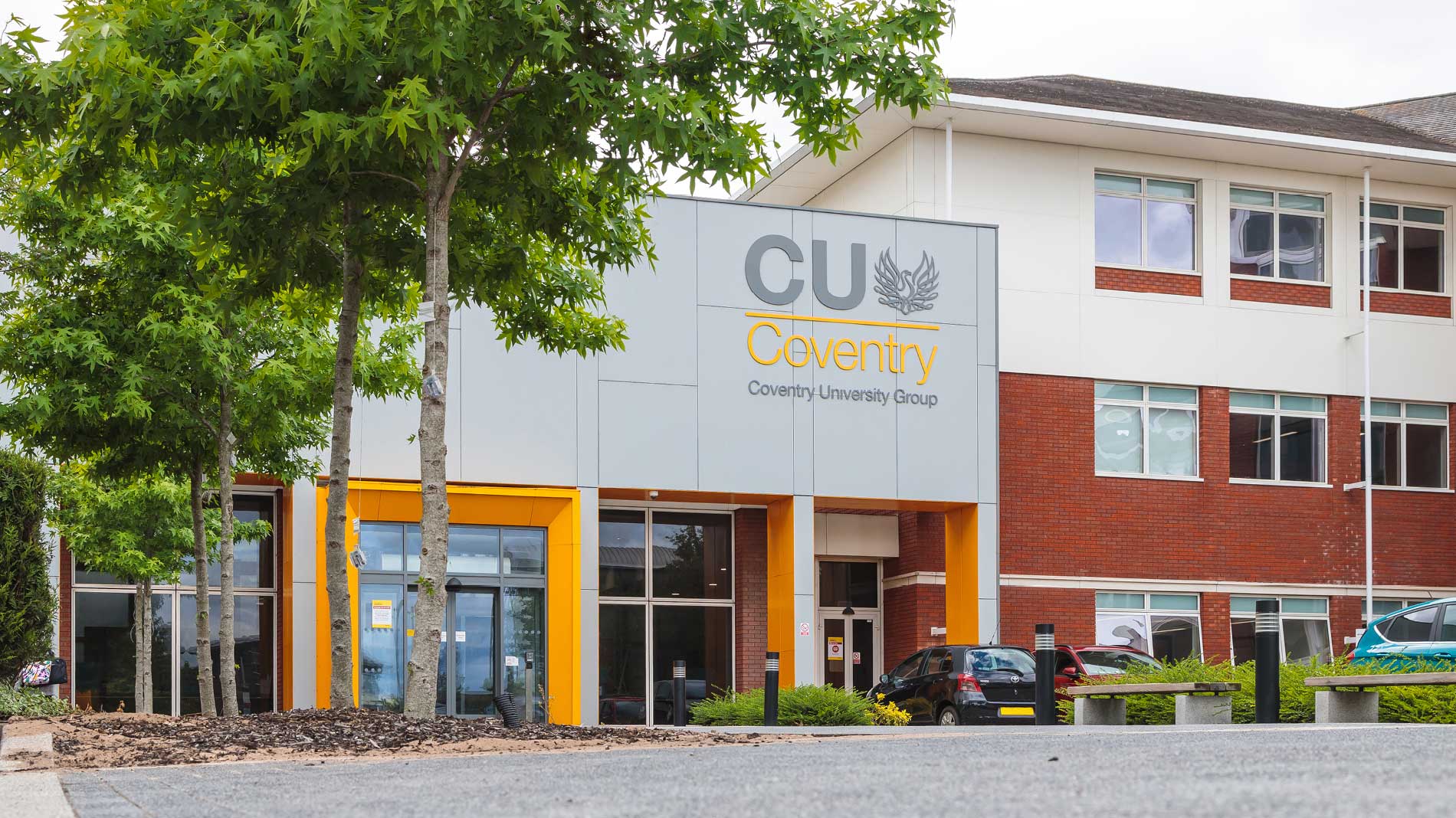




You’ll use facilities through timetabled teaching, practical activities and relevant independent study. Access may vary by module, activity, capacity, supervision or safety requirements. Access may change or be limited where the University needs to follow public authority guidance, decisions or orders.
Careers and opportunities
Computing and information systems skills are relevant across many areas of the digital economy, as organisations rely on software, data, networks, infrastructure, cyber security and enterprise systems to deliver services and make decisions.
This course is designed to support possible future routes in software development, systems analysis, database development, IT infrastructure, cyber security, business intelligence, enterprise systems, IT support, project support and service management.
Possible career paths may include:
- software developer
- software engineer
- systems analyst
- application analyst
- database developer
- database administrator
- data analyst
- business intelligence analyst
- cyber security analyst
- penetration testing-related roles
- infrastructure engineer
- network support or network technician roles
- IT support technician
- IT service management or project support roles
- information systems or enterprise systems support roles
- postgraduate study in computing, information systems, cyber security, data analytics or related areas.
These are examples of possible career paths. Some roles may require further training, professional qualifications, accreditation or experience.
Where our graduates work
- Amazon Web Services
- Civil Service
- QinetiQ
- NFU Mutual
- Aldi UK
- International Government
- Invisible Technology
How to apply
UK students
International students
Disclaimers