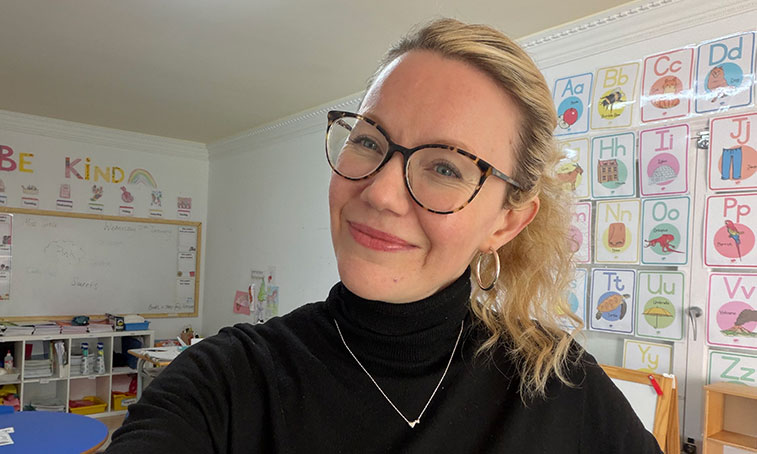
Elaine Coe joined NITE as Specialist Subject Lead Tutor for Media Studies in 2025, bringing 30 years’ experience of secondary teaching in both state and independent schools. We offer Media Studies as a secondary subject specialism on our PGCE courses. Here, she discusses why the teaching of media is so important in encouraging critical thinking in the next generation of media consumers.
Media is much more than just social
In 1991, The Disposable Heroes of Hiphoprisy sang that "Television" was "The drug of the nation. Breeding ignorance and feeding radiation." And in June 2026, MP Liz Kendall said that "Many children love connecting and interacting on social media. But others struggle with their mental health, concentration and self-esteem." We are all consumers of media, and as such we should address the continuous debate around its impact.
Studying media studies as a subject means that we can address misconceptions that pupils and, in some cases, their parents may have about the ways in which information is conveyed. Studying media allows for a wide-ranging experience of different perceptions of the world from diverse cultures and parts of the world that may not be studied in depth in other subjects. Studying media and its history allows us to teach the ways in which different industries influence consumers for their own benefit.
Everyone is a consumer
An advantage, and disadvantage, of media studies teaching is that we are all to some extent consumers of the media. This means that the tools and texts that we use to teach media studies are generally familiar to our pupils. From that familiarity we are able to broaden their horizons to many more experiences in different forms of media: classic texts, films and television that they may not know, and an international experience that they are more open to, when the format itself is recognisable. This may mean we sometimes feel that we must justify the teaching of such a - let's be honest - fun subject. We must justify the teaching of a subject that includes a substantial number of cross curricular influences.
We tackle tricky and sensitive subjects such as the representation of minority groups, and critical thinking about presentation on social media. We expose children to creativity in all its forms and encourage them to express themselves in their own creations.
In addition to this, the subject allows pupils of all abilities and access needs to achieve their best. As a "new" subject to many at GCSE or A Level, it offers access to a balance of skills - some practical - that give pupils with different or unusual talents the opportunity to succeed at the subject.
Remote control over the masses
In exposing our pupils to all aspects of the media and encouraging them to critically appraise what they are consuming and how it is being consumed, we can hope to encourage levels of tolerance and thoughtfulness in our pupils. In allowing them to go through the production process themselves, we hope to expose them to the difficulties and skills of producing media, and to experience working as part of a team. In engaging with difficult or controversial topics through the texts we study, we hope to encourage debate and empathy within our pupils and create critical thinkers.
It shapes our minds the most
It is important to champion our subject of media studies and promote it as a serious subject. It may not have the same academic reputation as other more traditional subjects, but that does not mean that it is less useful or desirable to employers. Many of our pupils choose to study media studies because they have an interest in some aspect of media as a career and hope to get some practical experience and knowledge of relevant terminology and industries.
However, the skills of critical thinking and empathy; of teamwork and self-reflection are to be emphasised. In a world of increasingly diverse and individualised access to the media, our pupils will go out into the world ready to challenge preconceived ideas and demonstrate their independent thought. Instead of "Breeding ignorance and feeding radiation." We are breeding intelligence and feeding critical minds.
Why train to teach Media with NITE?
Training with NITE means joining a supportive, practice focused route into teaching. Whichever route you choose to suit your own individual circumstances, you will learn from experienced educators while developing your skills in real classrooms. NITE programmes emphasise reflective practice, personalised support and high-quality mentoring, helping you grow into a confident, capable teacher ready to make a meaningful difference. If you want to inspire young people through the study of media studies in the modern world, NITE offers a pathway that blends academic learning with hands on experience - preparing you for a rewarding and impactful career in education.