Growing the next generation of teachers: Why hosting trainees matters
Monday 02 March 2026
4 min read
Introducing Maureen Rafferty
Before she joined NITE as a Visiting Assessor (VA), Maureen was a teacher, deputy head and initial teacher training mentor. Here she draws on her experience to explain why she feels so passionately about the role of placement schools in teacher training.
A career shaped by developing others
With over 35 years in education, including my role as Deputy Headteacher in a large primary school in Harrow, Greater London, I have seen first-hand how the profession evolves—and how vital it is that we continue to invest in those entering it. As a trained SENDCo with a particular passion for Early Years and Key Stage 1, much of my career has been shaped not only by leading within schools, but by developing others.
Throughout my time in school leadership, we worked closely with universities to support trainee teachers across a range of routes, including PGCE, BEd and BA programmes. From first-year placements to final-year students, these partnerships were central to our school’s culture. Many of those trainees went on to join us as early career teachers. We often referred to this as “growing our own teachers”—a long-term investment that strengthened both our staff team and our provision for pupils.
It is especially rewarding now, in my role as a Visiting Assessor, to reconnect with some of those former trainees—many of whom are now senior leaders themselves. Seeing them champion teacher development in their own schools and actively supporting new trainees is a powerful reminder of the lasting impact of this work.
Supporting trainees, strengthening schools
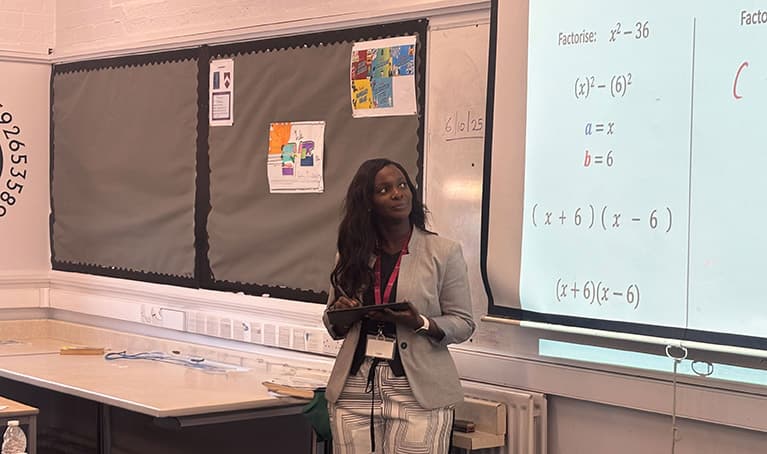
Over the past five years, I have worked with NITE as a Visiting Assessor, supporting trainee teachers throughout their placements. Visiting each trainee three times a year provides a unique opportunity to see their development over time—from those early, tentative steps in the classroom to growing confidence and competence by the final term.
Visiting Assessors play an important role in this journey. We are there to guide, support and challenge trainees, helping them to reflect on their practice and continue improving. For me, the goal has always been clear: to encourage and nurture the next generation of teachers. Alongside this, I have continued working as a supply teacher. This has allowed me to stay connected to the day-to-day realities of classroom teaching and ensures that my work as a Visiting Assessor remains grounded, relevant and informed by current practice.
The value of flexible, inclusive teacher training
One of the strengths I have observed through my work with NITE is the flexibility and accessibility of its training routes. Trainees come from a wide range of backgrounds and experiences, and the programme is designed to support this diversity. With a blend of online learning, in-school mentoring and structured support, trainees are well-equipped to transition into their roles as Early Career Teachers (ECTs).
Feedback from both trainees and mentors is consistently positive. The combination of high-quality training, strong partnerships with schools, and ongoing support helps to build confidence and professional competence. For schools, engaging with NITE also brings wider benefits—strengthening collaboration, increasing access to research-informed practice, and supporting ongoing professional learning.
Why hosting trainees matters
For school leaders, the decision to host trainee teachers should be seen not as an additional burden, but as a strategic investment. Trainees need high-quality school placements to develop the practical skills required for teaching. In return, schools gain significant benefits:
Professional development for staff: Mentoring trainees enhances coaching skills and encourages reflective practice.
Addressing recruitment challenges: Training teachers within your own setting creates a sustainable pipeline of future staff.
Fresh perspectives: Trainees bring new ideas, up-to-date pedagogical approaches, and enthusiasm to the classroom.
Improved outcomes for pupils: Team teaching and shared practice can enrich the learning experience for children.
Importantly, working with trainees fosters a culture of reflection and continuous improvement. It creates space for professional dialogue and encourages staff to articulate and refine their practice.
A collective responsibility
Ultimately, supporting trainee teachers is not just about individual development—it is about the future of the profession. Schools that take an active role in teacher training are helping to build a skilled, confident workforce that will benefit pupils, school communities and the education system as a whole.
As school leaders, we have an opportunity—and a responsibility—to contribute to this future. By investing in trainee teachers today, we are shaping the quality of education for years to come.