Business Management and Leadership BA (Hons) with foundation year

Study level: Undergraduate
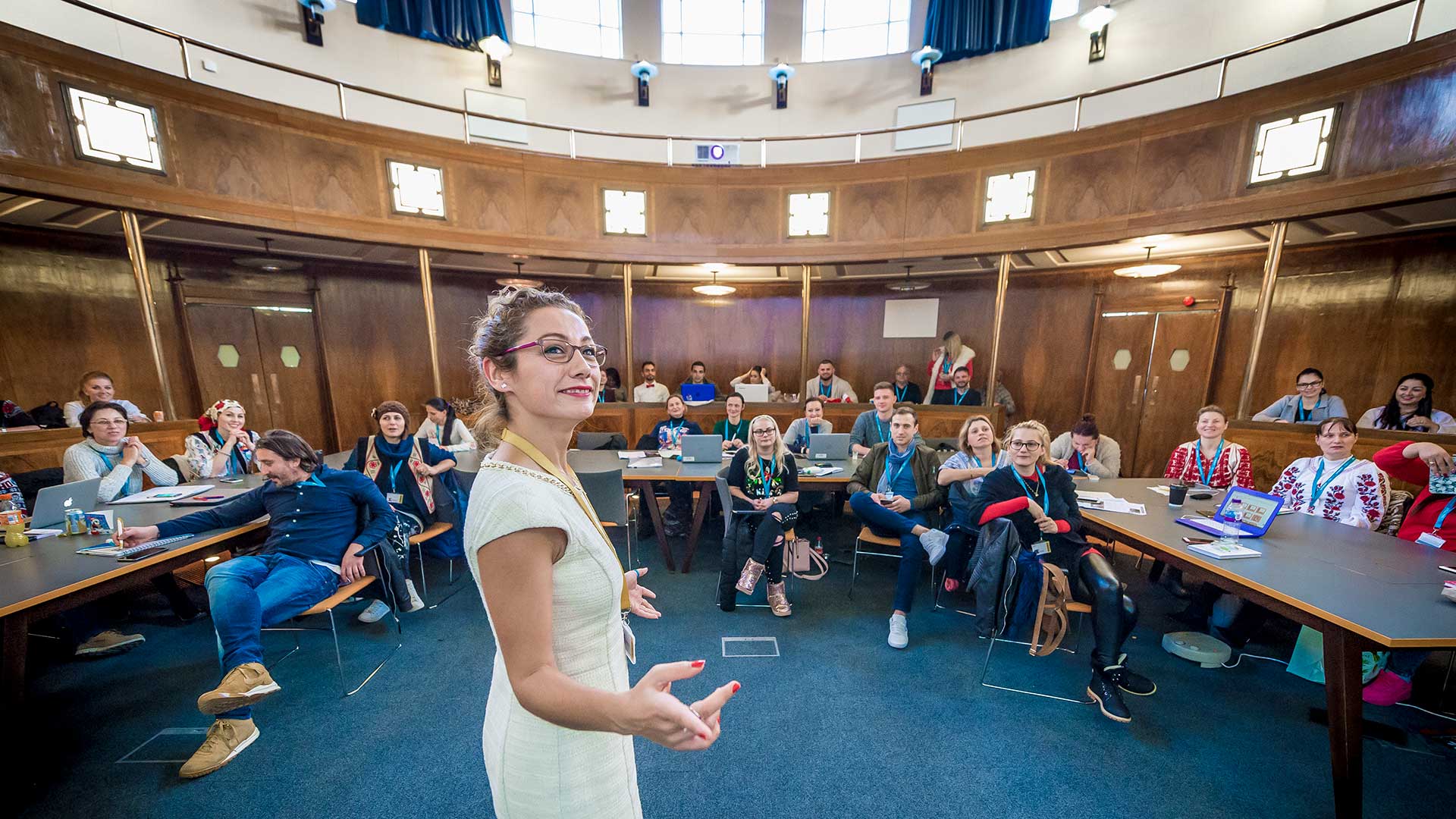
Lecturer teaching in front of a class

Develop business, management and leadership knowledge and skills.

Course features

Course option

Year of entry

Location

CU London (Dagenham, London)
CU London (Greenwich, London)

Study mode

Full-time
Sandwich

Duration

4 years full-time
5 years sandwich

UCAS codes

N20K

Start date

September 2027


Course overview

Modern organisations need people who can understand how businesses work, make informed decisions and support others through change. This course is designed to help you gain broad business knowledge while developing the communication, analytical and leadership skills used across contemporary organisations.

On this course, you’ll explore how organisations operate, how managers and leaders make decisions, and how businesses respond to customers, competitors, people, finance, innovation and global challenges.

You’ll connect business theory with practical application through activities such as case studies, business scenarios, group work and applied projects. You’ll examine how organisations plan, communicate, manage resources, support teams and respond to change.

You’ll also have opportunities to practise communication, teamwork, problem-solving, strategic thinking, research, analysis and professional decision-making. These skills can support future career planning or further study in business, management and leadership.

Why you should study this course

  • See business from every angle
    Explore how people, finance, customers, markets, strategy and the global environment shape organisational decisions.
  • Strengthen your leadership judgement
    Explore management and leadership approaches that can help you understand team behaviour, decision-making and organisational change.
  • Approach business problems strategically
    Use business tools and frameworks to analyse challenges, consider risks and evaluate responses.
  • Develop an enterprising mindset
    Consider how entrepreneurs and organisations identify opportunities, test ideas and adapt to changing markets.
  • Build practical professional skills
    Practise communication, teamwork, research, analysis and problem-solving skills relevant across business and management contexts.

Become a business management leader of the future

Olaitan Ajiboye came from Nigeria to study at CU London and has now graduated with a degree in business management and leadership. We caught up with him at his graduation to talk about his time here and his future.


What you'll study

Modules

Modules

To help you explore a potential career path and apply your learning in a professional setting, you may have the opportunity to undertake a work placement2 between your second and final years of study. Work placements can help you gain experience, develop transferable skills and better understand the type of work you may want to do in the future.

Placements are optional and are not guaranteed. You will need to apply for opportunities, and each placement must be approved before it can count towards your placement year. Employers or host organisations make the final selection decisions, and you may need to meet academic, conduct, right-to-work, visa or other eligibility requirements.

Key opportunities

  • Complete an approved work placement: apply for practical experience related to your course and career ambitions, typically lasting at least 26 weeks.
  • Reflect on professional development: recognise and document the skills, knowledge and experience you gain during your time in industry.
  • Broaden your global perspective: where available, you may be able to apply for an international work or study opportunity. These opportunities may depend on availability, academic approval, eligibility, visa and travel requirements, and additional costs.

This optional year is non-credit-bearing. If you successfully complete it, your experience will be formally recognised on your final degree certificate.

If you are sponsored by the University and choose to apply for an international work placement, you must comply with UKVI immigration regulations. You can contact us for guidance before making arrangements.

Modules

This year introduces you to your chosen subject while building essential skills.

  • Explore everything from marketing and global management to business communications and reflective growth, giving you a solid understanding of the subject before you progress.
  • Perfect the research and writing styles you’ll need to ace your degree-level assignments.
  • Learn core principles so you feel completely prepared when you start Year 1 of your degree.

On successful completion of this foundation year, you will be able to progress to year 1 of the degree.

Modules

We regularly review our course content to keep it relevant and current for our students. Consequently, we may update modules to reflect the latest industry standards..


How you'll learn

Forget stressful end-of-year exams. We focus on applied learning using a mix of lectures, tutorials and online study to get you ready for the real world. Instead of one big test, we assess your progress through coursework and phase tests. This better reflects the way you’ll likely work in your future career.

Teaching contact hours

As a full-time undergraduate student, you will study modules totalling 120 credits each academic year. A typical 30-credit module requires 300 hours of study. Study hours are made up of teaching contact hours and guided and independent study.

Teaching hours

Teaching hours may vary, depending on where you are in your studies, but on average, you will have between 10 and 12 teaching and learning hours each week. You will also have the option to attend additional sessions, including time with a progress coach or to meet with staff for advice and feedback. As you progress through your studies, teaching hours may reduce.

Guided and independent study

Throughout your studies, you will be expected to spend time in guided and independent study to make up the required study hours per module. You will be digging deeper into topics, reviewing what you’ve learnt and completing assignments. This can be completed around your personal commitments. As you progress to the end of your studies, you’ll spend more time on independent learning.

Online learning

As an innovative university, we use different teaching methods, including online tools and emerging technologies. So, some of your teaching hours and assessments may be delivered online.

Assessment

During your foundation year, the learning outcomes of modules, assignments and projects will be clearly stated. Your work will be marked according to how well you achieve these learning outcomes and your final feedback will refer to each outcome, as well as providing an overall percentage grade.

Assessment methods vary and include, practical class and project performance, written practical reports, project thesis, oral presentations, tutorial tasks and assessments which take place at the end of each six-week block. This course will be assessed using a variety of methods which will vary depending upon the degree selected or the module.

Course breakdown:

  • Coursework
  • Interactive assessments

The Coventry University Group assessment strategy ensures that our courses are fairly assessed and allows us to monitor student progression towards achieving the intended learning outcomes.

Teaching and learning methods may include:

  • lectures: gain a structured introduction to key concepts, theories and frameworks
  • seminars: take part in discussion and debate to deepen your understanding and develop critical thinking
  • tutorials: access guidance to consolidate learning, explore key topics and apply ideas
  • presentations: practise communicating ideas clearly and presenting information to different audiences 
  • group projects: build teamwork and collaboration skills through shared tasks and activities
  • workshops: apply knowledge through practical activities designed to support problem-solving and analysis
  • case studies: examine examples to understand how theory can be applied in context
  • business scenarios: explore realistic situations and consider responses
  • applied projects: connect theory with practice through research, planning, analysis or recommendations
  • online learning activities: access digital resources and activities that support flexible study and reinforce key concepts
  • guided and independent study: develop your understanding through directed reading, research, preparation and reflection.

Teaching contact hours

As a full-time undergraduate student, you will study modules totalling 120 credits each academic year. A typical 30-credit module requires 300 hours of study. Study hours are made up of teaching contact hours and guided and independent study.

Teaching hours

Teaching hours may vary, depending on where you are in your studies, but on average, you will have between 10 and 12 teaching and learning hours each week. You will also have the option to attend additional sessions, including time with a progress coach or to meet with staff for advice and feedback. As you progress through your studies, teaching hours may reduce.

Guided and independent study

Throughout your studies, you will be expected to spend time in guided and independent study to make up the required study hours per module. You will be digging deeper into topics, reviewing what you’ve learnt and completing assignments. This can be completed around your personal commitments. As you progress to the end of your studies, you’ll spend more time on independent learning.

Online learning

As an innovative university, we use different teaching methods, including online tools and emerging technologies. So, some of your teaching hours and assessments may be delivered online.

Assessment

Assessment methods vary by module and may include:

  • critical analysis
  • case studies
  • coursework
  • reports
  • projects
  • group work
  • presentations
  • academic posters and infographics
  • vlogs
  • literature reviews
  • business reports
  • time-constrained assessments
  • reflective tasks.

The Coventry University Group assessment strategy ensures that our courses are fairly assessed and allows us to monitor student progression towards achieving the intended learning outcomes.


Entry requirements

Typical entry requirements:

40 UCAS tariff points. All foundation courses require GCSE maths and English at grade 4 / C or Functional Skills Level 2, or other equivalent Level 2 awards. For T levels: overall grade of Pass (D or E on the Core) in the T level qualification in any subject.

If you don’t fulfil the entry criteria your application may be considered on an individual basis, taking into account any work experience, other qualifications and/or any training you have completed. Speak to one of our advisers today to find out how we can help you.

Contextual/Fair Access Offers

If you meet the criteria for our Fair Access Offer, you could automatically receive a contextual offer which is 16 UCAS points lower than our standard entry requirements. View the criteria for our Fair Access Offer.


Fees and funding

Foundation year

Student Full-time Part-time
UK, Ireland*, Channel Islands or Isle of Man £5,760 Not available
International/EU Not currently available*** Not available

Degree

Student Full-time Part-time
UK, Ireland*, Channel Islands or Isle of Man £10,050 per year Not available
International/EU Not currently available*** Not available

If you choose to study this course with a professional placement2 or study abroad year, you will need to pay a tuition fee3 to cover your academic support throughout your placement year. Students commencing their professional placement in the academic year 2029/30 will pay £1,615 if they are paying UK fees, or £1,950 if they are paying international fees.

For advice and guidance on tuition fees and student loans visit our Undergraduate Finance page and see The University’s Tuition Fee and Refund Terms and Conditions.

The University will charge the tuition fees that are stated in the table above for the first Academic Year of study. The University will review tuition fees each year. For UK (home) students, if Parliament permits an increase in tuition fees, the university may increase fees for each subsequent year of study in line with any such changes. Note that any increase is expected to be in line with the Retail Price Index (RPI), a UK measure of inflation that tracks changes in the cost of living.

If you choose to study this course with a professional placement or study abroad year, the University will charge the tuition fees stated above for those on a placement during Academic Year 2029/30. The University will review professional placement tuition fees each year. For UK (home) students, the University may increase fees for each subsequent year of study, but such that it will be no more than 5% above RPI.

For international students, we may increase fees each year, but such increases will be no more than 5% above inflation. If you defer your course start date or have to extend your studies beyond the normal duration of the course (e.g. to repeat a year or resit examinations) you may be charged the tuition fees in force at the time you take that additional period of study, and/or in line with any legislative changes that apply at that time.

Tuition fees cover the cost of your teaching, assessments, facilities and support services. There may be additional costs not covered by this fee such as accommodation and living costs, recommended reading books, stationery, printing and re-assessments should you need them. Find out what's included in your tuition costs.

Applies to degree only

The following are additional costs not included in the tuition fees:

  • Any optional overseas field trips or visits: £400+ per trip.
  • Any costs associated with securing, attending or completing a placement (whether in the UK or abroad) which may include costs of travel, accommodation, equipment or uniform required for the placement and any visa-related costs.

Foundation year funding

To secure funding for a degree with a foundation year, you must complete the full four-year programme. If you do not finish the entire course, including the integrated foundation year, you may have to pay the foundation year fees yourself. For further information, please refer to the 'Tuition Fee Loan' details in the 'Funding your undergraduate course' section of our 'Fees and finance' page.

*Irish student fees

The rights of Irish residents to study in the UK are preserved under the Common Travel Area arrangement. If you are an Irish student and meet the residency criteria, you can study in England, pay the same level of tuition fees as English students and utilise the Tuition Fee Loan.

**This degree with foundation year is not currently available to international students who require a student visa to study in the UK.


Facilities

Our Dagenham campus is in the stylishly renovated Civic Centre, offering a unique mix of classic architecture and modern learning spaces. You can study in our modern library, use the open-access IT suites or find a quiet spot in one of the many breakout areas designed for group work.

When you need a break, the on-site café is the perfect place to grab a snack and socialise with friends. The campus is just a short walk from local shops and transport links, making it easy to balance your studies with your life outside of university. 

Our Greenwich campus provides a professional, modern environment right in the heart of one of London’s most iconic districts. You’ll have access to modern teaching rooms and quiet study zones, along with a library stocked with everything you need for your assignments.

Between sessions, relax in the social spaces or grab a drink at the on-site café while catching up with friends. With the Thames and major transport links just minutes away, you are perfectly placed to enjoy the shops, markets and atmosphere of Southeast London.

You’ll use facilities through timetabled teaching, practical activities and relevant independent study. Access may vary by module, activity, capacity, supervision or safety requirements. Access may change or be limited where the University needs to follow public authority guidance, decisions or orders.


Careers and opportunities

A degree in business management can support a wide range of possible professional routes, from operations and project work to marketing, HR, consultancy, enterprise and leadership-focused roles. This course offers opportunities to develop broad business knowledge, commercial awareness and practical skills relevant to organisations that need people who can manage work, support teams, analyse information and contribute to effective decision-making.

Career routes may include:

  • management trainee roles
  • team leader or supervisor roles
  • operations management
  • project management
  • marketing or public relations
  • human resources or people management
  • business development
  • consultancy or advisory support
  • enterprise or start-up routes
  • public sector management
  • charity or third-sector management
  • postgraduate study in business, management or leadership.

Graduates may choose to explore opportunities in private companies, public sector organisations, charities, start-ups, consultancy settings, marketing and communications teams, HR teams, operations teams, project teams or business development functions.

These are examples of possible career paths. Some roles may require further training, professional accreditation or experience.


How to apply

This course with foundation year is not available to international students.


Discover Uni stats